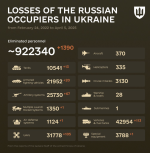
For Those Who Might Be Wondering Why We Might Be In Ukraine

Listening to the shortwave two nights ago a report was given of a mysterious disease that has "broken out" in Russia. Begins with flu like symptoms, within a very few days the victim is bedridden with debilitating fatigue and a cough that is so violent as to incapacitate the victim along with coughing up blood.... for weeks on end...... what not is known at the present is how long this affliction has been ravaging the Russian population, nor is it know of the death toll or the demographics of the afflicted.....
The analysis has come out that this disease may very well be a bio-weapon that origins may be traced back to one of the many bio-weapon labs that Zelensky possess..... the Russians are a smart group and when they can prove what Zelensky has perpetrated......shtf..... side note.... if I remember correctly there are two more woes of pestilence to come, and Zelensky is a fucking madman very capable of this type of genocide........ more as this this shit unfolds....
Just in case you haven't been reminded lately, you're a fucking idiot and russians deserve to die like dogs alongside all trumptards.
 

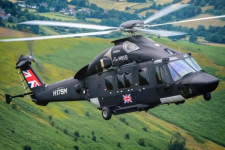
UK to supply decommissioned Puma HC.2 helicopters to Ukraine

The United Kingdom is set to send Puma HC.2 transport helicopters to Ukraine, marking a strategic move as per sources from the specialized publication Avions Légendaires. The helicopters, which were decommissioned on March 31, 2025, are expected to bolster Ukraine’s airdrop and medical evacuation operations. The UK's Ministry of Defence has resolved to dispatch around 8-10 helicopters to Ukraine, enhancing capabilities in critical missions. Previously, these helicopters served in the 33rd and 230th Expeditionary Squadrons and were actively deployed across Southeast Asia since 1971, notably in Brunei. Equipped for night tactical operations, these helicopters can carry up to 15 fully-equipped soldiers and feature cutting-edge missile defense systems against ground attacks.

Further to this, insiders disclosed that just days ago, Portugal sent eight Puma helicopters in the SA.330J standard to Ukraine, and France is considering supplying decommissioned units as well.

https://uawire.org/uk-to-supply-decommissioned-puma-hc-2-helicopters-to-ukraine
1743626205219.png
 
The Trump Administration is clearly signallimg that they have abandoned Ukraine and have no further interest in assistig Ukraine in defeating the Russian invasion. For Europeans, the secretary’s absence is the latest sign of the Trump administration’s "lower-priority approach" to arming Ukraine — a point Hegseth made clear at the last meeting in February. The Pentagon has $3.85 billion left in authority to send Ukraine military equipment, but no money left to replace it. "Leaders" in Congress have said they have no plans to pass more.

This is perhaps npt such a bad thing, in that without the Americans there, Russia won’t get the newest plans and intel right away and discussions will likely remains secure.

And then the Trump Administration has the temereoty to become upset about the Europeans moving away from US military hardware. Well, usually you only buy military hardware from friends and allies/ Obviously the Administration has not been listening to their boss.

https://www.defensenews.com/pentago...kip-multinational-meeting-on-ukraine-support/
1743648090913.png
 
Really good analysis of the March 19th Ukrainan attack on Crimean air defenses. On March 19, 2025, Ukraine launched a massive drone assault, wiping out key Russian radars, SAMs, and even a Mi-8 helicopter. This wasn’t just a strike—it was a message: Nowhere in Crimea is safe. But how did Ukraine pull it off? And what does it mean for the war?

Ukraine is waging assymetric warfare against Russia, and in this strike they crippled Crimean air defences and cost Russia $500,000,000 worth of air defense equipment that cannot be replaced. The cost of defending Crimea is becoming more and more untenable for Russia. These strikes set the stage for long range weapons to punch through, and Russians are beginning to realize this and flee Crimea. Russian military families are selling homes and actively evacuating their families - Trump may not understand that Ukraine will recapture Crimea, but Russians do.


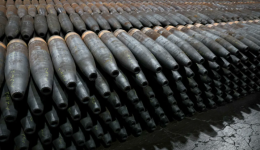
Czech FM says ammunition initiative shifts Russia-Ukraine shell ratio from 10:1 to 2:1

The Czech ammunition initiative has secured monthly deliveries to Ukraine until September of 2025, while Czech industry supplied 1.5 million rounds last year, including 500,000 large-caliber shells. The Czech Republic has emerged as a key player in supporting Ukraine’s defense amid Russia’s war, spearheading initiatives to address critical shortages in ammunition and military supplies. Its innovative “Czech Initiative” focuses on procuring artillery shells from non-EU countries to meet Ukraine’s urgent battlefield needs, with commitments for 1.5 million rounds in 2024 alone. This initiative has reduced the effectiveness of Russian artillery by 500 percent. Due to the ammunition acquired through the initiative, the ratio has shifted from 1:10 in favor of Russia to 1:2. Lipavský emphasized that the Czech initiative does not conflict with the European Commission’s plan to supply two million rounds of ammunition to Ukraine.

Given the far better accuracy of Ukrainian artillery (5x more accurate than Russian artillery and likely now more), this means Ukraine has essentially achieved artillery superiority as long as ammunition supplies are maintained. This is a huge win, and between European, Czech and Ukraainian ammunition manufacturing, reduces US artillery ammo support to a "ncve to have" rather than critical.

https://euromaidanpress.com/2025/04...ts-russia-ukraine-shell-ratio-from-101-to-21/
1743713634374.png
 

“Mad Max” tactics: Ukraine is sacrificing Bradleys for speed and blood in Russia’s Belgorod

Defense expert Yan Matveev reveals Ukraine’s new high-risk tactics: abandoning heavy armor to save soldiers and secure fast territorial gains.

Quite a good assessment of the ZSU's new tactics. Short rapid assaults by well-trained assault units to seize ground, accepting that armored vehicle losses will occur in return for seizing strategic objectives.

https://euromaidanpress.com/2025/04...leys-for-speed-and-blood-in-russias-belgorod/

1743714655749.png
 
https://en.topcor.ru/58272-udarom-fab-500-s-umpk-porazhen-sklad-sborki-bpla-vsu-v-hersone.html
This is more of the meat grinder... also it is noted elsewhere the the number of launched "drones" sent into Ukraine has increased dramatically up to near 4000 in the last two months... the Ukrainian defenses ability to intercept these simple Iranian drones have greatly diminished, signaling a marked drop in capacity to stop the incursions....
From the increased number of drone launchings of the simple Iranian drones, it's becoming increasingly more apparent that the Russians and/or the Iranians have increased their capacity to manufacture these weapons.....
With Iran in the crosshairs of the b-2 stealth bombers and the jews fix'n to apply a massive beat down on the Iranians, one has to be curious about the motivation behind destroying Iran.... is it to cripple weapons being sent to Russia? Cripple oil being delivered to China? Or possibly opening a southern route to invade Russia?
One more item to the mix, will Iran be able to successfully close the straits of Hormuz and activate the sleeper cells embedded in the lower 48?
As an after thought, is the April 5th uprising being coordinated with the Iranian sleeper cells?
 
US Ambassador to Ukraine Bridget Brink tweeted: "Horrified that tonight a ballistic missile struck near a playground and restaurant in Kryvyi Rih," without mentioning Russia in the message.

On the evening of 4 April, Russian forces launched a ballistic missile attack on a residential area in Kryvyi Rih, killing 18 people, including nine children, and injuring over 60.

American messagung from the Trump Administration in the face of Russian terrorism yet again pro-Russian.

https://www.pravda.com.ua/eng/news/2025/04/5/7506176/
 
Neither the latest escalations in Moscow’s glacial ground campaign or near-immediate failure of the purported ceasefire covering energy targets come as any surprise. They are related in the simplest possible way: Putin sees negotiations as a tool in his arsenal, nothing more. Anything you give to him he takes - and then laughs at your naive presumption that good-faith gestures deserve a reply in kind. Putin’s worldview doesn’t hold anyone as truly equal to the would-be god-king in the Kremlin. Sustaining the illusion that he can’t possibly fall is now about all that keeps his regime afloat. Hence his refusal to immediately accept a ceasefire. And the increased number of mass drone strikes targeting civilians lately. Also Ukraine’s warnings of a new spring-summer offensive effort on multiple fronts. In a system, the connections between elements are very important to monitor: they signal what’s under stress. Putin ordering his increasingly exhausted orc hordes into intensifying their mostly fruitless attacks again is part of the bluff of invincibility that animates his entire war at this stage. He’s desperate to signal that he doesn’t need negotiations, because he’s somehow winning. And even elements of Team Trump are starting to recognize how bad an idea it is politically to be seen to align with the dictator in Moscow.

The media meme about Ukraine being exhausted and the front line deadlocked is flat-out wrong. In almost every domain that matters on the battlefield Ukrainian forces are pulling ahead of the orcs in the all-important adaptation race. Moscow adapted to the challenges of the Network Age by returning to a distinctly industrial mode of waging war drawn from a warped interpretation of history. Ukraine has gone the other way, leveraging technological solutions wherever possible. Ukraine’s grand strategy for victory depends on Moscow burning through reserves of critical military capabilities ranging from tanks to quality personnel until it reaches a point where a cascading failure of the entire war effort can be induced. This moment looks set to arrive in the summer of 2025.

Airpower is one of the areas where Ukraine’s increased capabilities since 2022 is really starting to come into its own. Contrary to so many pundit claims over the years about how orc air defenses and jet interceptors would so easily swat the Ukrainian air force aside if it got too aggressive, Ukraine has gone from fighting a guerilla war in the skies to outright forcing an enemy with up to ten times as many combat-ready aircraft into an effective stalemate. On the ground, meanwhile, the situation on the fronts only looks like a stalemate because Ukraine is building up a reserve of combat power sufficient to turn the tide when the time is right. Move too soon, and more Ukrainians will die. Since 2023, when the full impact of Moscow’s mobilization efforts became clear, Ukraine has been forced to play the long game, as it were.

The 2023 counteroffensive didn’t work out mainly because Moscow had reserves enough to make Ukraine pay too high a price for pushing it too far. Though at a low ebb in the fall of 2022, Moscow’s strength was increasing, meaning that too many Ukrainian losses in 2023 would create dangerous vulnerabilities in 2024. The interruption of American aid for six months proved how wise it was not to over-extend. Since, the authorities in Kyiv have been satisfied to have the media downplay Ukraine’s chances in order to avoid unduly boosting expectations of success, as a relentless American media blitz before Ukraine’s counteroffensive in 2023 did. The narrative switch made by most foreign media unfortunately did much to prevent Ukraine from receiving military aid needed to withstand and overcome Moscow’s new effort - hence my long effort to act as a countervailing voice. The 2024 offensive into Kursk was necessary partly because Ukraine found itself in a position where it had to prove it wasn’t losing. Those who wish for Ukraine to more or less surrender hated the op from the start exactly because the Kursk Campaign upended their plans. Thankfully, it also achieved its core military objective of distracting the orcs from their plans in Donbas.

In 2025, even though Moscow is once again said to be powering up another offensive effort, the deterioration of combat power on most fronts is palpable. Even a year ago, a grand orc push to the Dnipro was within the real of possibility - Kursk made sure it couldn’t happen. Now, to think that the orcs can penetrate more than around twenty kilometers of front before their efforts grind to a halt is to ignore all available evidence. Hence the expectation that Ukraine will unleash a major wave of counteroffensives this year. But they’ll need more gear to get the job done. Even on a battlefield full of drones, tanks, infantry fighting vehicles, and armored personnel carriers are still essential. Lack of them is one of the reasons the orcs are losing their war.
 
Neither the latest escalations in Moscow’s glacial ground campaign or near-immediate failure of the purported ceasefire covering energy targets come as any surprise. They are related in the simplest possible way: Putin sees negotiations as a tool in his arsenal, nothing more. Anything you give to him he takes - and then laughs at your naive presumption that good-faith gestures deserve a reply in kind. Putin’s worldview doesn’t hold anyone as truly equal to the would-be god-king in the Kremlin. Sustaining the illusion that he can’t possibly fall is now about all that keeps his regime afloat. Hence his refusal to immediately accept a ceasefire. And the increased number of mass drone strikes targeting civilians lately. Also Ukraine’s warnings of a new spring-summer offensive effort on multiple fronts. In a system, the connections between elements are very important to monitor: they signal what’s under stress. Putin ordering his increasingly exhausted orc hordes into intensifying their mostly fruitless attacks again is part of the bluff of invincibility that animates his entire war at this stage. He’s desperate to signal that he doesn’t need negotiations, because he’s somehow winning. And even elements of Team Trump are starting to recognize how bad an idea it is politically to be seen to align with the dictator in Moscow.

The media meme about Ukraine being exhausted and the front line deadlocked is flat-out wrong. In almost every domain that matters on the battlefield Ukrainian forces are pulling ahead of the orcs in the all-important adaptation race. Moscow adapted to the challenges of the Network Age by returning to a distinctly industrial mode of waging war drawn from a warped interpretation of history. Ukraine has gone the other way, leveraging technological solutions wherever possible. Ukraine’s grand strategy for victory depends on Moscow burning through reserves of critical military capabilities ranging from tanks to quality personnel until it reaches a point where a cascading failure of the entire war effort can be induced. This moment looks set to arrive in the summer of 2025.

Airpower is one of the areas where Ukraine’s increased capabilities since 2022 is really starting to come into its own. Contrary to so many pundit claims over the years about how orc air defenses and jet interceptors would so easily swat the Ukrainian air force aside if it got too aggressive, Ukraine has gone from fighting a guerilla war in the skies to outright forcing an enemy with up to ten times as many combat-ready aircraft into an effective stalemate. On the ground, meanwhile, the situation on the fronts only looks like a stalemate because Ukraine is building up a reserve of combat power sufficient to turn the tide when the time is right. Move too soon, and more Ukrainians will die. Since 2023, when the full impact of Moscow’s mobilization efforts became clear, Ukraine has been forced to play the long game, as it were.

The 2023 counteroffensive didn’t work out mainly because Moscow had reserves enough to make Ukraine pay too high a price for pushing it too far. Though at a low ebb in the fall of 2022, Moscow’s strength was increasing, meaning that too many Ukrainian losses in 2023 would create dangerous vulnerabilities in 2024. The interruption of American aid for six months proved how wise it was not to over-extend. Since, the authorities in Kyiv have been satisfied to have the media downplay Ukraine’s chances in order to avoid unduly boosting expectations of success, as a relentless American media blitz before Ukraine’s counteroffensive in 2023 did. The narrative switch made by most foreign media unfortunately did much to prevent Ukraine from receiving military aid needed to withstand and overcome Moscow’s new effort - hence my long effort to act as a countervailing voice. The 2024 offensive into Kursk was necessary partly because Ukraine found itself in a position where it had to prove it wasn’t losing. Those who wish for Ukraine to more or less surrender hated the op from the start exactly because the Kursk Campaign upended their plans. Thankfully, it also achieved its core military objective of distracting the orcs from their plans in Donbas.

In 2025, even though Moscow is once again said to be powering up another offensive effort, the deterioration of combat power on most fronts is palpable. Even a year ago, a grand orc push to the Dnipro was within the real of possibility - Kursk made sure it couldn’t happen. Now, to think that the orcs can penetrate more than around twenty kilometers of front before their efforts grind to a halt is to ignore all available evidence. Hence the expectation that Ukraine will unleash a major wave of counteroffensives this year. But they’ll need more gear to get the job done. Even on a battlefield full of drones, tanks, infantry fighting vehicles, and armored personnel carriers are still essential. Lack of them is one of the reasons the orcs are losing their war.

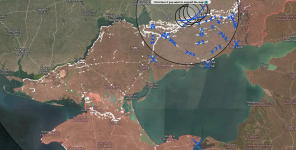
I am reminded by the war in Ukraine of the Russian offensive in Afghanistan. Neither were fast, nor did Russia prevail despite having overwhelming might at arms and the ability to use extreme force.

This indicates to me that Russia isn't the mighty power it claims to be and what the world sees it as.
 
Big Trends

Moscow is, according to both media outlets and Ukraine’s government, preparing to begin a new wave of offensives in Ukraine. And the past week has certainly seen a noted uptick in the pace of orc attacks. One reason for the surge is that the weather across most of the fronts looks to be well above freezing and also relatively dry, with drone footage not showing a lot of standing water in shell craters or deep tracks left by tracked vehicles. Spring leaves aren’t yet thick on the trees, however, which limits use of infiltration tactics, forcing the orcs to lean more on vehicle charges to try and breach Ukraine’s defenses. These are going about as well as in the past. That is to say, drones are cutting them apart with ease. What’s especially brutal about the situation from Moscow’s perspective is that although it has fielded tanks with active protection systems capable of shooting down incoming projectiles, they rely on active radar to operate. This immediately gives away their location, which isn’t ideal on today’s battlefield. Drones also may not move quickly enough to trigger their activation, since they are designed to deal with inbound anti-tank missiles and rocket propelled grenades.

The long-term solution to small drones will have to involve a remotely-controlled, partially automated weapon mounted on top of all vehicles. Using a combination of optical and acoustic signal feeds to differentiate drones from, say, passing birds, should work well. Won’t stop drone bombers that drop munitions, but ought to beat putting nets up around supply corridors, as both Ukrainians and the orcs are trying. A Swedish company has already developed a working prototype that they appropriately named “Loke” after the Norse trickster god. Field models of this sort of defense system are sure to be reaching Ukraine soon. Moscow’s battlefield drone game, by contrast, still relies more on semi-automated loitering munitions which Ukraine can now counter using interceptor drones. Effective hard-kill drone defenses are unlikely to concern Moscow much given how little it cares for the lives of personnel.

As far as the fighting at large, so far, despite ruscist attacks once more exceeding two hundred per day for much of the past week, they’ve got precious little to show for it except a notable increase in vehicle and personnel loss rates. The roughly fifty percent increase in vehicle losses over the past two weeks is especially problematic for Moscow, given that it passed peak availability for armored vehicles some time ago. Raw politics appears to be motivating orc generals more than military logic right now, Putin demanding that his troops sustain the illusion of meaningful progress to bolster his negotiating position. According to Ukraine, Putin is hoping to launch offensives that, if magically successful, would actually cut off a critical supply line and inflict a serious military defeat on Ukraine. Zelensky’s government probably wouldn’t survive. Yet the odds of this happening are essentially nil: Putin’s last best chance to pull this off was in early 2024, when Ukraine was desperately low on artillery thanks to American partisan lunacy. Now, his forces badly depleted after a completely futile year of fighting across too many fronts, trying to further expand his offensive efforts is precisely what Ukraine would like Putin to do. If he focuses on Sumy, Kharkiv, and Zaporizhzhia, the orc line in Donbas stands to collapse.

Barring the appearance of substantial, well-organized reserves that nobody knew about, not even the otherwise dangerously savvy folks at Estonian intelligence, all Putin is doing by trying to continue attacking on any front is accelerating the metabolic collapse already well underway inside his forces. In 2023, wary of becoming over-extended again, Putin’s defensive crouch was barely able to withstand Ukraine’s under-resourced attack, Zaluzhnyi thankfully pulling the punch to preserve combat power for this moment. In 2025, Ukraine finally has several dozen reasonably modern combat aircraft, with AWACS support soon to arrive. Ukrainian domestic industry is aiming to produce two million small drones (current forecasts are for four to five millions now)- doubling from the 2024 goal, which was exceeded - which are increasingly resistant to electronic warfare and have begun to employ machine intelligence to automatically strike targets once locked on to their electromagnetic signature. A whole lot more Ukrainian soldiers have deep experience operating NATO-standard kit, allowing for a sustained escalation in the supply of armor if allies will oblige.

The artillery famine is over for good, a million or more 155mm shells once again set to reach Ukraine through a Czech-led initiative to purchase them from international producers like India, South Africa, and South Korea, and another million coming off European production lines. Ukraine is also making 155mm shells, plus not only twenty highly praised Bohdana wheeled howitzers a month but probably as many towed versions as well - five to six hundred projected to be delivered over 2025, moving Ukraine to a position where they will hace clear artillery superiority. The former can fire at targets then move to a hide, while the latter can be build into a bunker to shield it against all but a direct hit by a similar enemy gun or aerial bomb. In a year Ukraine now produces darn near as many modern guns as it has ever received from partners. It’s the start of a trend.

In line with this trend, Ukraine is co-producing new modern Lynx infantry fighting vehicles with Germany to the tune of 10-20 a month, churning out a lot more BTR-4E troop carriers, and has set up local production of all the parts needed to service the venerable M-113, of which they now have a considerable number. Ukraine is also repairing twenty Bradleys a month, meaning that only totally destroyed vehicles are permanent losses. That should allow Ukraine to keep a couple hundred in service, enough to outfit half a dozen battalions. The Ukrainians have also revived at least part of the Soviet-era missile industry, making long-range cruise missiles, short-range ballistic missiles, and soon a Patriot-class surface to air missile to boot. Ukraine’s forces today are a world apart from what they were in March of 2024. Every year, in fact, Ukrainian capabilities have leaped to a new level while Moscow’s advantages plateaued or declined.

Moscow’s longstanding artillery advantage is now gone, Ukraine able to match the enemy in effective volume thanks to better accuracy and exceed the range on most orc guns. Better air defenses and electronic warfare are pushing back the glide bombs which have plagued Ukrainian troops near the front since 2023. Moscow’s investment in relatively expensive loitering drones capable of striking dozens of kilometers behind enemy lines is increasingly looking like a mistake compared to Ukraine’s focus on smaller quadcopters that are even tougher to knock down but can harry targets until they score a fatal hit. So if Moscow does indeed attempt to expand the active front again, this will play right into Ukraine’s best strategy for winning the war as quickly as possible. What the orcs should do right now by any reasonable measure is declare victory, dig in, and do everything they can to blame Ukraine for fighting on.

By escalating drone attacks against civilians even as Ukrainian drones have taken a break from tearing apart Moscow’s oil refineries to bonk ammunition warehouses, Putin is proving that he has no sincere desire for peace. This as much as Putin supposedly upsetting Trump by suggesting that the UN run Ukraine instead of Zelensky explains why Trump is predictably swinging back towards being down on russia again. On the ground, barring a truly shocking shift in Ukraine’s fortunes, Putin is in the dreaded Zugzwang from chess: a no-win situation where any move he makes hastens the inevitable. Hence him attempting to make no move at all - no even halfhearted steps towards an enforceable ceasefire, just an ongoing adamant refusal to accept the premise that he might ever lose implicit in every demand for concessions.

That’s what an alleged plan for another six to nine months of offensive operations amounts to: more of the same. Moscow hasn’t stopped attacking for about a year and a half - where it can. There are fewer and fewer areas where this is still true. It isn’t that his actions won’t hurt those on the front lines forced to sacrifice their blood and sanity to stop this menace. But an end to the madness is in sight.
 
Northern Theater

The Sumy front - and at this point it’s fair to call it that - continues to see Ukrainian and ruscist troops jousting for position along the international border. That Moscow will launch an offensive into Sumy of some size looks certain, hence Ukraine’s commitment of a couple assault regiments and perhaps a mechanized brigade to the Belgorod sector. This allows Ukraine to threaten a much bigger assault that would force Moscow to redeploy most of the troops needed to sustain any push into Sumy that goes far beyond the border. With Moscow kindly spreading its resources thin in a larger-scale repeat of what happened in 2022, Ukrainian forces are bound to find lots of weak points to prod.

Ukrainian troops continue to maintain a small foothold in Kursk on some higher ground southwest of Sudzha, but ruscist forces continue to reclaim portions on the road to the town and the twice-attacked (probably by Moscow, which immediately blamed Ukraine) gas metering station there. They are working to break into Sumy at various points, but having very little luck - the whole border area is reportedly heavily fortified and mined. In Belgorod, by contrast, Ukraine appears to have drawn an enemy brigade into a nice little fire trap. Air strikes that require Ukrainian jets to come dangerously close to the international border have taken down some key bridges in Belgorod south of the new Ukrainian incursion, limiting orc access to the front. All classic elements of a raid that threatens to become more - and as some have noted, the Ukrainian formations involved were recently fighting in Kursk. So much for that narrative about the retreat being a total rout. Another equally incorrect one will emerge to take its place, though.

Talk by the Ukrainian government of ruscist troops mounting another major push in Kharkiv seems pretty speculative, given how stuck the lines are around Vovchansk and Lyptsi. However, this could refer to the ongoing orc push over the Oskil farther east. By and large, Ukraine will likely adopt a mostly defensive posture in the north through spring. From a logistics perspective, this theater doesn’t immediately detract from supply throughput heading further south. Being the closest of the three to Moscow, Ukrainian offensives here were always bound to be carefully limited, unlikely to ever go so far as to seize a major population center like Kursk or Belgorod.

1743864010010.png

A long-term strategic challenge that Ukraine will always face is covering a frontier with no clear natural boundaries. Ukraine’s natural borders on the south are obviously the Black and Azov Seas, while to the east they probably should sit along the Don. But there’s no hard frontier north of the long arc the Don makes before it hits the Black Sea at Rostov-on-Don - a city, by the way, that logic and history dictates ought to be in Ukraine far more than Odesa or Sevastopol should ever be occupied by russia. As Ukraine fights towards victory, this frontier is ripe for raids and brief campaigns to distract the enemy, but at least for Ukraine, it will never be decisive in a military sense.
 
Eastern Theater

Fighting continues on the Kupiansk front, Moscow trying to expand its bridgehead over the Oskil north of the town at Dvorichna without much success. Farther up the Oskil, close to the international border, the orcs are trying to combine several little crossings into a larger bridgehead with the goal of linking that up with the one at Dvorichna. Historically a Soviet-pattern army in a bridgehead is very dangerous. But since 1945, such forces also terribly vulnerable, as the Egyptians discovered when fighting Israel back in 1973. There the Israelis contained the Egyptian attack then launched a cross-Nile operation of their own that threatened to push to Cairo. Pretty sure Israel won that war without carpet bombing civilians simply to secure a draw. Ah, how institutions deteriorate over time…

Ukrainian forces, still holding a substantial bridgehead on the east bank of the Oskil, are perpetually threatening to punch north and cut off the orcs in Dvorichna. The way troop densities work along the front line these days, there are probably only a few hundred, certainly no more than a thousand. But hundreds of forced surrenders would be a major blow to Putin’s bluff. South a bit, it’s difficult to tell whether Third Assault Brigade’s local counteroffensive on the Borova front will evolve, but the command there clearly aims to give the impression that it wants to march on Svatove if given half a chance. That coupled with a collapse of the Dvorichna bridgehead could throw an already fairly weak orc command into chaos. However, lately there’s been a clear pattern of Ukraine launching pre-emptive attacks aimed at disrupting enemy efforts to start up their own. So it is very possible that all Third Assault is doing is messing with an unfolding orc push in this area - it’s happened before with this aggressive and capable group.

The orc bridgehead over the Zherebets on the ***** front visibly expanded this week, to the point that it is unclear whether Ukrainian forces here are facing a crisis. Though this bridgehead also looks like a trap for wayward orcs, particularly as Ukrainian troops in the dense forest plantations along the Siverski Donets have reported local gains in recent weeks. The arc around Siversk remains stable despite some fairly large orc attacks - these were reportedly wiped out. The Kostyantynivka front is also fairly stable, though reports of heavy fighting in Toretsk continue to emerge in the media. Here and in Chasiv Yar the fighting is taking place at such a local level that open source mapping can’t accurately depict the dynamics. In general, reports suggest intense block by block fighting as Ukraine seeks to prevent a fresh orc effort from taking full control of either town.

Ukraine’s resilience on this front has been nothing short of remarkable, as both Toretsk and Chasiv Yar were considered all but lost months ago. It’s even more fascinating because the Ukrainians here deploy a collection of different brigades, many of them on paper structured as light infantry, which you might expect to have trouble fending off relentless orc assaults. It seems that the majority of the regiments drawn from Ukraine’s National Police are allocated here, along with the tough 28th Mechanized Brigade, which holds a series of slopes between Chasiv Yar and Toretsk. 93rd Mechanized is also highly respected and works in the area. 12th Offensive Guard “Azov” is another experienced outfit, 5th Assault certainly isn’t to be trifled with, then there’s 24th Mechanized and 100th Mechanized - plus 30th covering a long stretch north of Bakhmut - and several Territorial Defense brigades. The two effective corps fighting here have outperformed expectations all year without much fanfare.

They seem set to experience a lot more hard fighting in the near future, because even if Putin orders offensive efforts on new fronts, it is highly unlikely that the orcs will stop trying to creep towards Kostyantynivka. An attempt to clear the Ukrainian salient south of the Kleban-Bykske reservoir is underway, with the 109th Territorials still holding that chunk of the front between Kalynove and Oleksandropil where I sketched out a tactical defense scheme last year. Pokrovsk has witnessed a fairly dramatic escalation in the number and intensity of orc attacks, but so far with no reported success. Center for Defence Strategies suggests that the weight of the orc attacks on the Pokrovsk front are shifting to the east, a necessary prelude to an attack on Kostyantynivka from the south. Ukrainian forces have continued their counteroffensive efforts west of Pokrovsk, slowly but surely reducing the bridgehead over the Solona south of Kotlyne. Peaky Blinders, one of the most appropriately named Ukrainian drone units, has been active in this sector, recording several of the infamous crutch assaults, where injured russians are sent by their command to absorb a bit of Ukrainian firepower before they perish.

You might question why a drone operator would attack a man armed with nothing but crutches. Unfortunately, the grim choice is necessary because the orcs have started using unarmed soldiers as mules, and anyone they can force into a forward position is a potential spotter for orc artillery and drones. As ideal as it is to take these poor human mules prisoner, even if they try to surrender if their commander spots the signs they’ll actively try to kill the soldier and anyone around them. It’s an especially horrible war, this one. Blame Putin and the russians who refuse to kill him already. Moscow’s assault on Pokrovsk may not be over, but the crisis point has passed for Ukraine. Encirclement is almost certainly out of the question, and trying to approach Kostyantynivka from the south will be close to impossible if Pokrovsk hasn’t fallen. Once again the orcs have sacrificed potential for a substantial win by trying to fight everywhere.

The constant attempts to push Ukraine further east and north in southern Donbas are part and parcel of this error. Moscow’s troops have crept a bit farther this week than they did the one prior, but Ukraine has also counterattacked in places. It seems that the orcs have finally broken into the village of Rozlyv, but whether their positions can be held is a very open question at the moment. On the north bank of the Vovcha Ukraine has actually been counterattacking towards the outskirts of Andriivka, so I doubt that Rozlyv will be given up without a fight. A local counterattack might clear the enemy. Ukrainian troops are fighting for the Kostyantynopil-Andriivka-Rozlyv line pretty hard rather than fall back to Bahatyr and Oleksiivka. At the moment it doesn’t look like Ukraine will fall back nearly as far as I suggested might be needed after Velyka Novosilka fell. North of it the orcs are still sending forces up the road that runs along the Mokri Yali river. But they aren’t moving very far or fast, nor have attempts to push north to Bahatyr panned out. And the longer Ukraine has to dig in, the more likely the orcs will be stopped cold - even thrown back.
 
Southern Theater

Moscow’s push on the Zaporizhzhia front has intensified somewhat, and even gained a bit of ground between Kamianske and Orikhiv, including a road running near the front leading directly to the latter. At present, this effort falls far short of what would be needed to break through. The prospects for any advance to Zaporizhzhia city are dim, as Ukrainian troops can take advantage of multiple gullies that run across the line of any orc advance. More concerning is any threat to Orikhiv, a logistics hub which pretty much has to fall before the orcs can move further north in force. Orikhiv and Zaporizhzhia are a mirror image of Tokmak and Melitopol to the south. The smaller towns have to fall before the larger, and are heavily fortified. This is why I actually viewed Ukraine’s counteroffensive push between Robotyne and Verbove in 2023 as less then ideal, hitting right where the enemy was strongest. The Dnipro also constrains operations for both sides, even more than is diminished course might suggest. The areas formerly underwater before the orc demolition of the Nova Kakhova dam near Kherson are now covered in grass with virtually no cover. Pushing across that is darn near impossible.

As for the long course of the Dnipro, the orcs are always looking to take islands near Kherson and conducting their sick drone safaris to terrorize civilians. But while Ukraine rightly views a cross-river operation as too risky right now, it isn’t as if Moscow stands any chance of pushing over either. The Dnipro is a different beast than the Oskil or Zherebets. And both of these are tributary to and easier to cross than the winding Siverski Donets, which the orcs lost an astounding concentration of equipment trying to get across early on in the war.

Air, Sea, & Strike

Ukraine has turned a corner with respect to the fight in the skies, recently making it publicly known that F-16s routinely conduct missions almost up to the international border. Ukraine should be up to 24-30 Vipers and 3-6 Mirage 2000s by now, and the arrival of two Swedish AWACS jets and half a dozen more Vipers and Mirages each, hopefully by summer, stands to substantially augment Ukrainian capabilities. A couple weeks ago a Viper was spotted flying at rooftop level over Sumy, prompting Ukrainian authorities to remind everyone that recording military operations is illegal because of the risk to pilots. Within a few days, however, there Ukraine’s Air Force was releasing a video of the first on-camera interview with a Viper pilot, who confirmed that they do indeed fly close support missions near the front line.

Especially interesting is that not only are Vipers trucking bombs sometimes, but they’re pretty obviously covering Su-27 and Mig-29 jets as they do most of that dangerous work. The Viper spotted over Sumy appeared to have no weapons left, suggesting its air-to-air missiles (pretty sure they always carry two, whatever the mission) were already expended, either shooting down inbound orc drones and missiles or taking a shot at an orc Sukhoi trying to drop glide bombs. Ukraine’s air force also revealed an intriguing statistic - each day, on average, about eight ground attack sorties are flown, as well as ten air escort missions. This is in addition to air defense sorties. An implication is that Ukraine has a small squadron of Vipers that use air-to-air and radar-homing missiles to pave the way for Soviet-era jets armed with glide bombs. If armed with laser seekers, drones or troops on the ground can ensure pinpoint strikes without worrying about jammed GPS signals. Any ground-based radar that lights up to try and take a shot gets hit with a HARM, and the orc jet that wanders too close risks getting eaten by an AMRAAM.

More important than weapons, however, are the electronic countermeasure pods Ukraine’s Vipers are known to carry. Tuned specifically to interfere with orc systems now that all their operating modes are well known, ECM will substantially reduce the effective range of orc radars. Those scary orc S-400 and R-37 missiles with a theoretical 200km range suddenly find it much reduced. One of the biggest weaknesses with Muscovite tech is that it tends to have great specifications under ideal circumstances, but stray a bit outside and they fail.

Ukraine still need more air power, especially air to air missiles that can match the theoretical range of the enemy’s. Some Gripens armed with Meteor AAMs linked to AWACS would allow Ukraine to start killing orc Sukhois from behind friendly lines. Someone getting Ukraine a few dozen AIM-120D model AMRAAMs would be wonderful, as an AWACS can directly feed them targeting data too. But give Ukrainian engineers enough time, and they’ll work out how to trade off warhead size for additional fuel - and range - in a C model. The mere threat will help keep orc jets back. Something else to remember about AWACS platforms is that they can enhance the performance of other air defense systems. Air based radars aren’t as impacted by the curvature of the Earth, so in theory an AWACS can help a Patriot or Aster system achieve its maximum possible range, where otherwise 120km or so is the limit. Radar surveillance is also great for tracking movements on the ground, so gatherings of vehicles like you’ll see at fuel depots become visible, enabling rapid targeting with appropriate weapons. This capability is so dangerous to Moscow that no effort will be spared to find and kill any Ukrainian AWACS the orcs can get at. The biggest risk likely comes when they’re on the ground, so I expect that one will nearly always be airborne, the other in a reinforced shelter preparing to go up again.

Their endurance is only rated at five hours, and they’ll probably have to fly from a base in the far west of Ukraine, so more would be ideal, since losing one will nearly cripple the fleet. In an ideal world they’d stage from Poland and refuel in the air over NATO airspace before flying a route over central Ukraine, but you can’t have everything. Two more AWACS for round the clock coverage would be nice, though. Hey Macron, can you loan Ukraine a couple E-2 Hawkeyes from the de Gaulle air group? And some very bold crews? Merci beaucoup mon ami? Hey, I knew I took French in high school for a reason!

Between radical improvements in Ukraine’s air defenses - aside from multirole jets, there are a whole lot more modern air defense systems in Ukraine than there were in 2023 - and the newfound ability to jam glide bomb navigation signals, and Ukraine’s chances of sustaining intensive ground operations should be higher than ever before. Ukraine’s development of a full suite of strike options thanks to various forms of drone and indigenous missile programs is another important development. Ukraine did its part to respect the energy infrastructure ceasefire Team Trump claimed to have wrangled from Putin, shifting its strike campaign to hit ammunition warehouses again. A complex at Engels, a major strategic airbase, lost up to a hundred cruise missiles thanks to one attack. Moscow, by contrast, chose to attack civilian centers instead, including power infrastructure. Standard orc tactics. Trump, humiliated yet again by Putin, is reportedly not amused. We’ll see if he applies any sanctions, or if that’s all just talk.

At sea the Black Sea ceasefire is still holding, mainly because there isn’t much the orcs can do on that front anymore but hide or sink thanks to Ukraine’s drones anyway. Producing a multi-function, modular drone warship suggests that, just as in land and air combat, crewed platforms need to be kept away from a front line dominated by much cheaper, inherently more disposable drones. Crewed ships aren’t going away, because anything big enough to put a power source large enough to handle certain essential functions - surveillance and electromagnetic warfare among them - is going to need constant maintenance. They’ll also remain too costly to treat as disposable.

Warfare in the Network Age stands to be defined by the simple fact that people and - most true robots - are more difficult to replace than remote-controlled machines. You still need a lot of people to wage war nowadays, but maintaining a barrier between them and the killing is necessary to avoid attrition. Knowledge and experience are intangible yet incredibly valuable, never easily replaced. And people who have every reason to believe they stand a chance of surviving will apply their talents in ways that will astonish the most cynical observer. Ukraine wouldn’t still be around if this were not the case.
 
Leadership & Personnel

That Ukraine’s senior military leadership broadly understands the power of people is pretty evident. While Ukraine is pursuing serious reforms, they’re not radically upending the diverse ecosystem that has emerged as different branches of the service field their own brigades. Ukraine’s military reboot is focusing on improvements in training, better terms of service for both volunteers and mobilized, and adopting an organizational structure which can coordinate diverse subordinate elements. Integration of drones is another major component of the transformation, and the drone branch in Ukraine has done a great job filling as indispensable a function as artillery or engineers. Progress continues, and the course of the summer fighting will prove whether the adaptation is as beneficial as expected. Meanwhile, American sources - The New York Times, notably, are busy looking back to 2023 in another bid to learn all the wrong lessons.

Enough of the latest piece to allegedly offer an inside view of Ukraine’s military leadership has filtered into the Ukrainian press to get the jist. As ever, NYT spins a few absolute facts into a tale of Ukrainian dysfunction. Amusing to see an American outlet finally admit something that others have been pointing out for almost two years - that the push towards Robotyne and Verbove was only one of three equally important campaigns. Americans who misunderstand Clausewitz like they do everything else foreign are apt to insist that Ukraine erred in not launching one gigantic attack along a single axis. While this might seem like it violates the sacred German military rule that you never disperse your main effort, what folks constantly forget is the sheer geographic scale of the fighting.

Both sides are having to constantly choose where to concentrate combat power along the front line. Troops are not evenly distributed, and will flow to wherever there’s a need. To prevent reserves from moving in requires the ability to interdict the enemy’s logistics far behind the front. Ukraine did not have this in 2023: HIMARS is helpful, but lacks the range to reach the Azov Coast. ATACMS would have remedied the issue, but the Biden Administration wouldn’t allow that. Proper air support could have helped, but Ukraine didn’t get that, either. If Ukraine had pushed all its available forces into a single axis attack in 2023, the effect would have been much the same as a traffic jam. Local logistics would have been overloaded, dense concentrations of stuff easy pickings for orc ballistic missile strikes Ukraine lacked the Patriot systems to fend off. In addition, Moscow would have known that Ukraine was doing the obvious, Pentagon-approved thing and known to move every available body to Tokmak.

Given the density of the Surovikin Line in this area, it actually made sense for the entire thrust towards Melitopol to be a decoy. As it could well have been - Zaluzhnyi, recall, called off the original plan for 2023 after there had been enough fighting to prove to his American counterparts that no, the orcs wouldn’t simply break and run at the first sight of a Bradley. Not without meeting standing doctrinal assumptions for use of this tool that included support from Abrams tanks, Apache attack helicopters, A-10 Thunderbolt II ground attack jets, ATACMS, Tomahawks, and months of shaping by Air Force assets including B-2 bombers. Not just HIMARS and 155mm artillery - and no cluster rounds until halfway through the campaign.

The oh-so-informed New York Times, of course, criticizes Ukraine for pursuing simultaneous counteroffensives toward Mariupol and - even worse, to American eyes - Bakhmut, which American experts had insisted that Ukraine shouldn’t have ever fought for to begin with. Funny how their themes always manage to repeat. Anyway, totally ignored is the fact that the only chance Ukraine had of generating the required force ratios to advance far on any front was to keep orc reserves from concentrating. The implicit assumption being pushed by the American side here is that Ukraine could have won if only everything had been thrown at Melitopol. In truth, Syrskyi’s alleged insistence that reserves be sent to Bakhmut, where he was leading a fight that in retrospect was far better managed than the better-resourced Orikhiv front - made more sense after the first week of fighting near Orikhiv than sending reinforcements there. Ukraine’s push down the Mokri Yali valley made more sense to reinforce than the drive towards Tokmak, especially when orc reserves had gone west.

This is lost on American officaldom, of course. At least the piece apparently felt comfortable to remind the world just how decrepit Biden’s leadership was, revealing that the famous Ukrainian victory over the cruiser Moskva, pride of the Black Sea Fleet, upset him. Apparently, he and his team worried that might make Putin go nuclear. Reflexive control, anyone? It was kind of nice to confirm (if NYT gossip counts as such) my longstanding case that American officials always hated the Kursk operation, something that was evident from the way the expert class shifted how it was described just a few days in. At first, it was a brilliant raid - then, once Bidenworld fed allies in the press their talking points, it became a terrible risk doomed to end badly. Which the media was quick to assert was in fact the case once Ukraine pulled out, mostly in good order, half a year later.

The point: effective leadership is proven, and nearly every Ukrainian alive understands this better than literally any self-proclaimed American expert. American and many European talking heads love to criticize Syrskyi where they once fawned over Zaluzhnyi, thinking that Ukrainian criticism of Syrskyi means they ignore the fact Zaluzhnyi did many of the same things. This is a sign of how unserious their coverage of Ukraine has always been. That is why in 2025 virtually no one these days seems to be predicting future Ukrainian counteroffensives. On one hand, this is a plus for Ukraine: when the orc front breaks, it will look like a miracle and the international press will be all for Ukraine again. But on the other hand, public perception that Ukraine is crazy to fight until victory endangers proper levels of military aid reaching the front.

The hypothetical Volnovakha Campaign: A Deeper Dive

Ukraine’s obvious grand strategy for winning the war in such a way that Moscow never tries anything like it again is ending Putin’s regime.
Though economic pressure and international isolation help advance this goal, it is most likely to be a major military defeat that shatters the illusion of ruscist invincibility which will bring him and his regime down. Ukraine stands to be the fatal bone that finally catches in the bear’s throat and ends the menace for good. To accomplish Putin’s downfall after he successfully mobilized in the wake of the defeats of 2022 required demolishing the bulk of his reserves of combat power. Ukraine’s strategic options were long painfully limited by the hovering threat of a major orc offensive that could break Ukraine’s front. Over half a year, the Kursk Campaign proved that Putin’s reserves are dangerously low at last. Relying on North Korean support is a sign of desperation.

Now that Ukraine can act without fearing a surprise orc offensive of sufficient size to threaten a catastrophic defeat, the strategic choice facing Kyiv is where to commit its carefully husbanded reserves of combat power to achieve the greatest effect. A defeat of sufficient magnitude could trigger a broader collapse of the orc front more generally, but ought to at least bring Putin down. His regime is unlikely to survive a humiliation of that magnitude after blowing through most of the Soviet inventory of war materiel and over half a million casualties over the past year and a half of nonstop offensives that have gained precious little ground.

(Chloe) That's an important point to take away from this. While Putin continues his mobilizations and meatgrinder attacks, don't ever lose sight of the fact that Russia has lost the strategic initiative, and it is now. despite Trump's bullshit rhetoric, Ukraine that is holding the cards, and it is Ukraine that is now in a position to make the choice as to where and when to strike.

But how to get it done - and as importantly, where to try?
Moscow has invested a great deal in heavily fortifying most of the front line across occupied Ukraine. And not every place is equally valuable.

In a strategic sense Volnovakha is one of the most critical points that the orcs must hold to sustain their occupation of southern Ukraine. Here rail lines meet that, if this junction is severed along with the Kerch Strait Bridge, leave between 150,000-200,000 ruscist soldiers effectively stranded. There are other attractive areas to strike, but this one has long been a favorite. So it will make a good case study in a hypothetical campaign suited for the Network Age.

As a reminder, here, broadly speaking, is the plan: isolate orc logistics and crash the line.

1743864924687.png
 
The hypothetical Volnovakha Campaign: A Deeper Dive

A very heavy lift, to be sure! We'rr looking at fifteen Ukrainian brigades organized into three corps, one Mechanized, one Airborne, and one Marine, crashing the line where the Southern and Eastern theaters meet. They will have to penetrate two dense defense lines to get at the primary target: the rail line leading west from Volnovakha. Just bringing it into artillery range might be enough, but to hold off inevitable counterattacks, Ukraine really needs to strike deeper than that.

Ukraine has a number of new tools that it lacked the last time it tried to breach the front in the south back in 2023. Ultimately, victory at any scale in a fight depends on being able to better manage energy so that it can be concentrated and applied to an enemy vulnerability. Control over the pace of the fighting in some vital respect is key. The ruscist ability to properly coordinate and supply troops in the field is now at serious risk, meaning that Ukraine is increasingly able to dictate the terms of local engagements. Assume that Ukraine can, by midsummer, stockpile 120-150 cruise missiles of the Neptune and Storm Shadow/SCALP-EG class (Taurus too, eh Merz?) plus 500 small cruise missiles and 5,000 strike drones - roughly 2 months of planned production of the latter two types. Applying them to systematically reduce orc logistics between Mariupol and Melitopol stands to make moving troops and supplies a difficult, dangerous, and increasingly inefficient affair. Targets include depots, headquarters, and bridges, with special emphasis on rail and road junctions - locomotives, if possible. Even damaging rail lines and roads at numerous points could be of use. The more supply trucks have to maneuver through or around choke points, the greater the odds of traffic jams creating target rich environments.

Ideally, at least half as many more drones and small cruise can be dedicated to semi-weekly hits on juicy targets farther in the rear, like Sevastopol, Rostov-on-Don, and the Kerch Strait. For the last especially some Taurus and any ATACMS missiles Ukraine can get hold of now would be ideal. That bridge doesn’t have to come down entirely to be rendered unusable by military traffic for months. In this zone major headquarters, supply depots, and railway junctions and bridges must be regularly hit. Yet this deadly ceaseless rain will be nothing compared to what any orcs within twenty kilometers of the front will have to endure. Here Ukraine’s task is to seize effective control of the lower sky by whacking hostile drones with interceptors and flooding the zone with surveillance drones. Enough drones will need to be available to utterly overwhelm local orc air defenses, which will have to be relentlessly hunted whenever they switch on.

The warheads on most drones are relatively small, meant to take out personnel or vehicles, so fortifications require heavier ordnance. Luckily both 155mm shells and 250lb bombs will usually serve, and Ukraine has plenty of both, the latter delivered by aircraft and guided either by GPS or laser, if assisted by a drone or human to paint the target. While flights of drones harry any orcs that come out in the open or drive vehicles, dugouts, bunkers, and other fortified positions can be annihilated to leave no shelter. For offensive operations to work out as planned, the enemy must be too distracted or weakened to effectively resist. Total annihilation isn’t necessary, instead all the critical elements of the broader military organism across the target area have to stop working as planned. This enables intensive localized ground pushes that seize defensible bits of territory that will serve as springboards for the next lunge. Within twenty kilometers of the front, the standard must be that any orc target is spotted and hit with appropriate firepower within a few hours. This will keep the enemy’s reactions too slow to keep up with a sufficiently relentless pace of attacks.

The roughly 80km stretch between the outskirts of Hulyaipole in the west and Volnovakha in the east should be amenable to a large-scale counteroffensive using a lot of armored vehicles and drones. Ukrainian troops will be heading up a slope, but a very gentle one that isn’t cut by too many water lines. These tend to make it easier for an enemy to set up defense lines thanks to rapid elevation shifts and the potential for channeling the movement of over suitable crossings. NATO type tanks are very heavy, so not having to worry about getting them over a water barrier is always preferable. The bulk of the Ukrainian brigades will advance southeast between the Haichur and Mokri Yali rivers, seizing cleared orc fortifications for cover as they advance. The region has a fairly limited road network, but it should be sufficient for summertime fighting. Under the circumstances, limited cover should work to Ukraine’s advantage, as Ukrainian movements should be synchronized with efforts to make it difficult for Moscow to interfere. Fully leafed trees along the edges of fields and the course of the Haichur and Mokri Yali ought to be just concealing enough for Ukrainian troops to have time to dig in wherever they pause.

Adding together favorable terrain for summer fighting, the potential for Ukraine to dominate the lower sky with drones and largely neutralize orc airpower higher up, ongoing reforms of training and doctrine, enhanced strike capabilities, and the enemy showing more interest to the east and west of the Hulyaipole area, and the odds are as in Ukraine’s favor here as anywhere else. The distance from the nearest occupied population centers should work in Ukraine’s favor overall, too. Of course, this also means that Ukrainian reinforcements and supplies will have to come a long way - a dangerous vulnerability. Whatever advantage Ukraine holds thanks to these or any other factors, within 2-3 weeks they will begin to erode and at 6-8 fade away entirely in the target sector. After two months, three at the very most, the brigades involved will have to go over to the defense. By this point, they’ve got to have achieved their objectives, or the opportunity is lost. The reason for this is simple: even Moscow adapts, if slowly.
 
Because of that, certain elements of the operation will have to be carefully choreographed - without, of course, limiting the autonomy of local forces to an undue degree. Ukrainian assault teams will have to strike across a broad front and without massing a lot of reinforcements ahead of time that would give up the element of surprise. As soon as they go in, follow-on teams will have to be into motion, driving from assembly areas elsewhere in Ukraine straight to deployment points in under two days. For the operation to succeed, Ukraine will need to mass three corps, each consisting of five front line brigades and probably as many containing essential specialists. Artillery, drone, engineer, supply, and other supporting brigades need to manage their own supply chains, but can attach elements to front line forces as required. While it’s tempting to pick a dream team of Ukrainian brigades to commit to such an important effort, as many as possible should be ones familiar with southern Donbas or that have moved around a lot.

Ukraine must do all it can to split the enemy forces in the target area into two groupings. It will be the job of the Mechanized corps to make as if it intends to go straight to heavily defended Polohy then turn down the course of the Haichur, focusing on Fedorivka before proceeding towards Kamianka. The Marine corps will push east south of Velyka Novosilka, advancing down the Mokri Yali river valley on both banks. With the Mechanized and Marine corps covering the flanks and working to pin down as many hostile formations as possible, the Airborne spearhead will drive straight through both layers of the Surovikin Line then keep on going to the Azov highlands. If they get there within 5-6 weeks, the offensive effort will then turn east, to Volnovakha itself. Each brigade will be functionally organized into three battlegroups, each built around an infantry battalion, basically creating autonomous regiments that can be reinforced by the corps with specialist assets. Each battalion will further subdivide into four companies. These battlegroups will enter the battle in sequence, 10-14 days apart. They will not concentrate near the target area, nor will the intensive bombardment of orc logistics begin, until after the offensive starts. Once they do engage, each company in the battlegroup will move along routes cleared by their predecessors in a telescoping fashion. Think of it as shoving fifteen spears towards the enemy’s jugular in parallel.

To mitigate the chances of the orcs anticipating the attack, only the lead company from each of the fifteen Wave 1 battlegroups will actually deploy ahead of time, disguised as replacements for local Territorial Guard formations. Only instead of rotating out, the territorials will stick around to back up the assault troops as they go in to be sure nobody is hung out to dry if an attack goes wrong. They’ll also help contain and clear isolated orc groups. Everywhere the pattern at onset will be the same: in a short period of time electronic warfare will knock back enemy communications and drones while a wave of strikes on identified targets across the entire battlespace attempts to overwhelm orc defenses. While this is going on recon teams are moving ahead of the first companies, backed by huge numbers of drones closely coordinating with friendly electronic warfare teams to leave electromagnetic windows that minimize fratricide.

Every company can count on at least one air strike and direct support from a HIMARS launcher and a couple artillery pieces within minutes as they drive 2-3km into the grey zone to seize a set of defensible positions. They will have to be closely supported by engineering assets to clear paths through minefields and quickly cut hides for vehicles and soldiers in the tree lines. Constant re-clearing of routes will be required, something drones should be able to assist with, just as other drones drop mines around known orc positions to keep them isolated. The moment the lead company moves out, the second company in each Wave 1 parent battalion departs their staging area. Upon arrival in the sector, they deploy and move straight to the attack, driving another 2-3km towards enemy lines. The process then repeats twice more to round out Wave 1, Ukrainian command only moving entire battalions at once around Day 5. If the necessary level of paralysis sets in to justify continuing the operation, Ukrainian intentions will no longer matter: the orcs will be fighting to survive in scattered groups.

The goal here is to make it as difficult as possible for the orc chain of command to appreciate the magnitude of what’s happening until it’s too late. Information will be contradictory and scattered, the full scope truly apparent only when Ukrainian companies seize portions of the first major line of defense, 10-12km from the current front line. It is to be hoped this will happen within a week, with the most combat-capable companies from the Wave 1 battlegroup then moving laterally to establish contact with neighboring brigade sectors and trap any orc teams behind them. The Wave 1 battlegroups will focus on holding secure the channels they cut into the orc front while Wave 2 deploys to carry out the next phase of intensive operations that breach the next layer of the orc defense. If week 2 dawns and Ukrainian troops are still advancing, this should mean that orc command is behind the curve again. Army-level orc commanders often hesitate to tell Moscow how bad the situation is: if Kursk is any indication, it will take up to three weeks for Moscow to wise up and commit reserves from other fronts. By then it must be too late.

Phase Two of the campaign looks exactly like the first - companies continue the telescoping pattern to cut lanes through the enemy defense 2-3km at a time. One of the Wave 2 battlegroups from each corps should be held back as a reserve to hedge against any rapid orc counterattacks that prove too dangerous, which will slightly reduce the intensity of the advance - down to four brigade spearheads instead of five. Phase Three follows the same pattern, although after 2-3 weeks Moscow’s front could have shattered to the point that companies can safely move forward in pairs. It is also possible that stiffening resistance will require that the Wave 1 battlegroups take another turn at the front. As a further hedge against surprise, two of the five battlegroups in each corps should be held back, allowing this reserve to smoothly continue the Phase Three advance to the end of week four.

In an ideal world, by this point Ukrainian forces would have reached their initial halt line, Mechanized and Marine corps building a defense against orc counterattacks while the Airborne brigades push to take Volnovakha. If the fighting is tougher than hoped, it might take until week six to get to this point, with reserves pulled from all three corps coordinating the final assault. By week eight, another serious counteroffensive effort on a different front will probably need to be underway, and the Volnovakha Campaign called regardless of outcome. This entire concept is, of course, highly prospective. It does depend on a lot of factors invisible to the public eye lining up. However, based on the course of the war so far, it's not outside the realm of probability at all. And the general pattern should hold on other fronts - and scales - as well.

It relies not on the mere shock of encountering western gear to break the orcs, but isolating and tearing apart an entire army group faster than the enemy imagines possible. Though each telescoping corridor will face threats on either flank, the mutual advance should present the defending orcs with the exact reciprocal situation. That is, they are the ones who feel surrounded and forced to go to ground. And if they stay there, all is well. The offensive can flow right around them. With luck, the smart orcs will surrender.
 
https://ria-ru.translate.goog/20250...l=auto&_x_tr_tl=en&_x_tr_hl=en&_x_tr_pto=wapp
What was discovered in Kursk region, the war crimes of the "Saint ukie" ..... murder of unarmed civilians, rape of young girls, more murder of non combatants.... the shit the Russian investigators, experienced investigators found was utterly shocking and inhuman..... yupper that ain't no nazis Zelensky's army... fuck me to tears..... fabrisenko, hopefully he has a 13 ft drop, a sudden stop and a slow twist to the left....
 
Back
Top