For Those Who Might Be Wondering Why We Might Be In Ukraine

It's unrealistic to think the Russians are going to accept NATO country forces on their border.

That's why the Russians went to war against Finland, Estonia, Latvia, and Lithuania when they joined NATO.

Those wars were something to behold, weren't they?
 
Putin has thus far refrained from crossing the Dnieper in force

Putin's forces can't cross the goddamned street right now without a Ukrainian drone flying up their ass. There is no way in hell they could pull off a massive amphibious operation across the Dnieper. In fact those fucking cvnts were forced to retreat across the Dnieper because they had to run away from the Ukrainians who were and are buttfucking them on a daily basis.

That cvnt Putin would be in fucking Paris if the prick thought he could pull it off so don't pretend he's showing any restraint when he fails to do something he can't do anyway.
 
It is time to repost Russia's ultimatum to NATO from December 2021:

Draft

The United States of America and the Russian Federation, hereinafter referred to as the “Parties”,

guided by the principles contained in the Charter of the United Nations, the 1970 Declaration on Principles of International Law concerning Friendly Relations and Cooperation among States in accordance with the Charter of the United Nations, the 1975 Helsinki Final Act of the Conference on Security and Cooperation in Europe, as well as the provisions of the 1982 Manila Declaration on the Peaceful Settlement of Disputes, the 1999 Charter for European Security, and the 1997 Founding Act on Mutual Relations, Cooperation and Security between the North Atlantic Treaty Organization and the Russian Federation,

recalling the inadmissibility of the threat or use of force in any manner inconsistent with the purposes and principles of the Charter of the United Nations both in their mutual and international relations in general,

supporting the role of the United Nations Security Council that has the primary responsibility for maintaining international peace and security,

recognizing the need for united efforts to effectively respond to modern security challenges and threats in a globalized and interdependent world,

considering the need for strict compliance with the principle of non-interference in the internal affairs, including refraining from supporting organizations, groups or individuals calling for an unconstitutional change of power, as well as from undertaking any actions aimed at changing the political or social system of one of the Contracting Parties,

bearing in mind the need to create additional effective and quick-to-launch cooperation mechanisms or improve the existing ones to settle emerging issues and disputes through a constructive dialogue on the basis of mutual respect for and recognition of each other’s security interests and concerns, as well as to elaborate adequate responses to security challenges and threats,

seeking to avoid any military confrontation and armed conflict between the Parties and realizing that direct military clash between them could result in the use of nuclear weapons that would have far-reaching consequences,

reaffirming that a nuclear war cannot be won and must never be fought, and recognizing the need to make every effort to prevent the risk of outbreak of such war among States that possess nuclear weapons,

reaffirming their commitments under the Agreement between the United States of America and the Union of Soviet Socialist Republics on Measures to Reduce the Risk of Outbreak of Nuclear War of 30 September 1971, the Agreement between the Government of the United States of America and the Government of the Union of Soviet Socialist Republics on the Prevention of Incidents On and Over the High Seas of 25 May 1972, the Agreement between the United States of America and the Union of Soviet Socialist Republics on the Establishment of Nuclear Risk Reduction Centers of 15 September 1987, as well as the Agreement between the United States of America and the Union of Soviet Socialist Republics on the Prevention of Dangerous Military Activities of 12 June 1989,

have agreed as follows:

Article 1

The Parties shall cooperate on the basis of principles of indivisible, equal and undiminished security and to these ends:

shall not undertake actions nor participate in or support activities that affect the security of the other Party;

shall not implement security measures adopted by each Party individually or in the framework of an international organization, military alliance or coalition that could undermine core security interests of the other Party.

Article 2

The Parties shall seek to ensure that all international organizations, military alliances and coalitions in which at least one of the Parties is taking part adhere to the principles contained in the Charter of the United Nations.

Article 3

The Parties shall not use the territories of other States with a view to preparing or carrying out an armed attack against the other Party or other actions affecting core security interests of the other Party.

Article 4

The United States of America shall undertake to prevent further eastward expansion of the North Atlantic Treaty Organization and deny accession to the Alliance to the States of the former Union of Soviet Socialist Republics.

The United States of America shall not establish military bases in the territory of the States of the former Union of Soviet Socialist Republics that are not members of the North Atlantic Treaty Organization, use their infrastructure for any military activities or develop bilateral military cooperation with them.

Article 5

The Parties shall refrain from deploying their armed forces and armaments, including in the framework of international organizations, military alliances or coalitions, in the areas where such deployment could be perceived by the other Party as a threat to its national security, with the exception of such deployment within the national territories of the Parties.

The Parties shall refrain from flying heavy bombers equipped for nuclear or non-nuclear armaments or deploying surface warships of any type, including in the framework of international organizations, military alliances or coalitions, in the areas outside national airspace and national territorial waters respectively, from where they can attack targets in the territory of the other Party.

The Parties shall maintain dialogue and cooperate to improve mechanisms to prevent dangerous military activities on and over the high seas, including agreeing on the maximum approach distance between warships and aircraft.

Article 6

The Parties shall undertake not to deploy ground-launched intermediate-range and shorter-range missiles outside their national territories, as well as in the areas of their national territories, from which such weapons can attack targets in the national territory of the other Party.

Article 7

The Parties shall refrain from deploying nuclear weapons outside their national territories and return such weapons already deployed outside their national territories at the time of the entry into force of the Treaty to their national territories. The Parties shall eliminate all existing infrastructure for deployment of nuclear weapons outside their national territories.

The Parties shall not train military and civilian personnel from non-nuclear countries to use nuclear weapons. The Parties shall not conduct exercises or training for general-purpose forces, that include scenarios involving the use of nuclear weapons.

Article 8

The Treaty shall enter into force from the date of receipt of the last written notification on the completion by the Parties of their domestic procedures necessary for its entry into force.

Done in two originals, each in English and Russian languages, both texts being equally authentic.

For the United States of America For the Russian Federation

Source: https://www.washingtontimes.com/news/2021/dec/23/treaty-between-united-states-america-russian/
 
It is time to repost Russia's ultimatum to NATO from December 2021:

Draft

The United States of America and the Russian Federation, hereinafter referred to as the “Parties”,

guided by the principles contained in the Charter of the United Nations, the 1970 Declaration on Principles of International Law concerning Friendly Relations and Cooperation among States in accordance with the Charter of the United Nations, the 1975 Helsinki Final Act of the Conference on Security and Cooperation in Europe, as well as the provisions of the 1982 Manila Declaration on the Peaceful Settlement of Disputes, the 1999 Charter for European Security, and the 1997 Founding Act on Mutual Relations, Cooperation and Security between the North Atlantic Treaty Organization and the Russian Federation,

recalling the inadmissibility of the threat or use of force in any manner inconsistent with the purposes and principles of the Charter of the United Nations both in their mutual and international relations in general,

supporting the role of the United Nations Security Council that has the primary responsibility for maintaining international peace and security,

recognizing the need for united efforts to effectively respond to modern security challenges and threats in a globalized and interdependent world,

considering the need for strict compliance with the principle of non-interference in the internal affairs, including refraining from supporting organizations, groups or individuals calling for an unconstitutional change of power, as well as from undertaking any actions aimed at changing the political or social system of one of the Contracting Parties,

bearing in mind the need to create additional effective and quick-to-launch cooperation mechanisms or improve the existing ones to settle emerging issues and disputes through a constructive dialogue on the basis of mutual respect for and recognition of each other’s security interests and concerns, as well as to elaborate adequate responses to security challenges and threats,

seeking to avoid any military confrontation and armed conflict between the Parties and realizing that direct military clash between them could result in the use of nuclear weapons that would have far-reaching consequences,

reaffirming that a nuclear war cannot be won and must never be fought, and recognizing the need to make every effort to prevent the risk of outbreak of such war among States that possess nuclear weapons,

reaffirming their commitments under the Agreement between the United States of America and the Union of Soviet Socialist Republics on Measures to Reduce the Risk of Outbreak of Nuclear War of 30 September 1971, the Agreement between the Government of the United States of America and the Government of the Union of Soviet Socialist Republics on the Prevention of Incidents On and Over the High Seas of 25 May 1972, the Agreement between the United States of America and the Union of Soviet Socialist Republics on the Establishment of Nuclear Risk Reduction Centers of 15 September 1987, as well as the Agreement between the United States of America and the Union of Soviet Socialist Republics on the Prevention of Dangerous Military Activities of 12 June 1989,

have agreed as follows:

Article 1

The Parties shall cooperate on the basis of principles of indivisible, equal and undiminished security and to these ends:

shall not undertake actions nor participate in or support activities that affect the security of the other Party;

shall not implement security measures adopted by each Party individually or in the framework of an international organization, military alliance or coalition that could undermine core security interests of the other Party.

Article 2

The Parties shall seek to ensure that all international organizations, military alliances and coalitions in which at least one of the Parties is taking part adhere to the principles contained in the Charter of the United Nations.

Article 3

The Parties shall not use the territories of other States with a view to preparing or carrying out an armed attack against the other Party or other actions affecting core security interests of the other Party.

Article 4

The United States of America shall undertake to prevent further eastward expansion of the North Atlantic Treaty Organization and deny accession to the Alliance to the States of the former Union of Soviet Socialist Republics.

The United States of America shall not establish military bases in the territory of the States of the former Union of Soviet Socialist Republics that are not members of the North Atlantic Treaty Organization, use their infrastructure for any military activities or develop bilateral military cooperation with them.

Article 5

The Parties shall refrain from deploying their armed forces and armaments, including in the framework of international organizations, military alliances or coalitions, in the areas where such deployment could be perceived by the other Party as a threat to its national security, with the exception of such deployment within the national territories of the Parties.

The Parties shall refrain from flying heavy bombers equipped for nuclear or non-nuclear armaments or deploying surface warships of any type, including in the framework of international organizations, military alliances or coalitions, in the areas outside national airspace and national territorial waters respectively, from where they can attack targets in the territory of the other Party.

The Parties shall maintain dialogue and cooperate to improve mechanisms to prevent dangerous military activities on and over the high seas, including agreeing on the maximum approach distance between warships and aircraft.

Article 6

The Parties shall undertake not to deploy ground-launched intermediate-range and shorter-range missiles outside their national territories, as well as in the areas of their national territories, from which such weapons can attack targets in the national territory of the other Party.

Article 7

The Parties shall refrain from deploying nuclear weapons outside their national territories and return such weapons already deployed outside their national territories at the time of the entry into force of the Treaty to their national territories. The Parties shall eliminate all existing infrastructure for deployment of nuclear weapons outside their national territories.

The Parties shall not train military and civilian personnel from non-nuclear countries to use nuclear weapons. The Parties shall not conduct exercises or training for general-purpose forces, that include scenarios involving the use of nuclear weapons.

Article 8

The Treaty shall enter into force from the date of receipt of the last written notification on the completion by the Parties of their domestic procedures necessary for its entry into force.

Done in two originals, each in English and Russian languages, both texts being equally authentic.

For the United States of America For the Russian Federation

Source: https://www.washingtontimes.com/news/2021/dec/23/treaty-between-united-states-america-russian/
How relevant is the above today?
 
That's why the Russians went to war against Finland, Estonia, Latvia, and Lithuania when they joined NATO.

Those wars were something to behold, weren't they?
So, why don't we just send an army of European NATO troops into Ukraine, because nothing will happen?
 
So far, I haven’t seen any verified or consistent demands from either side, only fragmented media reports that often turn out to be inaccurate. We’re reaching the point where most Western legacy outlets, as well as Ukrainian and Russian state media, have to be read primarily as instruments of wartime propaganda, each advancing its own strategic narrative rather than objective reporting.

Russia is unlikely to relinquish the Donbas, given both its predominantly Russian-speaking population and its symbolic role in the origins of the conflict following 2014. Putin has thus far refrained from crossing the Dnieper in force, indicating a preference for consolidating control over the Donbas and maintaining a buffer zone stretching through southern Ukraine to Kherson. Crimea will remain non-negotiable, while Odessa represents a potential target if Moscow seeks to secure full dominance over the Black Sea littoral.
You haven't seen it because your eyes are closed. Russia doesn't occupy Donbas.

Ukraine is the country that chooses whether or not to surrender. They don't own Russia anything
 

Russia's 'Death Spiral' Accelerates as Elites Flee


Moscow's elites loot billions as the army's discipline collapses from within. This is not just a battlefield crisis. It's a symptom of deep social decay, where contempt for veterans grows and soldiers desert.

This analysis reveals the stark signals of two nations on opposite paths. While Russia's society fractures under pressure, Ukraine shows profound resilience by honoring its veterans and already planning a future of post-war growth.

The Tale of Two Armies: Innovation vs. Incompetence
How Ukraine's Weaponry Is Crippling Russia's Economy
Russia's Military is Imploding from Within
The Kremlin's Desperate Search for Soldiers
The Exodus of Wealth: Elites Flee with Crypto
The Kremlin's Digital Crackdown: Controlling the People


RUSSIA’S GASOLINE CRISIS: REFINERY SHUTDOWN STRATEGY


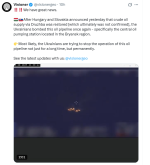
Ukrainian drone strikes on Russian oil refineries, which resumed in August and have hit at least seven major facilities, could inflict irreparable damage on the domestic oil processing industry,

 
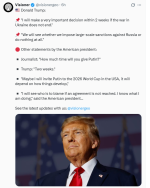
When it comes to Putin, Trump is Pathetically Embarrassing

This is Twilight Zone territory

Trump is gonna cry so hard when Russia and Putin goes down


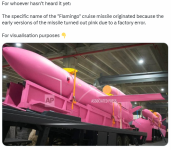
“Flamingo” in action: how Ukraine keeps Russians in its sights!


Ukraine no longer relies on it's allies for a limited number of long range weapons

Now Ukraine has a long range cruise missile it can reach almost everywhere in Russia, and which it can use as it likes without any artificial constraints imposed by cowardly weasals

With a one ton warhead, it has one heck of an impact when it hits.....


Anne Applebaum: The Real Reason Why Putin Keeps Refusing a Ceasefire


This is not a war over territory. There's no piece of territory that Russia needs. Imaginimg that Russia will accept land for peace is a mistake. AT the moment, Putin believes he will win and that Ukraine will be defeated and he will control the whole of Ukraine. Since he still thinks he's going to win, why could he stop fighting. That all he wants is a piece of land is a fundamental misundertanding.

This is a colonial war, comparable perhaps to the French war in Algeria.

Anne explains this really well.

 
Really interesting look at taking the Russian Oil Industry down

Some of the Russian oil fields are so old that if they stop pumping, it will take a huge investment in modern technology to bring them online again.....

Really god analysis of the impact and contingency steps the US may be making ti mitigate the impact of taking Russian pool offline.

 
It's very clear what Trump is doing here.

He doesn't want Ukraine to win. He's stalling on sanctions and actions against Russia, giving Putin what he wants, which is time to comp;ete the defeat of Ukraine. The moment it looks like Ukraine is winning, Putin will agree and Trump will try and force Ukraine into a disadvantageous ceasefire. At that point Trump will need to be cut out of the loop and stalled while Ukraine completes the destruction of Russia.

1755910198432.png
 
It's very clear what Trump is doing here.

He doesn't want Ukraine to win. He's stalling on sanctions and actions against Russia, giving Putin what he wants, which is time to comp;ete the defeat of Ukraine. The moment it looks like Ukraine is winning, Putin will agree and Trump will try and force Ukraine into a disadvantageous ceasefire. At that point Trump will need to be cut out of the loop and stalled while Ukraine completes the destruction of Russia.

View attachment 2559873

DonOld “the traitorous dotard” is such an embarrassment - and such a traitorous dotard.

👎

We. Told. Them. So.

🌷
 

Ukraine Advances | A new Counterattack in ***** Direction


ZSU advanced in an area where the Russians have been attacking.


Armenia & Azerbaijan Team Up to CRUSH Russia's Influence!

Armenia and Azerbaijan have signed a U.S.-brokered peace deal on August 9, 2024, marking a decisive break from Moscow’s influence. The agreement, confirmed by The Guardian and Euromaidan Press, ends a decades-long conflict over Nagorno-Karabakh and establishes a new trade corridor. This move follows Armenia’s April–May 2024 return of border villages and Azerbaijan’s 2023 retaking of Nagorno-Karabakh, both moments where Russia failed to act.

The deal grants the United States development rights over the corridor while both Armenia and Azerbaijan formally recognize each other’s sovereignty. Russia, once the dominant broker in the region, has been sidelined after years of playing both sides. With Armenia turning away from Moscow and Azerbaijan looking west, Putin faces a strategic loss in the Caucasus at a time when his military is already consumed by the Ukraine war.


Trump says Ukraine must accept Russian terms to end the war


In other words, Trump is still sucking Putin's cock and doing his best to force Ukraine to surrender. His latest is that “He’s long believed that Russia holds the upper hand in the war and needs to be nudged toward peace talks. Ukraine, meanwhile, relies heavily on the U.S. for weapons and intelligence. So there are more pressure points to push them into a deal,” a former Trump administration official explained.

According to three individuals familiar with Trump’s thinking, the U.S. president remains reluctant to pressure Vladimir Putin, convinced that he holds more leverage over Ukraine and America’s European allies. Previously, Trump had stated that his possible participation in a three-way meeting with Ukrainian President Volodymyr Zelenskyy and the Russian dictator would depend on whether “those two can work together.”

Kurt Volker, former U.S. ambassador and special envoy for Ukraine, told the outlet that the peace process remains stuck at the same point it was six months ago. “There won’t be a deal. Putin will never agree,” he said.

Living in a fantasy world, Trump continues to assure his allies that negotiations remain on track.....Another White House source told Politico that Trump and his national security team “continue to work with Russian and Ukrainian officials to organize a bilateral meeting.” At the same time, the White House declined to comment on the Kremlin’s apparent evasion of a meeting between the Russian dictator and the Ukrainian president.

In other words, because Ukraine fights on so effectively, Putin is using Trump to try and pressure Ukraine into surrendering, because thats what Russia's terms amount to. Putin refiuses to budge on his demands, and Trump is doing his best to help him.

https://english.nv.ua/nation/trump-...-russian-terms-politico-reports-50539417.html
 
Back
Top