ChloeTzang
Literotica Guru
- Joined
- Apr 14, 2015
- Posts
- 20,279
Part 2
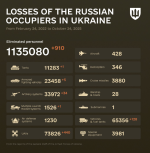
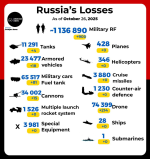
In those cases where the Russian officers run out of meat before receiving their next batch from Moscow, however, even elite Russians are made to play at being cannon fodder. An operational vulnerability Ukraine will be certain to exploit. When an army is run like a pyramid scheme, it’s prone to rapid collapse when layers that think themselves reasonably secure come under threat. Recall how Muscovite professionals broke and ran from Izium three years ago. With desertions upping the unrecoverable toll another ten percent, the Russians are rocking a deficit of up to ten thousand bodies a month, depending on how many of the wounded can be returned to health. Plenty are soon sent out on crutches to soak up another drone. Coupled to the near-depletion of equipment reserves and insufficient new production forcing a reliance on North Korean imports, this loss rate puts the Russians short about a full combined arms army. Even The Economist in a recent issue caught on to the quadratic increase in orc fatalities over the course of the conflict. If this continues for another year, Moscow is going to be losing a combined arms army every month.
As for now, the Ukrainians getting about 5% stronger while the orcs have become at least 10% weaker on the ground is not, in and of itself, sufficient to turn the tide. But once you layer that onto Ukraine’s ever-escalating deep strike campaign, fast-spreading cracks in the Russian war economy, and emerging Ukrainian dominance in the next generation of drones, and the picture for Moscow looks extraordinarily bleak.
Which begs that constant question of mine: why is this not the story you’ll get from most of the news? Pick a big-name publication, from BBC to any US partisan rag you like, and Ukraine’s fight is portrayed in universally negative terms. The clear message to Ukrainians from these outlets: Give up while you still own some of Donbas. You’ve had your fifteen minutes in the spotlight. What a contrast to 2022, when serious people were insisting that Putin was on the verge of dying from a chronic illness or (my favorite) that he only did this because he was too isolated during the pandemic (what, because normally he’s kissing everyone in reach?). So: if Trump is well aware of Ukrainian intentions and actual capabilities, then why is he still hedging his bets?
Another two-part answer. It’s one half partisanship, the other vanity. The first, funnily enough, is why it’s a net plus that he’s back to being stupid on Ukraine - the people in the US and Europe who let Trump live in their subconscious are bound to turn on Kyiv if he ever does actually embrace Ukraine for real. In any case, Trump is facing a midterm election cycle that stands to go very badly for his party, because that’s just how the US partisan system works at the federal level. The incumbent president's party gets blamed for every silly campaign promise they couldn’t immediately fulfill and all problems someone with power decides that the country currently faces, so loses seats in Congress. There are exceptions, but they’re rare. And Trump is no more popular now than he was in 2018, the last time he faced this dynamic.
The Senate is pretty much lost to Democrats for the rest of this decade, but despite around eighty percent of House seats being non-competitive, a few dozen are still subject to switching, and the Republican margin in the House is in single digits. Which explains the new rush by Team Trump to convince Republican-dominated states to do an out of cycle redistricting as the Supreme Court decides that race can’t be a factor in creating districts. Will it be enough? Probably not. So: the US economy is bound to be either in a deep recession by 2026 thanks to the generative AI bubble bursting or coping with a lethal form of stagflation because it didn’t. Facing strong headwinds, Trump will need every vote he can possibly get, and midterm elections are dominated by older, established partisan voters - about a third of voters from presidential years, mainly independents, sit out midterms. Older Republicans tend to be more pro-Ukraine than the younger ones attracted to Trump by his juvenile antics seeming edgy for lack of a proper contrast anywhere else in mainstream American politics.
Trump’s coalition has three key wings: the remaining old-school Republicans like Rubio and Haley, christian nationalist Putin-lovers like Vance and Hegseth, and techno-fascists like Musk and Thiel. The broader coalition is split 50/50 on Ukraine. The christian nationalists and tech allies like Thiel hate Ukraine because they imagine Putin built something special in his empire instead of stitching together various bits of the Soviet system into a shambling zombie. Real republicans and the techno-pseudolibertarians like Musk who are into MAGA for the cash see either the logic in kneecapping the USA’s most serious rival or the money to be made backing the innovative underdog. To satisfy both sides, Trump has to throw each their share of red meat. That’s part of his endless rhetorical zig-zags: people only pay attention to the media that caters to them, and most outlets only report the stuff he says that’s of interest to their audience. So Trump rambles off seemingly random nonsense in the verbal equivalent of keyword stuffing on a webpage to boost it’s Google profile - one of the tricks that made Google just give up and let sites with lots of traffic have an edge in search results.
On Ukraine, accordingly, about a third to half the time Trump takes care to reassure the relevant portion of his base that Kellogg is really his guy, not Witkoff, on Ukraine. Luckily, this is enough of a commitment to prevent Trump totally siding with Putin in his ridiculous quest to be hailed as a peacemaker - despite constantly having boats blown up in the Caribbean that may or may not be involved in drug smuggling. With respect to the vanity side, Trump desperately wants a Nobel Peace Prize - or at least to be able to make more than a half-assed case for being robbed of it. This, he seems to have decided, means ending any war that was underway when Biden was president, because Biden bad, Trump good. For Trump’s brand, actually ending a war isn’t required: all that has to happen is a deal being signed that he can say ended it. Once the US partisan machine kicks in, anyone who disagrees will come off like a partisan. Just look at his team’s rhetoric around the ceasefire that released the last living hostages held by Hamas in Gaza. That’s not peace or anything close to it - all that happened was that Hamas decided it was a better look to be unilaterally victimized by Israel instead of releasing heart-wrenching videos of abused hostages, which helps Israeli actions appear justified, even if they’ve only dragged this whole disaster out.
Never mind that short ceasefires had been established and soon broken in the past, even when Hamas had the leverage offered by hostages. Or that a ceasefire is only step on on a long road to peace even according to Team Trump. All that matters to Trump is being the center of attention. No matter what happens, even renewed fighting between Israel and Hamas, it won’t be the same war in Trump’s eyes. The same logic will hold in Ukraine if he can wrangle the sides into even the most temporary of ceasefires. Trump is determined to position himself as the supposed arbiter of peace, the one guy who can get Zelensky and Putin to shake hands on a deal. Where Team Biden was happy to have Ukraine as a simmering forever war keeping Europe under the USA’s thumb as the price for protecting the continent against Moscow, Team Trump’s coalition dynamic demands that the USA act like a father impatiently observing two estranged sons fight for his affection.
Now that we’ve been through the loop a few times, the strategy Trump employs to push any pair of combatants towards his desired position is clear. He alternates between flattery and threats, promising everything under the moon to the side willing to make a show of cooperation and fire and fury if they are reluctant. Once at the table, the actual causes of the conflict can be ignored in the interests of that photogenic moment he craves. His is the role of a paternal figure who aims to sweep a troublesome dispute under the rug by siding with whoever agrees to agree first. This, he thinks, makes him look strong. Under the right circumstances, this approach might have merit. In the case of the Ukraine War, it is interpreted by one side as obvious weakness and the other as cruelly deceptive. Both are correct. Countries are not families in any sense, and this entire charade is being put on for domestic purposes.
In those cases where the Russian officers run out of meat before receiving their next batch from Moscow, however, even elite Russians are made to play at being cannon fodder. An operational vulnerability Ukraine will be certain to exploit. When an army is run like a pyramid scheme, it’s prone to rapid collapse when layers that think themselves reasonably secure come under threat. Recall how Muscovite professionals broke and ran from Izium three years ago. With desertions upping the unrecoverable toll another ten percent, the Russians are rocking a deficit of up to ten thousand bodies a month, depending on how many of the wounded can be returned to health. Plenty are soon sent out on crutches to soak up another drone. Coupled to the near-depletion of equipment reserves and insufficient new production forcing a reliance on North Korean imports, this loss rate puts the Russians short about a full combined arms army. Even The Economist in a recent issue caught on to the quadratic increase in orc fatalities over the course of the conflict. If this continues for another year, Moscow is going to be losing a combined arms army every month.
As for now, the Ukrainians getting about 5% stronger while the orcs have become at least 10% weaker on the ground is not, in and of itself, sufficient to turn the tide. But once you layer that onto Ukraine’s ever-escalating deep strike campaign, fast-spreading cracks in the Russian war economy, and emerging Ukrainian dominance in the next generation of drones, and the picture for Moscow looks extraordinarily bleak.
Which begs that constant question of mine: why is this not the story you’ll get from most of the news? Pick a big-name publication, from BBC to any US partisan rag you like, and Ukraine’s fight is portrayed in universally negative terms. The clear message to Ukrainians from these outlets: Give up while you still own some of Donbas. You’ve had your fifteen minutes in the spotlight. What a contrast to 2022, when serious people were insisting that Putin was on the verge of dying from a chronic illness or (my favorite) that he only did this because he was too isolated during the pandemic (what, because normally he’s kissing everyone in reach?). So: if Trump is well aware of Ukrainian intentions and actual capabilities, then why is he still hedging his bets?
Another two-part answer. It’s one half partisanship, the other vanity. The first, funnily enough, is why it’s a net plus that he’s back to being stupid on Ukraine - the people in the US and Europe who let Trump live in their subconscious are bound to turn on Kyiv if he ever does actually embrace Ukraine for real. In any case, Trump is facing a midterm election cycle that stands to go very badly for his party, because that’s just how the US partisan system works at the federal level. The incumbent president's party gets blamed for every silly campaign promise they couldn’t immediately fulfill and all problems someone with power decides that the country currently faces, so loses seats in Congress. There are exceptions, but they’re rare. And Trump is no more popular now than he was in 2018, the last time he faced this dynamic.
The Senate is pretty much lost to Democrats for the rest of this decade, but despite around eighty percent of House seats being non-competitive, a few dozen are still subject to switching, and the Republican margin in the House is in single digits. Which explains the new rush by Team Trump to convince Republican-dominated states to do an out of cycle redistricting as the Supreme Court decides that race can’t be a factor in creating districts. Will it be enough? Probably not. So: the US economy is bound to be either in a deep recession by 2026 thanks to the generative AI bubble bursting or coping with a lethal form of stagflation because it didn’t. Facing strong headwinds, Trump will need every vote he can possibly get, and midterm elections are dominated by older, established partisan voters - about a third of voters from presidential years, mainly independents, sit out midterms. Older Republicans tend to be more pro-Ukraine than the younger ones attracted to Trump by his juvenile antics seeming edgy for lack of a proper contrast anywhere else in mainstream American politics.
Trump’s coalition has three key wings: the remaining old-school Republicans like Rubio and Haley, christian nationalist Putin-lovers like Vance and Hegseth, and techno-fascists like Musk and Thiel. The broader coalition is split 50/50 on Ukraine. The christian nationalists and tech allies like Thiel hate Ukraine because they imagine Putin built something special in his empire instead of stitching together various bits of the Soviet system into a shambling zombie. Real republicans and the techno-pseudolibertarians like Musk who are into MAGA for the cash see either the logic in kneecapping the USA’s most serious rival or the money to be made backing the innovative underdog. To satisfy both sides, Trump has to throw each their share of red meat. That’s part of his endless rhetorical zig-zags: people only pay attention to the media that caters to them, and most outlets only report the stuff he says that’s of interest to their audience. So Trump rambles off seemingly random nonsense in the verbal equivalent of keyword stuffing on a webpage to boost it’s Google profile - one of the tricks that made Google just give up and let sites with lots of traffic have an edge in search results.
On Ukraine, accordingly, about a third to half the time Trump takes care to reassure the relevant portion of his base that Kellogg is really his guy, not Witkoff, on Ukraine. Luckily, this is enough of a commitment to prevent Trump totally siding with Putin in his ridiculous quest to be hailed as a peacemaker - despite constantly having boats blown up in the Caribbean that may or may not be involved in drug smuggling. With respect to the vanity side, Trump desperately wants a Nobel Peace Prize - or at least to be able to make more than a half-assed case for being robbed of it. This, he seems to have decided, means ending any war that was underway when Biden was president, because Biden bad, Trump good. For Trump’s brand, actually ending a war isn’t required: all that has to happen is a deal being signed that he can say ended it. Once the US partisan machine kicks in, anyone who disagrees will come off like a partisan. Just look at his team’s rhetoric around the ceasefire that released the last living hostages held by Hamas in Gaza. That’s not peace or anything close to it - all that happened was that Hamas decided it was a better look to be unilaterally victimized by Israel instead of releasing heart-wrenching videos of abused hostages, which helps Israeli actions appear justified, even if they’ve only dragged this whole disaster out.
Never mind that short ceasefires had been established and soon broken in the past, even when Hamas had the leverage offered by hostages. Or that a ceasefire is only step on on a long road to peace even according to Team Trump. All that matters to Trump is being the center of attention. No matter what happens, even renewed fighting between Israel and Hamas, it won’t be the same war in Trump’s eyes. The same logic will hold in Ukraine if he can wrangle the sides into even the most temporary of ceasefires. Trump is determined to position himself as the supposed arbiter of peace, the one guy who can get Zelensky and Putin to shake hands on a deal. Where Team Biden was happy to have Ukraine as a simmering forever war keeping Europe under the USA’s thumb as the price for protecting the continent against Moscow, Team Trump’s coalition dynamic demands that the USA act like a father impatiently observing two estranged sons fight for his affection.
Now that we’ve been through the loop a few times, the strategy Trump employs to push any pair of combatants towards his desired position is clear. He alternates between flattery and threats, promising everything under the moon to the side willing to make a show of cooperation and fire and fury if they are reluctant. Once at the table, the actual causes of the conflict can be ignored in the interests of that photogenic moment he craves. His is the role of a paternal figure who aims to sweep a troublesome dispute under the rug by siding with whoever agrees to agree first. This, he thinks, makes him look strong. Under the right circumstances, this approach might have merit. In the case of the Ukraine War, it is interpreted by one side as obvious weakness and the other as cruelly deceptive. Both are correct. Countries are not families in any sense, and this entire charade is being put on for domestic purposes.