For Those Who Might Be Wondering Why We Might Be In Ukraine

SECOND AIR DEFENSE RING AROUND MOSCOW, PANIC IN LUKOIL


Moscow, the capital of Russia, came under mass drone attack, the city mayor Sergey Sobyanin wrote on his Telegram on Oct. 26. According to the statement, the largest number of drones also ''visited" Bryansk, Kaluga, Tula, Kursk and eight other Russian regions. Russian Lukoil reports that, due to the restrictive measures introduced by several countries against the Company and its subsidiaries, it has announced its intention to sell its international assets.
- Moscow trying to strengthen Moscow air defence system by taking air defense systems away from other regions and facilities
- Lukoil preparing to sell foreign assets - collapse of Russian oil companies has started
- Dozens of Russian regions being visited by hundreds of Ukrainian drones on a daily basis
- Not enough money in the budget now to pay for the equipemnt they need or for the soldiers then need to continue to mobilize

 
If you look at the recruiting, pay, and combat wound bonuses the Russians are offering to bolster their ranks it's easy to see that there's a financial advantage to killing them off as soon as possible.

Not to mention the Russian wives scam - marry a soldier, arrange with his commanding officer to have him sent on an assault and killed, wife and commanding officer split the death benefit. Marry the next one....it's a real scam and very profitable for everyone except the guy killed off. One can only encourage the Russians to continue with this practive
 

Ukraine HITS Moscow HARD…


Ukraine has brought the war deep into Russia, launching one of the largest drone strikes on Moscow since the conflict began. Explosions, fires, and smoke filled the skies as dozens of drones targeted military and strategic sites across multiple regions. Despite Kremlin claims of success, reports suggest real damage and panic in the capital. Watch our full report on how Ukraine’s growing reach is shaking Putin’s control and changing the course of the war.


Ukraine to receive F-16, Gripen, Rafale fighters


Ukraine prepares for a new era in the sky — allies to deliver up to 250 fighters F-16, Gripen, and Rafale. While Zelenskyy calls on the Kremlin for peace, Putin breaks deals with the US and loses remaining support. The West unites — sanctions, aircraft, and resolve to stand with Ukraine until victory.

0:00 — Intro
0:11 — Zelenskyy: If Putin doesn’t sit at the negotiation table — new sanctions are needed
1:09 — Plan: up to 250 fighters (F-16, Gripen, Rafale) for Ukraine
2:24 — Russia continues attacks on civilian infrastructure (Dnipropetrovsk, Kherson, Mykolaiv)
4:05 — Putin officially terminated the US agreement on joint plutonium destruction
9:19 — Possible new US and EU sanctions against key sectors of the Russian economy


"IT'S STARTING": Russia Begins to BOIL OVER.


“IT’S STARTING: Russia Begins to BOIL OVER” dives straight into the chaos unfolding inside Putin’s Russia. Forget “Russia vs. the West” — this is Russia vs. itself. Factories are shutting down, workers are walking out, and the mothers of dead soldiers are refusing to stay silent. The elites are turning on each other, regions are collapsing under poverty, and the fear that once kept the country quiet is fading fast.

This episode breaks down the signs of a regime on the brink — from unpaid munitions workers in Tula, to grieving families in Kursk, to paranoid Kremlin insiders watching the empire rot from the inside. Putin’s greatest weapon — silence — is finally breaking, and when it does, there’s no going back.


Russia's Mortgage Crisis is Worse than the Military Collapse:


- Russian house market in a multi-trillion ruble death spiral
- 30% interest rates and crippling inflation
- Must now choose between a financial collapse and political revolution


"IT'S STARTING": Russia Begins to BOIL OVER.


“IT’S STARTING: Russia Begins to BOIL OVER” dives straight into the chaos unfolding inside Putin’s Russia. Forget “Russia vs. the West” — this is Russia vs. itself. Factories are shutting down, workers are walking out, and the mothers of dead soldiers are refusing to stay silent. The elites are turning on each other, regions are collapsing under poverty, and the fear that once kept the country quiet is fading fast.

This episode breaks down the signs of a regime on the brink — from unpaid munitions workers in Tula, to grieving families in Kursk, to paranoid Kremlin insiders watching the empire rot from the inside. Putin’s greatest weapon — silence — is finally breaking, and when it does, there’s no going back.

Like I said, watch what's happening closer to the Kremlin. ;)
 
Like I said, watch what's happening closer to the Kremlin. ;)

(y) The factions are positioning themselves. Russia's a kleptocract and while Putin is the chief kelptocrat, there are others. and as the economy is hard harder and harder, the money dries up, and the foreign investments are confiscated, it's increasingly clear that Europe will not abandon Ukraine, which militarily is gaining strength by the week, and Ukraine is on the cusp of taking control of the war - and also beginning to make contact with and support independance movements within the Russian Federation, Putin will be taken out.

One only has to look at Igor Girkin, surviving in jail and writing articles critical of the conduct of the war, to see that there's a non-Putin faction in the FSB that protects him - and is powerful enough to protect him. The oligarch's that have gone out the windows may be wealthy, but they have been spear-chuckers, not real players. Pawns to be discarded. Now from that last release they did where they were shwing Putin the maps, it's likely that Putin is being fed the same crock of shit that led him to invade Ukraine in the first place. What's going to being him down is the first big military defeat. Losing Kheron and Crimean? A Ukraian breakthru the the Sea of Aziv would be even better.

Personally I think it will come when Ukraine has enough assault units prepared and trained to rollup a large strip of the frontline and roll forward and the Russians have exhausted themselves and their economy starts to really implode. Riots inside Russia and that kind of thing, probably 2026. Because that's also when it looks like Ukraine will have their next F16's, some Gripens and some Rafales (amazng!!!!!!) and a shit-ton-load of Lynx's and CV90's.
 

"IT'S STARTING": Russia Begins to BOIL OVER.


“IT’S STARTING: Russia Begins to BOIL OVER” dives straight into the chaos unfolding inside Putin’s Russia. Forget “Russia vs. the West” — this is Russia vs. itself. Factories are shutting down, workers are walking out, and the mothers of dead soldiers are refusing to stay silent. The elites are turning on each other, regions are collapsing under poverty, and the fear that once kept the country quiet is fading fast.

This episode breaks down the signs of a regime on the brink — from unpaid munitions workers in Tula, to grieving families in Kursk, to paranoid Kremlin insiders watching the empire rot from the inside. Putin’s greatest weapon — silence — is finally breaking, and when it does, there’s no going back.

I'm surprised it taken so long for Russian wives and mothers to mobilized. I really thought this would have taken place a year ago.
 
I'm surprised it taken so long for Russian wives and mothers to mobilized. I really thought this would have taken place a year ago.

The casualties have all been from minorities and regions outside of St Petersburg and Moscow. He's been really careful not to send actual Russians from those two cities into Ukraine. It's all been mobiks who want the money so far anf those are disproportionately from the minorities and those remote regions. In Moscow and St Peterburg they don't gve a shit about them - only when they are directly impacted will they squeal. Those are the only two that count. When riots and fighting breaks out there, you know a reprise of 1917 is all on.
 
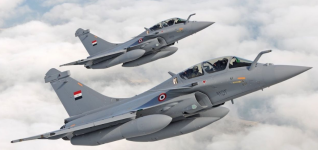
Zelenskyy confirms Rafale fighter jet talks with France as Ukraine eyes three-fighter strategy

Ukraine is holding negotiations with France over Rafale fighter jets as part of a planned shift from Soviet aircraft. Ukraine is in talks with France on the possible supply of Rafale fighter jets, President Volodymyr Zelenskyy confirmed on 28 October, Militarnyi reports. The French-made multirole Rafales could become a new component of Ukraine’s air fleet as the country transitions away from its aging Soviet aircraft during the Russian invasion. Amid the ongoing Russo-Ukrainian war, Ukraine's fighter jet fleet includes Soviet-era MiG-29s, US-made F-16s, and French-supplied Mirage 2000-5s, with Swedish JAS 39 Gripens expected to join soon. This diverse mix, driven by wartime necessity, complicates both logistics and maintenance.

Responding to an Ukrinform question, Zelenskyy said Ukraine is conducting “three parallel conversations regarding aircraft — with the Swedes, with the French, and with the Americans.” He reminded that the modernization plan for Ukraine’s air force is based on three key fighter platforms — F‑16, Gripen, and Rafale. Militarnyi notes that back in 2021—a year before Russia's full-scale invasion—French President Emmanuel Macron reportedly planned to propose Rafale jets to Ukraine to replace the Soviet‑era MiG‑29s during his visit to Kyiv. No further details of that initiative were made public, but the topic has now returned to the agenda.

The Rafale, produced by Dassault Aviation, is a 4++ generation multirole fighter able to perform all types of combat missions. One of its major advantages is the capacity to use the long‑range Meteor air‑to‑air missile developed by the MBDA consortium. According to Ukrinform, Zelenskyy called the Swedish Gripen attractive for its lower maintenance costs, shorter pilot‑training period, and ability to operate from roads. He added that Ukraine and Sweden agreed to localize Gripen production, describing that step as “a historic agreement.” Zelenskyy noted that the overall demand for new combat aircraft is around 250 planes, with 150 Gripen fighters already agreed in principle. The ongoing talks with France place Rafales alongside Gripens and F‑16s as one of three cornerstone aircraft in Ukraine’s future air‑power structure.

https://euromaidanpress.com/2025/10...rance-as-ukraine-eyes-three-fighter-strategy/

1761684359422.png
 
Zelenskyy: First Swedish Gripen jets to arrive next year in Ukraine’s largest-ever combat aviation deal

Ukrainian President Volodymyr Zelenskyy announced that the first Swedish Gripen fighter jets are expected to arrive in Ukraine next year as part of an agreement for up to 150 aircraft. The announcement follows a letter of intent signed on 22 October between Zelenskyy and Swedish Prime Minister Ulf Kristersson for the purchase of 100 to 150 new Gripen fighters, specifically the latest JAS 39 Gripen E variant. However, Kristersson clarified the timeline and nature of the agreement. The letter of intent does not provide for immediate deliveries but establishes a framework for long-term cooperation. Kristersson explained that the agreement would enable Ukraine to build substantial air force capabilities with approximately 100-150 Gripen E fighters. He characterized the deal as a long-term commitment, describing it as "a clear mutual statement and the beginning of a long journey of 10-15 years."

It's likely that a factory to build the Gripen's will be constructed in Ukraine as the SAAB plant in Sweden can only build around one Gripen a month. This would be similar to the SAAB agreement with Brazil and proposals made to Canada and India. In the meantime, older model Gripens would be supplied to Ukraine as an interim measure.

https://euromaidanpress.com/2025/10...n-ukraines-largest-ever-combat-aviation-deal/
 
Ukraine Plans 250-Aircraft Fighter Fleet, Prioritizes Swedish Gripens – Zelensky

Ukraine is working to build a fleet of 250 modern fighter aircraft, including F-16s, Swedish Gripens, and French Rafales, President Volodymyr Zelensky said Monday. The program is part of Ukraine’s long-term strategy to modernize the Ukrainian Air Force (UAF) and strengthen national security. “We are holding parallel talks with Sweden, France, and the United States. The overall goal is a fleet of 250 new aircraft. This is our future,” Zelensky said during a briefing with journalists, including RBC-Ukraine correspondent. Zelensky said Ukraine is negotiating three types of fighters. The selection of F-16s, Gripens, and Rafales is based on the experience of Ukrainian pilots and Russia’s military capabilities.

Swedish Saab JAS39 Gripen Series E


The Swedish Gripen is a priority for Ukraine. Zelensky said the jets are cheaper to maintain, pilots can be trained on them in about six months, and they can even take off from and land on roadways. The aircraft are compatible with most weapons currently used by Ukraine, from both US and European defense industries. Zelensky also announced a preliminary agreement with Sweden for 150 Saab JAS39 Gripens, including local production. “We agreed with Sweden that we will sign a contract, and Ukraine will have 150 new Gripens. This is a long road, but a very good option,” he said. On Oct. 22, Kyiv and Stockholm signed a letter of intent for Sweden’s Saab AB to sell 100-150 of the latest-generation Series E Gripen fighters to Ukraine over the next 10-15 years.

Swedish Prime Minister Ulf Kristersson hailed the planned deal as a “long-term” one, saying initial deliveries could start in roughly three years. Shortly after the two countries signed an agreement, reports emerged that Swedish arms maker Saab was considering opening a final assembly plant in Ukraine for its Gripen fighters. The Financial Times (FT), citing Saab CEO Micael Johansson, said the plant was eyeing production expansion in Brazil, and possibly in Canada and elsewhere in Europe – plus Ukraine – to cope with the high number of jets planned. “It is not so easy during a war, but it would be great to set up a capacity for at least final assembly and tests and maybe part production in Ukraine,” Johansson told the FT. Johansson said the planned deal marked a huge jump from current production numbers.

French Dassault Rafale

“President Volodymyr Zelensky said Ukraine is actively negotiating with France over a possible acquisition of Dassault Rafale fighter jets,” according to a report by independent defense and security news outlet Defense Blog. The Rafale, France’s most advanced fourth-generation-plus multirole fighter, has not been officially approved for transfer to Ukraine, which the French Defense Ministry says is still a priority for their own fighter fleet. Currently, the Mirage 2000-5F, a fourth-generation air defense fighter with air-to-air and limited air-to-ground capabilities, is the French contribution to Ukrainian air power. Zelensky confirmed that a new batch of Mirage 2000-5F fighters is slated to arrive soon, along with additional air-to-air missiles.

F-16s will be the backbone of Ukraine’s fighter fleet for now

Once Belgium transfers its promised 30 F-16s to the UAF, pending the F-35s that are replacing them, Ukraine will have a fleet of around 86 F-16AM (single-seat) and F-16BM (two-seat) Block 20 Mid-Life Update airframes. While these are some of the earliest production F-16s still in service, the Mid-Life Update (MLU) in the 2000-2010 decade brought the NATO warplanes nearly up to the current US operational F-16CM standards. These MLU aircraft also underwent significant upgrades to their electronic warfare (EW) systems before transfer to the UAF. There are no publicly known discussions about Ukraine acquiring the latest F-16V Block 70 (GE engine) or Block 72 (Pratt & Whitney engine) under contract or discussions for sale to Taiwan, Bahrain, Slovakia, Peru and other countries. Upgrading Ukraine’s fleet to Block 72 is an option that could also be explored.

Or the UAF could hold out for the fifth-generation F-35 Lightning II in its long-term plans.

Modernized fighter fleet for the UAF’s future

Zelensky said adopting these new aviation platforms will allow Ukraine to defend its skies more effectively and integrate its defense industry with Western technology standards.

https://www.kyivpost.com/analysis/63097
 
Latvia orders mass expulsions, requests NATO F-35s amid escalating Russian provocations

The Baltics are moving from protest to action. Following Russian fighter jets violating Estonian airspace and Moscow’s increasingly imperial rhetoric toward the region, Latvia has ordered the expulsion of hundreds of Russian citizens while requesting NATO F-35 patrols, closing what officials see as dangerous openings for Russian influence and potential invasion. Riga has taken a hard and visible step to avoid any precedent for Russian invasion, seeing their sovereignty being continually questioned by Russian media. Ordering mass expulsion of Russians citizens from the country, and now directly requesting additional security by NATO, the Baltics understand that Russian invasion is an all too real threat directly on their borders.

Under Soviet rule, Moscow moved large numbers of ethnic Russians into the Baltics to change local demographics. That left towns and districts where Russian-speakers are a big slice of the population, the exact communities Moscow says it now needs to protect, the same pretext it used to invade Ukraine. Because of that history, the Baltic governments treat migration and residency rules as national security, not just paperwork. Baltic capitals see Russia repeating the same Donbas playbook with them: Russia will label the Russian-speaking minority as prosecuted, giving pretext for invasion. While it also creates real human problems and business losses, ethnic Russians were given ample opportunity to come into compliance with the new immigration laws, and only those who refused are currently being expelled.

Public opinion across the Baltic States has hardened, especially as Russian state-linked media began using imperial-toned language, referring to Baltic capitals in dismissive terms that implicitly question their sovereignty; notably calling Estonia the Estland province and governate, which was its name under occupation by the Russian empire. That rhetoric normalizes the Russian claim that the post-Soviet map is contestable and feeds the question of protective responses, precisely the narrative the Baltics fear and one that Moscow might use to justify future invasion.

https://euromaidanpress.com/2025/10/17/frontline-report-2025-10-17/

View attachment 2571731

Fuck Russia. Pardon, fuck the Latvian province of Muscovy. :geek:
 
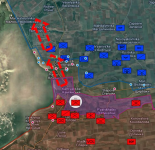
Another Upcoming Shitshow for Russia in the South

It seems the Russians have beem amassing troops for an attack in the south...

1761694458872.png1761694493026.png
 
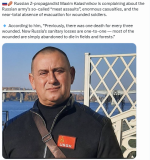
A Russian soldier fighting in Chasiv Yar says that new recruits sent to the front die almost immediately, with his own unit taking over 90% casualties. The fields are strewn with rotting corpses. To avoid having to pay compensation to relatives, collecting IDs is banned. A soldier of the 88th Reconnaissance and Sabotage Brigade "Espanyola", called Ruslan, with the callsign "Rukha", has described conditions in the fighting for Chasiv Yar over the summer of 2025, in which thousands of Russians were killed and injured. "They recruit people who don't know anything—millions are spent on [recruiting] them. They arrive—and immediately, they are 200s [dead]...They're sent to the training ground for two weeks with an rifle. Just hold it, shoot it, teach it, and that's it. That's all they do."

He says that the new recruits usually die during their first combat mission. Ruslan describes himself as "a saboteur by trade" (likely a member of a DRG, a sabotage and reconnaissance group). "There are six of us left: there were seventy, now there are six." He describes how the battlefield is littered with Russian corpses that have not been recovered and are falling apart from decay, or are trapped under the rubble of collapsed buildings: "You drive over corpses—there's no other way. It's like that, you just can't tell who you're driving over... We've got three brigades buried under slabs. "Those in the basement—they simply can't be pulled out, and those who lived on the first floor—they were all blown to pieces..."

"The road of life—it's strewn with corpses, the fields are just littered with them. Why don't they pull them out? They could be pulled out, but even if you wanted to pull them out now, they're all falling apart. You pull on his leg, and the leg comes off." According to Ruslan, his commanders have banned the men from collecting documents from fallen soldiers, because so many have been killed that it's too expensive to pay their relatives compensation for their deaths. "We used to go out and collect documents. Not corpses, but documents. Then we would bring them to the battalion commander and hand them over. Later, we were forbidden from doing this because it wasn't profitable for the Ministry of Defence..."

"Personally, when I had time, I would collect 70–80 military ID cards a day. Imagine that, in a single day. Just imagine — that's millions [of rubles in compensation], and there were about fifteen of us...Fifteen of us would go out into the field and collect them: we would arrive and find 700–800 military ID cards. Imagine how much money that is [worth] — 700–800 military ID cards."

It's going to be interesting, because a lot of these guys also enlist understanding that if they are killed, their families will get a huge payout. When they never come back and the families realize they're dead and they haven't been paid out, I cannot see the reaction being off. This is actally something the Ukrainians could utilize - collect the ID's the Russian dead and notify the families on behalf of the Russian Ministry of Defence, and advise them of the benefits due to them.

 
A Russian soldier fighting in Chasiv Yar says that new recruits sent to the front die almost immediately, with his own unit taking over 90% casualties. The fields are strewn with rotting corpses. To avoid having to pay compensation to relatives, collecting IDs is banned. A soldier of the 88th Reconnaissance and Sabotage Brigade "Espanyola", called Ruslan, with the callsign "Rukha", has described conditions in the fighting for Chasiv Yar over the summer of 2025, in which thousands of Russians were killed and injured. "They recruit people who don't know anything—millions are spent on [recruiting] them. They arrive—and immediately, they are 200s [dead]...They're sent to the training ground for two weeks with an rifle. Just hold it, shoot it, teach it, and that's it. That's all they do."

He says that the new recruits usually die during their first combat mission. Ruslan describes himself as "a saboteur by trade" (likely a member of a DRG, a sabotage and reconnaissance group). "There are six of us left: there were seventy, now there are six." He describes how the battlefield is littered with Russian corpses that have not been recovered and are falling apart from decay, or are trapped under the rubble of collapsed buildings: "You drive over corpses—there's no other way. It's like that, you just can't tell who you're driving over... We've got three brigades buried under slabs. "Those in the basement—they simply can't be pulled out, and those who lived on the first floor—they were all blown to pieces..."

"The road of life—it's strewn with corpses, the fields are just littered with them. Why don't they pull them out? They could be pulled out, but even if you wanted to pull them out now, they're all falling apart. You pull on his leg, and the leg comes off." According to Ruslan, his commanders have banned the men from collecting documents from fallen soldiers, because so many have been killed that it's too expensive to pay their relatives compensation for their deaths. "We used to go out and collect documents. Not corpses, but documents. Then we would bring them to the battalion commander and hand them over. Later, we were forbidden from doing this because it wasn't profitable for the Ministry of Defence..."

"Personally, when I had time, I would collect 70–80 military ID cards a day. Imagine that, in a single day. Just imagine — that's millions [of rubles in compensation], and there were about fifteen of us...Fifteen of us would go out into the field and collect them: we would arrive and find 700–800 military ID cards. Imagine how much money that is [worth] — 700–800 military ID cards."

It's going to be interesting, because a lot of these guys also enlist understanding that if they are killed, their families will get a huge payout. When they never come back and the families realize they're dead and they haven't been paid out, I cannot see the reaction being off. This is actally something the Ukrainians could utilize - collect the ID's the Russian dead and notify the families on behalf of the Russian Ministry of Defence, and advise them of the benefits due to them.

How about that? :)
 

But NOT from the U.S….

🤬

And things are difficult in Pokrovsk right now, thanks to DonOld & the MAGAt republican traitors betraying democracy, Ukraine and the free world.

If DonOld & the MAGAt republicans hadn’t undermined President Biden’s effort to arm Ukraine, and if DonOld & the MAGAt republicans hadn’t given aid & comfort to Putin / Russia, the war would likely be over by now, with Putin / Russia defeated and the current Russian regime overthrown.

🤬

We. Told. Them. So.

🌷
 
But NOT from the U.S….

At least we're selling stuff to them via NATO / EU

And things are difficult in Pokrovsk right now, thanks to DonOld & the MAGAt republican traitors betraying democracy, Ukraine and the free world.

Right now I think that's more a result of Ukrainian military supremen command decisions

If DonOld & the MAGAt republicans hadn’t undermined President Biden’s effort to arm Ukraine, and if DonOld & the MAGAt republicans hadn’t given aid & comfort to Putin / Russia, the war would likely be over by now, with Putin / Russia defeated and the current Russian regime overthrown.
We shall agree to disagree on that one, as ever
 

Elites Flee Putin: $100B Crisis Hits

Putin is terrified of a coup.....

Moscow is fortifying against its own reflection. Air defense batteries and Rosgvardia armor now protect power, not borders, showing a regime bracing for internal shock. Elites are voting with their feet and their capital. Reports show massive wealth transfers abroad, tightened security around Valdai, and new prosecutions targeting exiled opposition figures. That is what panic looks like inside an autocracy: defenses turning inward, markets sliding, and loyalty being priced.

Here is the strategic read.
- The economy is fracturing as capital flight widens the fiscal hole, leaving the Kremlin unable to fund both war and repression.
- The power vertical is weakening as oligarchs and insiders diversify away from Moscow.
- On the battlefield, Ukraine’s precision strikes are increasing the cost of loyalty.
- These forces converge on one outcome: political instability at the core of Putin’s system.

This channel tracks indicators, not rumors. When money moves, security hardens, and prosecutions rise together, it means the Kremlin is spending its limited focus suppressing insiders instead of confronting Ukraine or NATO. That shift creates opportunity. In this episode, we expose the financial drain, the new defensive lines around Valdai, and the fractures splitting Putin’s inner circle. We will also break down what Kyiv and the West must do next: close sanctions loopholes, expand long-range strike capabilities, and maintain relentless pressure on Russia’s war machine.

If you value verified analysis over propaganda, subscribe and share. Facts win wars.

CHAPTERS:
00:00 - Intro
01:01 - Kremlin's Top-Down Power & War Decisions
02:06 - Why Putin Needs the War to Continue
03:12 - Who is the Real Enemy Inside the Kremlin?
03:40 - Air Defense Rings and Putin's Fearful Orders
05:12 - Russia's Budget Collapse & Currency Crisis
08:07 - Historical Coups & The Weak Lion King
11:30 - Financial Distress & The Path to Regime Defeat
14:54 - Outro

 
Back
Top