For Those Who Might Be Wondering Why We Might Be In Ukraine

What is Ukraine saving its missiles for?


It looks like UKraine is building up a stockpile of missiles to target Russian energy infrastructure over winter

Deterrence by punishment. Is this an early sign that the strategic balance is tipping?

Ukraine will respond to attacks on its energy infrastructure on an eye-for-an-eye basis, targeting the Russian power grid, Zelensky recently announced. This shows that Ukraine is no longer just responding to Russian attacks but is now venturing into the realm of military deterrence. The shift is enabled by the development of the Flamingo missile, which gives Ukraine the capability to do so and appears to be stockpiled for a winter campaign.

0:00 Introduction
0:40 Ukrainian long-range capabilities
1:52 Flamingo missile
3:27 Hitting Russia's energy grid
4:18 Legal issues
4:52 The goal is deterrence
6:06 Will it work?
7:37 US providing Tomahawk missiles?
8:37 Changing power relationship
10:10 How would the Russian population react?
 

RUSSIAN DEATH STRATEGY: Ukraine Army TV clip​


It's in Ukrainian - the auto-transate English is a bit hard to follow but seems they are mocking the tactics the Russian infantry are taught when they are spotted by drones

 
A Ukrainian channel I follow -

•⁠ Journalist, military analyst Vasyl Pekhno
•⁠ Major of the Armed Forces of Ukraine, political scientist Andriy Tkachuk

The battle for Pokrovsk is reaching a new level? An important decision has been made, serious reserves are being sent there. Why is it important for us to hold on to it? Zelensky was framed with Kupyansk? His plan may fail. A very important military facility was blown up in Donetsk, Flamingo was probably used up. Is Russia preparing a radiation disaster in Zaporizhia? What are they up to with the ZNPP again? Major of the Armed Forces of Ukraine, political scientist Andriy Tkachuk and journalist Vasyl Pekhno talk about this in the new episode of the podcast.

00:00 Blog of Andriy Tkachuk and Vasyl Pekhno
01:19 Shakhedi base demolished in Donetsk
08:48 How to solve the problem of long-range KABs?
14:17 What will happen after leaving Pokrovsk?
23:05 Zelensky “on the stretch” through Kupyansk
26:14 Russia is preparing an explosion at the ZNPP?

 
Update on Pokrovsk

Ukraine will have to evacuate Pokrovsk - will Ukraine get units out with minimal losses?

 
Lavrov in disgrace and being exiled......

VLADIMIR Putin has reportedly cast aside his veteran foreign minister Sergei Lavrov in a spectacular fall from grace inside the Kremlin.

It is understood Lavrov, 75, has been “sent into disgrace” after enraging the Trump administration and being frozen out of top-level meetings.


Gunvor Cancels $22 Billion Russian Lukoil Deal After US Calls it ‘Kremlin’s Puppet’


Swiss commodity trader Gunvor said on Thursday it has withdrawn its proposal to buy foreign assets of Russian energy company Lukoil LKOH.MM after the U.S. Treasury called it Russia’s “puppet” and signaled Washington opposed the deal. The move scuttles what would have been Gunvor’s largest acquisition and underscores Washington’s attempt to use sanctions to isolate Russia and choke revenues it uses to fight the war in Ukraine. The U.S. Treasury said in a post on X that President Donald Trump “has been clear that the war must end immediately. As long as (Russian President Vladimir) Putin continues the senseless killings, the Kremlin’s puppet, Gunvor, will never get a license to operate and profit.”

Seth Pietras, Gunvor’s corporate affairs director, said in an email that Treasury’s statement was “fundamentally misinformed and false” and it welcomed “the opportunity to ensure this clear misunderstanding is corrected.” “In the meantime, Gunvor withdraws its proposal for Lukoil’s international assets,” Pietras said.

Treasury imposed sanctions on Lukoil last month in an effort to cut Russia’s revenues used in fighting the war. After Treasury imposed sanctions on Russia‘s second-largest oil company in October, Lukoil said it had accepted an offer from Gunvor to buy its foreign assets. The assets include refineries in Europe, shares in oilfields in Kazakhstan, Uzbekistan, Iraq and Mexico, and hundreds of retail fuel stations around the world.
Treasury’s input on the deal is important because it can issue licenses, or waivers, allowing transactions related to the sanctions. Even before the withdrawal, bankers and insiders said Gunvor’s biggest acquisition target to date would be difficult to complete because it was far beyond the commodity trader’s borrowing capacity.
 

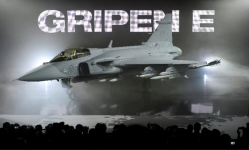
Sweden and Ukraine make progress on Gripen E fighter deal financing discussions


Sweden and Ukraine are making progress on financing a potential multi-billion-crown deal that could see Kyiv acquire up to 150 Saab JAS 39 Gripen E fighters, Swedish Defense Minister Pål Jonson told Reuters on November 6, 2025. The two governments are exploring a range of funding mechanisms that could combine Ukrainian payments with Swedish military assistance and multilateral support. If finalized, the package would represent Sweden’s largest aircraft order to date. Sweden and Ukraine signed a long-term air defense cooperation agreement on October 22, 2025, which includes the option to export the Gripen fighter jet. The letter of intent outlines a framework for between 100 and 150 aircraft, a scale that would roughly double Saab’s current production plans.

While no value has yet been disclosed, Saab’s recent sale of four Gripens to Thailand for 5.3 billion Swedish crowns ($563 million) has prompted questions about Kyiv’s ability to fund such a large purchase. The earlier Gripen C/D series was once marketed as an affordable fighter compared to other aircraft of its generation. However, the newer Gripen E/F variant, previously described by Jonson as “a modern combat aircraft that, in almost every respect, is entirely new,” comes at a significantly higher unit cost. Jonson noted that discussions on financing are “moving forward” and that Ukraine’s post-war budget capacity would be “a central part of the deal” alongside other funding sources.

Options that Stockholm is considering include credits, frozen Russian assets, and its Ukraine aid framework, set at 40 billion crowns ($4.2 billion) for 2026 and another 40 billion crowns ($4.2 billion) in 2027. The proposal has also been presented to the Coalition of the Willing, a group of 16 European countries funding Ukraine’s defense, some of which could contribute given their involvement in Gripen component production. At the same time, Sweden is pushing within the European Union to unlock €200 billion ($215 billion) in frozen Russian assets to help finance Ukraine’s war effort and post-war reconstruction.

Prime Minister Ulf Kristersson has described the Gripen agreement as “very realistic,” while noting that the first deliveries would not take place until around three years after a final contract is signed. Swedish officials have emphasized that any transfer of new-build Gripen E/F fighters would occur only once the war ends, though limited access to earlier-generation Gripen C/D jets could be considered sooner, depending on Sweden’s own transition schedule. For Ukraine, the Gripen’s dispersed basing capability, ease of maintenance, and multirole design make it an attractive option as Kyiv seeks to replace its Soviet-era fleet.

The potential Ukrainian order would require Saab to expand its production network beyond Sweden and Brazil. CEO Micael Johansson has said the company is evaluating options to “rapidly increase output,” including new assembly lines outside of Sweden. Saab is already in discussions with Bombardier about localizing Gripen production in Canada, a move that would also serve North American (Canada) and other export markets. The two companies already cooperate on the GlobalEye early warning aircraft, built on Bombardier’s Global 6000 platform. Saab recently delivered its first Gripen E to the Swedish Air Force, during a ceremony at the Skaraborg Air Wing (F 7) in Såtenäs on October 20, 2025. The model features a new engine, radar and electronic warfare suite, as well as software-driven systems that allow for rapid updates to counter evolving threats.

https://www.aerotime.aero/articles/sweden-ukraine-gripen-e-deal-financing

1762527163020.png
 

Zelenskyy on possibility of receiving Rafale aircraft:


The possibility of receiving French Rafale fighters depends on negotiations, Ukraine views this positively, President Volodymyr Zelenskyy said during a briefing on Friday.

"We will build on two platforms, with the "Gripins" everything is already taking shape, the second question is about France, here everything depends on our negotiations. We view all this positively," the president said, answering a question from an Interfax-Ukraine correspondent about progress in receiving the fighters.
 

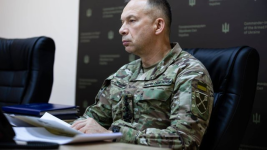
Syrsky on Instructors and Training


A good indication on the ongoing effort Ukraine is putting into continually improving their training and also into building a professional NCO corps as well as using professional instructors with combat experience. The duration of basic military training has been increased from 30 to 51 days.

The School of Instructors will begin operating in the near future, which will significantly increase the level of training of instructors and will become a platform for accumulating and transferring relevant combat experience, Commander-in-Chief of the Armed Forces of Ukraine Oleksandr Syrsky has said.

"I emphasized the inadmissibility of involving instructors in performing other tasks not related to the training of units. High-quality, professional training of soldiers requires full commitment," Syrsky wrote on Facebook on Friday following the results of the monthly meeting on the training of personnel of the Armed Forces of Ukraine.

He reported that during the meeting, the issues of integrating corps into the educational process and improving the training system of units were also discussed.

"The use of the latest technologies and tactics on the battlefield, as well as the expansion of the kill zone, require constant improvement of the training system. The main goal is to preserve the life of a Ukrainian serviceman as much as possible. Despite all the challenges, we managed to increase the duration of basic military training from 30 to 51 days. It is important to saturate it with modern elements that save lives: countering enemy drones of various types, the use of electronic warfare, tactical medicine and other critically important components," Syrsky said.

During the meeting, he heard reports on the implementation of the action plan to improve the quality of training of units. He paid special attention to staffing training centers with professional instructors with combat experience.

"We separately considered the issue of training sergeants. The changing nature of war requires a powerful corps of junior commanders. We are placing the main emphasis on the formation of leadership qualities. We are increasing the training time in this direction and expanding the program of the Leadership course. Active work is underway to train detachment commanders. This is extremely important, because their interaction during exercises allows them to exchange combat experience and quickly adapt to changing situations on the battlefield," he said.

https://en.interfax.com.ua/news/general/1118783.html

1762527639292.png
 
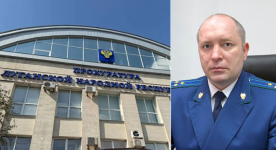
Moscow-installed prosecutor ends up dead in occupied Luhansk

A high-ranking Russian-appointed member of Luhansk occupation authorities has been found dead in occupied eastern Ukraine under unclear circumstances, according to Petro Andriushchenko, head of the Center for the Study of Occupation. Russian national Kirill Grekov, the so-called “Deputy Prosecutor General of the Luhansk People's Republic,” was reportedly discovered hanged in occupied Luhansk, as local authorities avoid commenting publicly on the case. Grekov’s body was discovered on 6 November. Grekov had been appointed by Moscow and was sent to the Russian-occupied territory to carry out key duties on behalf of Russian authorities. According to Andriushchenko, Grekov had tense relations with both local residents and so-called officials, often becoming entangled in conflicts that may have led to what was described as a “tragic end.”

Andriushchenko noted that Grekov’s death is being concealed from the public. Authorities of the so-called “LNR” have avoided making any statements about the incident, and no coverage has appeared in the regional occupation-controlled media. Obozrevatel confirmed that no information regarding Grekov’s death had been published by the “media” of the pseudo-republic. Grekov’s last appearance on the “LNR prosecutor's office” website was on 23 August 2025. Grekov, a Russian policeman from Rostov, was appointed to the “LNR” in late 2022 directly to the position of so-called deputy prosecutor. He is listed in the Myrotvorets database, which gathers personal information on Russians and collaborators involved in Russia’s war against Ukraine.

His appointment came just months after an earlier deadly incident in the same office. In 2022, the so-called then “LNR Prosecutor General” Sergei Gorenko and his deputy Yekaterina Steglenko were killed when an explosive device detonated inside Gorenko’s office. It remains unclear whether their deaths were the result of internal purges aimed at replacing pro-Russian locals with Russians, or a targeted operation by Ukraine’s Security Service. At the time, the Office of the President of Ukraine referred to the deaths as a “conflict among criminals.”

The current so-called “LNR Prosecutor General” is Gleb Mikhailov, a Russian citizen from Dagestan who will likely also come to a 'tragic end" in time.

https://euromaidanpress.com/2025/11...luhansk-under-suspicious-silence-sources-say/

1762530799579.png
 

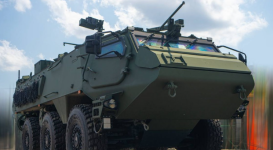
Latvia Completes Delivery of 42 x Patria 6x6 Armored Vehicles for Ukraine's Special Operations Forces


kraine has officially received the final batch of the Patria 6x6 armored personnel carriers from Latvia. The transfer ceremony took place at the Ādaži military base near Riga, attended by Ukrainian Prime Minister Denys Shmyhal and Latvian Defense Minister Andris Spruds. During the ceremony, Denys Shmyhal expressed gratitude to the Latvian government and the people of Latvia for their consistent support of Ukraine. He emphasized that the newly delivered armored vehicles will soon be handed over to Ukraine's Special Operations Forces, further strengthening their mobility and protection on the battlefield.

With this shipment, Latvia has completed the transfer of all 42 promised Patria 6x6 armored personnel carriers to Ukraine. The delivery was carried out in three batches: the first in July, the second in September, and the final one in November. Earlier reports indicated that the first vehicles were assigned to the 3rd Separate Assault Brigade. The speed of delivery stands out as particularly impressive. Only about three months passed between the handover of the first and last batches. Considering production and transport times, Latvia managed to complete the entire transfer of 42 vehicles in less than a year. Latvia's ability to meet such deadlines is even more remarkable given that its production rate for the Patria armored vehicles had previously been estimated at around 30 units per year. For comparison, it took the Latvian army three years from signing its own contract to producing and receiving its first domestically built Patria vehicles.

Latvia supplied the vehicles in a basic configuration, armed with heavy machine guns. However, discussions continue about how Ukraine might further equip or modify the Patria 6x6 units to meet its operational needs, including potential installations of additional weapon stations or advanced protection systems.

The completion of this delivery demonstrates Latvia's strong commitment to supporting Ukraine's defense and underlines the growing cooperation between NATO allies and Kyiv. The Patria 6x6s will now serve in some of Ukraine's most capable and flexible units, those of the Special Operations Forces, enhancing their ability to conduct fast, protected, and decisive missions.

https://en.defence-ua.com/weapon_an...ukraines_special_operations_forces-16401.html

1762531019257.png
 

The News Out of Ukraine Today Is Absolutely Wild


Russian Volgograd Oil Refinery halts operations
Ukrainian Special Forces struck several oil facilities and storage depots in Crimean
Luhansk - Kirill Grekov, so-called Russian Gauleiter of the LNR, was found hanged
Russians are feeding anti-Ukrainian propaganda to MAGA

 
Ukraine's Official New IFV.....the Lynx KF41

Meet the Lynx KF41, the new backbone of Ukraine’s mechanized army. Under a landmark deal with Germany’s Rheinmetall, Ukraine will begin producing the Lynx domestically, turning from a patchwork of donated vehicles into a unified, standardized, NATO-grade force.

In this video, I break down why the Lynx is a huge leap forward for Ukraine’s ground forces. Built with modular architecture, it can switch roles in hours; troop carrier today, command post tomorrow. It’s equipped with the LANCE 2.0 turret, a 35mm Wotan cannon, and optional Spike anti-tank missiles, giving it the firepower to chew through Russian BMPs and even challenge older tanks. With modular armor, mine-resistant seating, and Rheinmetall’s StrikeShield active protection system, the Lynx keeps crews alive even when the battlefield turns into chaos. And it moves… fast. A 1,140-horsepower engine gives it highway-level speed while carrying eight fully armed infantry.

I’ll explain how Ukraine tested the Lynx in 2024, why it passed every trial, and what this means for the country’s future military industry. This isn’t just another aid package. It’s an industrial revolution inside a warzone.

By late 2025, Ukraine will start assembling Lynx vehicles inside its borders—marking the first time since World War II that a nation under attack has built brand-new armored vehicles at home. Rheinmetall and Ukraine’s Ukroboronprom are building the factories, training local workers, and setting up a production ecosystem that will outlast the war itself. This is the shift from survival to sovereignty. From receiving weapons to building them. For Germany, this partnership is a long-term bet; a way to help Ukraine stand on its own while revitalizing Europe’s defense industry. For Ukraine, it’s a declaration: “We’re not just fighting to survive. We’re building to win.”

When these Lynxes start rolling off Ukrainian assembly lines, it will be history in motion.

Glory to Ukraine. Glory to the heroes.


Ukraine STRIKES HARD... Russian Frontline Base BURNS in MASSIVE Fireball


Ukraine just struck a massive blow against Russia’s deadly Shahed drone fleet. A huge explosion in occupied Donetsk has wiped out a major Russian drone base holding up to 1,000 Shaheds and 1,500 warheads. This devastating attack cripples Russia’s ability to terrorize Ukrainian cities this winter—and costs Putin millions. Here’s how Ukraine pulled it off, what it means for the war, and why Russia’s drone campaign may finally be collapsing.


Russia’s Collapse Has Begun


Inside Russia tonight, the system is breaking down from every direction. On the front line, an entire brigade has been paralyzed not by enemy fire but by dysentery. Soldiers are living in unsanitary conditions while commanders ignore them. This is not just a health crisis. It is a symbol of a superpower that can no longer maintain its own army. The Russian military is sick, under-supplied, and demoralized. Units are now reporting mass desertions, fragging of officers, and collapsing logistics networks.

Behind the front, partisans inside Russia are destroying railway lines, locomotives, and depots that once carried weapons and ammunition to the war. The sabotage is growing. It is Russians themselves who are turning against the system that once ruled them through fear.

At the same time, Russia’s war machine is burning from within. Drone strikes have destroyed key power plants and refineries, including the Kostroma facility that once powered central Russia. Explosions at Tuapse and Volgograd have crippled oil exports. For the first time, Moscow admits that it cannot keep up with the losses. Each strike exposes how fragile the state has become.

Economically, Russia is now in freefall. The Finance Ministry confirms a massive shortfall in oil and gas revenue. The ruble is sinking. Foreign reserves are being sold off to fund the war. Inflation is soaring. In cities across the country, people are running out of fuel, food prices are climbing, and unemployment is spreading. Taxes are being raised on ordinary Russians while elites continue to hoard what remains. This is a government that has run out of money and trust.

The Kremlin knows what is coming. Inside its own propaganda, officials are warning of unrest and civil war. They fear that the same historical cycle that destroyed the empire in 1917 and the Soviet Union in 1991 is repeating itself. The same pattern of war, economic collapse, and public anger is visible again.

Even Russia’s allies are beginning to distance themselves. Serbia hints that it is selling ammunition to Europe. China and India are cutting oil deals. NATO has officially won the production war. The West now produces more ammunition than Russia can ever match. The balance has turned.

This is not coincidence. It is total system failure. Russia’s military, industrial, economic, and political structures are collapsing together. What was once seen as a permanent regime is now rotting from within.

As a correspondent in Kyiv, I see how these changes unfold in real time. Ukraine is fighting not only for survival but for the stability of Europe itself. If you want to help bring drones and technology to the Ukrainian soldiers who defend freedom, check the pinned comment below for how you can donate directly.

Please like this video, share it, and subscribe to this channel. Confirm that you are still subscribed as we near 250,000 supporters. Together we can make sure the world understands the truth of what is happening inside Russia and why it matters for all of us.

CHAPTERS:

0:00 Russia’s Collapse Has Begun
0:45 Total System Failure on the Frontline
2:22 Dysentery, Sabotage, and a Broken Army
4:10 Russia’s War Machine Is Burning
5:58 Energy Grid and Industry in Ruins
7:25 The Economic Freefall
9:03 Tax Raids and Public Desperation
10:32 The Fear of Revolution Returns
12:06 Historical Parallels: 1917 and 1991
13:40 Putin’s Elite Panic and NATO’s Advantage
15:05 Why Russia’s Fall Is Inevitable
15:55 Support Ukraine and Stay Informed

 
Update on Pokrovsk

Ukraine will have to evacuate Pokrovsk - will Ukraine get units out with minimal losses?


Ukraine is going to squeeze every ounce of attrition out of Pokrovsk that it can.

The Russians want Pokrovsk so badly??? OK, try and take it completely- at an unbelievably high cost - while Ukraine simultaneously continues to destroy critical targets inside Russia.

And if Russia did / does manage to completely occupy the ruins of Pokrovsk with significant numbers of Russian forces, well… Ukraine has Flamingos ready to land on those forces (and Flamingos would likely be faaaaar more successful attacking Pokrovsk than they have been with those deep strikes inside Russia).

👍

Slava Ukraini!!!

🇺🇦
 
Time for some decidedly anti-Russian memes.
Just in case anyone is unclear on my bias allow me to say, "FUCK RUSSIA!!!" :nana:


PootyPoot.jpg

i-asked-chatgpt-to-show-vladimir-putin-dancing-shirtless-on-v0-3xfv6qyacv2c1.png
 
Back
Top