Navigation
Install the app
How to install the app on iOS
Follow along with the video below to see how to install our site as a web app on your home screen.
Note: This feature may not be available in some browsers.
More options
You are using an out of date browser. It may not display this or other websites correctly.
You should upgrade or use an alternative browser.
You should upgrade or use an alternative browser.
The 50 Plus Cafe, Pub, All-Nite Greasy Spoon and Dive Bar
- Thread starter Wonderer67
- Start date


Missk_2022
Virgin
- Joined
- Apr 30, 2022
- Posts
- 10,080
Uphill through waist deep mud carrying a 100 lb weight

Wonderer67
Optimistic nihilist
- Joined
- Sep 25, 2020
- Posts
- 19,507
Thanks!How's things over the pond, good day all, not sure what times you have there
After literally a week of cold and rainy weather, we got a really nice sunny day. 65 Fahrenheit, maybe 20 Celsius…

likes2watchU
I need a nap
- Joined
- Jun 6, 2009
- Posts
- 16,156
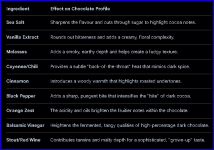
There are so many different things you can play with when cooking with chocolate. Mind boggling amounts of variations IMO.Maybe there is something other than coffee that has bitter flavors you could try?
Depends on what you want to enhance/add to the mix
Here are some of the most common ones:
Here's a similar table for tea:
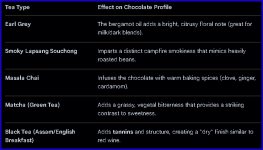
To infuse liquids like tea or wine into your chocolate batter without ruining the consistency, you generally use one of two methods: liquid replacement or flavor extraction.
The goal is to maintain the total "wet-to-dry" ratio of your original recipe so the cake doesn't become gummy or sink.
1. The Liquid Replacement Method
If your recipe calls for water or milk, you can replace that volume 1:1 with your infused liquid.
For Tea: Brew the tea at triple strength using the water or milk already required by the recipe. For example, if a recipe needs 250ml of milk, gently heat it and steep 4–5 tea bags for 10 minutes.
Pro Tip: Re-measure the liquid after straining, as the tea leaves or bags will absorb some of it. Top it back up to the original required volume.
For Wine: Simply swap out a portion of the water or milk for your wine. For a subtle depth, replace about 25% of the liquid; for a "Red Wine Chocolate Cake" style, you can replace up to 100% of the liquid with a bold red.
2. The Flavor Extraction Method (The "Bloom")
In chocolate baking, adding hot liquid is a secret hack to "bloom" the cocoa powder. This releases the natural oils and intensifies the dark chocolate flavor.
Blooming with Tea: Instead of just using boiling water to bloom your cocoa, use boiling hot, high-strength tea. This provides both the chemical "bloom" and the aromatic tea undertones simultaneously.
Infusing the Fats: Tea flavors are often fat-soluble. You can gently heat the butter or oil from your recipe and steep the tea leaves directly in the fat for 5–10 minutes. Strain carefully before proceeding with your recipe as normal.
3. Dry Infusions
If you don't want to mess with the liquid ratios at all, you can add flavor through the dry ingredients:
Microground Tea: Finely grind tea leaves (like Earl Grey or Matcha) into a powder using a spice grinder and whisk them directly into your flour.
Sugar Blitz: Pulse tea leaves with your granulated sugar in a blender before creaming it with butter to distribute the aroma evenly throughout the crumb.

joclfc
Doting Grandfather
- Joined
- Jul 26, 2019
- Posts
- 7,170
Tea or herbal/ green tea?There are so many different things you can play with when cooking with chocolate. Mind boggling amounts of variations IMO.
Depends on what you want to enhance/add to the mix
Here are some of the most common ones:
View attachment 2601807
Here's a similar table for tea:
View attachment 2601806
To infuse liquids like tea or wine into your chocolate batter without ruining the consistency, you generally use one of two methods: liquid replacement or flavor extraction.
The goal is to maintain the total "wet-to-dry" ratio of your original recipe so the cake doesn't become gummy or sink.
1. The Liquid Replacement Method
If your recipe calls for water or milk, you can replace that volume 1:1 with your infused liquid.
For Tea: Brew the tea at triple strength using the water or milk already required by the recipe. For example, if a recipe needs 250ml of milk, gently heat it and steep 4–5 tea bags for 10 minutes.
Pro Tip: Re-measure the liquid after straining, as the tea leaves or bags will absorb some of it. Top it back up to the original required volume.
For Wine: Simply swap out a portion of the water or milk for your wine. For a subtle depth, replace about 25% of the liquid; for a "Red Wine Chocolate Cake" style, you can replace up to 100% of the liquid with a bold red.
2. The Flavor Extraction Method (The "Bloom")
In chocolate baking, adding hot liquid is a secret hack to "bloom" the cocoa powder. This releases the natural oils and intensifies the dark chocolate flavor.
Blooming with Tea: Instead of just using boiling water to bloom your cocoa, use boiling hot, high-strength tea. This provides both the chemical "bloom" and the aromatic tea undertones simultaneously.
Infusing the Fats: Tea flavors are often fat-soluble. You can gently heat the butter or oil from your recipe and steep the tea leaves directly in the fat for 5–10 minutes. Strain carefully before proceeding with your recipe as normal.
3. Dry Infusions
If you don't want to mess with the liquid ratios at all, you can add flavor through the dry ingredients:
Microground Tea: Finely grind tea leaves (like Earl Grey or Matcha) into a powder using a spice grinder and whisk them directly into your flour.
Sugar Blitz: Pulse tea leaves with your granulated sugar in a blender before creaming it with butter to distribute the aroma evenly throughout the crumb.

dkak001
Very Experienced-ish
- Joined
- Aug 8, 2006
- Posts
- 4,151
Somehow, I figured you'd have some input on the subject.There are so many different things you can play with when cooking with chocolate. Mind boggling amounts of variations IMO.
Depends on what you want to enhance/add to the mix
Here are some of the most common ones:
View attachment 2601807
Here's a similar table for tea:
View attachment 2601806
To infuse liquids like tea or wine into your chocolate batter without ruining the consistency, you generally use one of two methods: liquid replacement or flavor extraction.
The goal is to maintain the total "wet-to-dry" ratio of your original recipe so the cake doesn't become gummy or sink.
1. The Liquid Replacement Method
If your recipe calls for water or milk, you can replace that volume 1:1 with your infused liquid.
For Tea: Brew the tea at triple strength using the water or milk already required by the recipe. For example, if a recipe needs 250ml of milk, gently heat it and steep 4–5 tea bags for 10 minutes.
Pro Tip: Re-measure the liquid after straining, as the tea leaves or bags will absorb some of it. Top it back up to the original required volume.
For Wine: Simply swap out a portion of the water or milk for your wine. For a subtle depth, replace about 25% of the liquid; for a "Red Wine Chocolate Cake" style, you can replace up to 100% of the liquid with a bold red.
2. The Flavor Extraction Method (The "Bloom")
In chocolate baking, adding hot liquid is a secret hack to "bloom" the cocoa powder. This releases the natural oils and intensifies the dark chocolate flavor.
Blooming with Tea: Instead of just using boiling water to bloom your cocoa, use boiling hot, high-strength tea. This provides both the chemical "bloom" and the aromatic tea undertones simultaneously.
Infusing the Fats: Tea flavors are often fat-soluble. You can gently heat the butter or oil from your recipe and steep the tea leaves directly in the fat for 5–10 minutes. Strain carefully before proceeding with your recipe as normal.
3. Dry Infusions
If you don't want to mess with the liquid ratios at all, you can add flavor through the dry ingredients:
Microground Tea: Finely grind tea leaves (like Earl Grey or Matcha) into a powder using a spice grinder and whisk them directly into your flour.
Sugar Blitz: Pulse tea leaves with your granulated sugar in a blender before creaming it with butter to distribute the aroma evenly throughout the crumb.


PersonalFavors
Voyeur
- Joined
- Aug 7, 2021
- Posts
- 2,738
Don't do it!And too many years of experience. My sinuses were so bad, the doctor showed me the X ray and said he couldn’t see the sinuses due to the congestion and inflammation. Guess what was next? Yep surgery and I don’t wish that on my enemy!

B2fromA2looking4U
Enjoy the moment
- Joined
- Oct 6, 2022
- Posts
- 10,201
Exactly. I was desperate as the inflammation was also an infection. That infection was too close to the brain. So I really did not have much choice. Still, my advice is to prevent the sinuses getting so bad they are infected. That was about 20 years ago.Don't do it!
PersonalFavors
Voyeur
- Joined
- Aug 7, 2021
- Posts
- 2,738
I could not fall asleep last night either. I saw 1:58 the last time I remembered. Woke at 7:30 and it was dark so I retried and 9:54. Got up and a bit more productive. First full run through of taxes almost complete. Considered a job, but relocation seems so far away financially at this point I have to reconsider.Man did i fall the daylight savings time test?
Crappy sleep two hours behind
Missk_2022
Virgin
- Joined
- Apr 30, 2022
- Posts
- 10,080
Most of these things ruin good chocolate.... i am good with my big elm chocolate mayo cake and my ghiradelli back of the bacg choc chip cookies with guittard choc chips..... hahahahaThere are so many different things you can play with when cooking with chocolate. Mind boggling amounts of variations IMO.
Depends on what you want to enhance/add to the mix
Here are some of the most common ones:
View attachment 2601807
Here's a similar table for tea:
View attachment 2601806
To infuse liquids like tea or wine into your chocolate batter without ruining the consistency, you generally use one of two methods: liquid replacement or flavor extraction.
The goal is to maintain the total "wet-to-dry" ratio of your original recipe so the cake doesn't become gummy or sink.
1. The Liquid Replacement Method
If your recipe calls for water or milk, you can replace that volume 1:1 with your infused liquid.
For Tea: Brew the tea at triple strength using the water or milk already required by the recipe. For example, if a recipe needs 250ml of milk, gently heat it and steep 4–5 tea bags for 10 minutes.
Pro Tip: Re-measure the liquid after straining, as the tea leaves or bags will absorb some of it. Top it back up to the original required volume.
For Wine: Simply swap out a portion of the water or milk for your wine. For a subtle depth, replace about 25% of the liquid; for a "Red Wine Chocolate Cake" style, you can replace up to 100% of the liquid with a bold red.
2. The Flavor Extraction Method (The "Bloom")
In chocolate baking, adding hot liquid is a secret hack to "bloom" the cocoa powder. This releases the natural oils and intensifies the dark chocolate flavor.
Blooming with Tea: Instead of just using boiling water to bloom your cocoa, use boiling hot, high-strength tea. This provides both the chemical "bloom" and the aromatic tea undertones simultaneously.
Infusing the Fats: Tea flavors are often fat-soluble. You can gently heat the butter or oil from your recipe and steep the tea leaves directly in the fat for 5–10 minutes. Strain carefully before proceeding with your recipe as normal.
3. Dry Infusions
If you don't want to mess with the liquid ratios at all, you can add flavor through the dry ingredients:
Microground Tea: Finely grind tea leaves (like Earl Grey or Matcha) into a powder using a spice grinder and whisk them directly into your flour.
Sugar Blitz: Pulse tea leaves with your granulated sugar in a blender before creaming it with butter to distribute the aroma evenly throughout the crumb.
Lilianna and i had this convo last night.... no herbs, sticks, plants, veggies or vinegar in the sweet stuff.
Missk_2022
Virgin
- Joined
- Apr 30, 2022
- Posts
- 10,080
Everyone is outside.....
I am baking chicken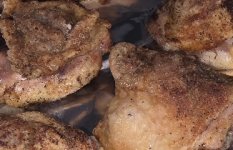
I am baking chicken

Greylag
Very Experienced
- Joined
- Nov 25, 2023
- Posts
- 3,377
You and Lili have it right … don’t contaminate chocolate!Most of these things ruin good chocolate.... i am good with my big elm chocolate mayo cake and my ghiradelli back of the bacg choc chip cookies with guittard choc chips..... hahahaha
Lilianna and i had this convo last night.... no herbs, sticks, plants, veggies or vinegar in the sweet stuff.
likes2watchU
I need a nap
- Joined
- Jun 6, 2009
- Posts
- 16,156
likes2watchU
I need a nap
- Joined
- Jun 6, 2009
- Posts
- 16,156
I may have asked the web for a simple chart... but I've watched a show or two. Some of the creations made with chocolate?Somehow, I figured you'd have some input on the subject.


It's one of many subjects I find fascinating but have no desire to try/do.

likes2watchU
I need a nap
- Joined
- Jun 6, 2009
- Posts
- 16,156
Just like mixing drinks... makes no sense to use top shelf if you're adding a bunch of mixers.Most of these things ruin good chocolate.... i am good with my big elm chocolate mayo cake and my ghiradelli back of the bacg choc chip cookies with guittard choc chips..... hahahaha
Lilianna and i had this convo last night.... no herbs, sticks, plants, veggies or vinegar in the sweet stuff.
Save top shelf for solitary sipping/nibbling.
You want decent but mid-range
Just my 2 cents

likes2watchU
I need a nap
- Joined
- Jun 6, 2009
- Posts
- 16,156
While I've zero doubt that chicken will be tasty AF... it feels a bit unfair that you're inside cooking again.Everyone is outside.....
I am baking chicken
Missk_2022
Virgin
- Joined
- Apr 30, 2022
- Posts
- 10,080
Right!!You and Lili have it right … don’t contaminate chocolate!
People trying to get all fancy
Missk_2022
Virgin
- Joined
- Apr 30, 2022
- Posts
- 10,080
At least its for meWhile I've zero doubt that chicken will be tasty AF... it feels a bit unfair that you're inside cooking again.
Missk_2022
Virgin
- Joined
- Apr 30, 2022
- Posts
- 10,080
My chicken was delicious.... stomach is full
PersonalFavors
Voyeur
- Joined
- Aug 7, 2021
- Posts
- 2,738
I'm doing chicken again tonight. But I am doing it outside. Its 7pm and still light outside! Feels like summer and we haven't had spring yet.My chicken was delicious.... stomach is full
Missk_2022
Virgin
- Joined
- Apr 30, 2022
- Posts
- 10,080
I have all the windows openI'm doing chicken again tonight. But I am doing it outside. Its 7pm and still light outside! Feels like summer and we haven't had spring yet.
Missk_2022
Virgin
- Joined
- Apr 30, 2022
- Posts
- 10,080
I cooked ALOT of chicken. Gonna use some of it for chicken saladI'm doing chicken again tonight. But I am doing it outside. Its 7pm and still light outside! Feels like summer and we haven't had spring yet.
Similar threads

- Replies
- 33
- Views
- 5K

Share: