Words peculiar to different English speaking countries.

Away from nouns, the word 'gotten' has become such a standard part of US English that it's included in spell checkers. In my part of the UK, at least, it's totally non-existent, and it's an enduring frustration of mine when I write something in standard British and the spellchecker or autocorrect flags it and wants to replace it with 'gotten'.

For example: "I wasn't sure what I had done to have got myself into this situation." -> "I wasn't sure what I had done to have gotten myself into this situation."
 
People are critical of UK English people not learning foreign languages, but we have to be conversant in maybe twenty different dialects of Ingleesh - even within our own country. I can understand most word-accent combos with the exception of Rap and Indian-English-modom.
 
Away from nouns, the word 'gotten' has become such a standard part of US English that it's included in spell checkers. In my part of the UK, at least, it's totally non-existent, and it's an enduring frustration of mine when I write something in standard British and the spellchecker or autocorrect flags it and wants to replace it with 'gotten'.

For example: "I wasn't sure what I had done to have got myself into this situation." -> "I wasn't sure what I had done to have gotten myself into this situation."
I remember these perfect constructions: ‘sleepen, waiten, drunken, talken, walken, as well as eaten, spoken, fallen etc. Gotten seems to have survived in standard American English; in British Standard (School) English few …en constructions seem to have survived into adulthood.

I would follow 'had done' with 'get'. No need to say it twice.
 
People are critical of UK English people not learning foreign languages, but we have to be conversant in maybe twenty different dialects of Ingleesh - even within our own country. I can understand most word-accent combos with the exception of Rap and Indian-English-modom.
A couple of the books in the Rivers of London series are narrated by a teenage girl from London, and sometimes it's a struggle to follow what she's saying. Particular in the audiobook versions.
 
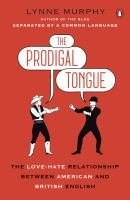
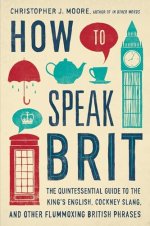
Two items to consider:

The prodigal tongue : the love-hate relationship between American and British English
by Murphy, M. Lynne

tlccontent.jpg

How to Speak Brit: The Quintessential Guide to the King's English, Cockney Slang, and Other Flummoxing British Phrases
by Christopher J. Moore

1592408982.01._SX400_SCLZZZZZZZ_.jpg
 
As an American, I'm not sure I understand what "posh" means, in Brit terms.
Is it related to net worth? Education? Physical appearance?

Or is it simply a word that separates the haves from the have nots, the estate owners from servants.

The latter is my guess, since, historically, the royals always made a point to separate themselves from "commoners", and made sure everyone knew the difference.
 
As an American, I'm not sure I understand what "posh" means, in Brit terms.
Is it related to net worth? Education? Physical appearance?

Or is it simply a word that separates the haves from the have nots, the estate owners from servants.

The latter is my guess, since, historically, the royals always made a point to separate themselves from "commoners", and made sure everyone knew the difference.
Nah, posh has never been taken seriously: nice set of china? Well that’s posh innit? Port out starboard home is maybe a myth about which side of the boat you book for travel to India to avoid the sun.
People don’t respect fixed classes anymore but we do respect integrity and intelligence- that’s if you can find it.
 
From the great southland of the USA, yonto, aways over yonder, a ferpiece, yistida, hankering, ifen, fixin' to, might could, haden't aughtto. Jeet? (did you eat yet?), nekkid, hissy fit. How's yer mama'n'em? Air-up. Darn Tootin' we'ins gots our own language.
 
Only Brits, Scots, Irish, Aussies, and Kiwis seem to use wanker, lorry, fop, flat as apartment, boot as trunk, and torch as flashlight to name a few things. As a Texan, I had to look up those terms when I first heard them.

There’s only one Canadian I’ve heard use the word “bub” to refer to people. It may have died off in a previous generation other than Wolverine of the X-Men.

Only in the western USA have I heard “y’all.”
 
Posh is always what someone else is, to separate them from you. When I was a kid, having a freezer and buying Viennetta was posh. Hyacinth Bucket is trying to become posh by her standards, which would be middle-middle-class.

The real posh people (upper middle class and the tiny upper class) consider themselves smart not posh, and only use posh ironically.

It's mostly related to background - did your family get given land by William the Conqueror or some king soon after? If your family only acquired money or a title later, about four generations and a nice country pile are needed to become part of the Establishment rather than nouveau riche. "The kind of man who has to buy his own furniture" was a criticism of one of Thatcher's Cabinet about another - meaning, 'jumped-up little oik'.

There is a subtle behaviour code and typical appearance and obvious association with money, but you can be pretty cash-poor yet still one of the smart set. Family piles (manor houses) needing huge amounts of repairs, often handled by letting the National Trust run the house all bar a wing for the family, are a cliche.
 
Only Brits, Scots, Irish, Aussies, and Kiwis seem to use wanker, lorry, fop, flat as apartment, boot as trunk, and torch as flashlight to name a few things. As a Texan, I had to look up those terms when I first heard them.
I think you'll find that the usage is endemic in the Commonwealth. Zimbabweans and South Africans definitely use boot, flat, lorry, wanker and torch.

Also, a truck is an articulated lorry. An american truck is a double cab or single cab pick up, abbreviated as single or double cab.
 
Last edited:
Only Brits, Scots, Irish, Aussies, and Kiwis seem to use wanker, lorry, fop, flat as apartment, boot as trunk, and torch as flashlight to name a few things. As a Texan, I had to look up those terms when I first heard them.

There’s only one Canadian I’ve heard use the word “bub” to refer to people. It may have died off in a previous generation other than Wolverine of the X-Men.

Only in the western USA have I heard “y’all.”
Scots are still Brits at the time of writing.

'Bab' is a common endearment in Birmingham (the England one).

Youse is used for plural you in parts of the UK, mainly in Scotland. Always startled me when my Polish Midwestern grandma used it too.
 
Back
Top