On this Day in History

Whisky a Go Go 1963 opens

The Whisky a Go Go (informally nicknamed The Whisky) is a historic nightclub in West Hollywood, California, United States. It is located at 8901 Sunset Boulevard on the Sunset Strip, corner North Clark Street, opposite North San Vicente Boulevard, northwest corner. The club played a central role in the Los Angeles music scene from the 1960s through the 1990s.

In 1958, the first Whisky a Go Go in the United States opened in Chicago, Illinois, on the corner of Rush and Chestnut streets. It has been called the first real American discothèque. A franchise was opened in 1966 on M Street in the Georgetown section of Washington, D.C., by restaurateur Jacques Vivien.

It owes its name to the first discothèque, the Whisky à Gogo, (à gogo, meaning, in French, "in abundance", "galore"), established in Paris in 1947 by Paul Pacini (d. 2017), which itself took the name from the movie Whisky Galore! based on the British novel Whisky Galore which was released in France as Whisky a Gogo.

The Sunset Strip Whisky was founded by Elmer Valentine, Phil Tanzini, Shelly Davis, and attorney Theodore Flier and opened on January 16, 1964. In 1966, Valentine, Lou Adler, and others founded The Roxy Theatre. In 1972, Valentine, Adler, Mario Maglieri and others started the Rainbow Bar & Grill on the Sunset Strip. Lou Adler bought into the Whisky in the late 1970s. Valentine sold his interest in the Whisky a Go Go in the 1990s but retained an ownership in the Rainbow Bar & Grill and the Roxy Theatre until his death in December 2008.
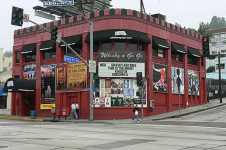
1768574869102.png
 
I saw so many great acts there, from Robin Trower to the then Mystic Knights of the Oingo Boingo.

I guess it's still open, but I don't want to see the bands that play there anymore.
 
Last edited:
On this date in 1953, a prototype Chevrolet Corvette sports car made its debut at General Motors’ (GM) Motorama auto show at the Waldorf-Astoria Hotel in New York City.

More than 45,000 people ogled the new concept car—so many that police had to step in to control the crowd. GM had never intended to turn this concept car into a production model, but design executive Harley J. Earl realized its potential, and the company soon began manufacturing actual working versions.

The Corvette, named for a fast type of naval warship, would eventually become an iconic American muscle car and remains in production today, with numerous changes in body design.


In 1962, Chevrolet rolled out the iconic Mako Shark 1 Corvette, arguably the most popular body style of all Corvettes:

The Mako Shark 2 followed in 1965
 
Last edited:
1991 Operation Desert Storm begins, with US-led coalition forces bombing Iraq, during the Gulf War


The Gulf War was an armed conflict between Iraq and a 42-country coalition led by the United States. The coalition's efforts were in two phases: Operation Desert Shield, which marked the military buildup from August 1990 to January 1991; and Operation Desert Storm, from the bombing campaign against Iraq on 17 January until the American-led liberation of Kuwait on 28 February.

On 2 August 1990, Iraq, governed by Saddam Hussein, invaded neighboring Kuwait and occupied the country within two days. The invasion was primarily over Kuwait's alleged slant drilling in Iraq's Rumaila oil field, and Iraq's large debt to Kuwait from the recently ended Iran–Iraq War. After a brief rump puppet government known as the Republic of Kuwait, Iraq split Kuwait's territory, absorbing the north into Basra Governorate, and establishing Kuwait Governorate in the south.

The invasion of Kuwait was met with immediate international condemnation. The UN Security Council demanded Iraq's immediate withdrawal and imposed a total embargo on products from Iraq and Kuwait. The coalition began a military buildup in the Persian Gulf region. The broadest military alliance since World War II, its largest contributors were the US, Saudi Arabia, the United Kingdom, and Egypt.

The Security Council issued an ultimatum to Iraq on 29 November 1990, expiring on 15 January 1991, to withdraw from Kuwait, with member-states thereafter empowered to use "all necessary means" to force withdrawal. On 17 January, the coalition began aerial and naval bombardment of Iraq and Kuwait, which continued for five weeks. Iraq fired missiles at Israel and at Saudi Arabia but failed to provoke the Israeli military response it hoped would split Muslim-majority countries from the coalition. On 24 February 1991, the coalition launched a decisive ground assault liberating Kuwait and promptly advancing into Iraqi territory. The coalition halted its ground advance after one hundred hours and declared a ceasefire.

In the war's aftermath, the Iraqi government suppressed a series of uprisings until 5 April 1991. Coalition countries responded by establishing two no-fly zones over Iraq's north and south. The United Nations Special Commission sought to end Iraq's weapons of mass destruction programs. In 2003, another US-led coalition invaded and occupied Iraq, beginning the Iraq War.

The conflict's environmental impact included Iraqi forces causing over six hundred oil well fires and the largest oil spill in history until that point. US bombing and demolition of Iraqi chemical weapons facilities were concluded to be the primary cause of Gulf War syndrome, experienced by over 40% of US veterans.

The conflict introduced live news broadcasts from the front lines of the battle, principally by American network CNN. It earned the nickname Video Game War, after the daily broadcast of images from cameras onboard American military aircraft. Considered the "first space war", the US adopted satellite-based reconnaissance, communications, and GPS navigation. Precision-guided munitions and a stealth aircraft, the F-117 Nighthawk, were novel features of the air war. The largest tank battles in American military history were fought, surpassed only by the Battle of the Bulge: the Battle of Medina Ridge, the Battle of Norfolk, and the Battle of 73 Easting.
 
On this date in 1985, legendary filmmaking brothers Joel and Ethan Coen (Raising Arizona, Fargo, No Country for Old Men) saw the debut of their first film, the hard-boiled, often gruesome black comedy Blood Simple.

The film, co-written and co-directed (although only Joel received credit) by the brothers, told the story of Julian Marty (played by Dan Hedaya), a bar owner who hires a private detective (M. Emmett Walsh) to follow his wife (Frances McDormand). When the detective finds out that Marty’s wife is two-timing him with a handsome bartender (John Getz), Marty hires the detective to kill the pair.

Blood Simple won the Grand Jury Prize at the Sundance Film Festival, which had recently been taken over by Robert Redford’s Sundance Institute and is now held in Park City, Utah, every January. Building on the buzz of that award, the entertainment media went crazy over the two young brothers, comparing their debut with the work of such luminaries as Orson Welles, Alfred Hitchcock and Sergio Leone.

 
1980 Pink Floyd's double album "The Wall" hits #1

The Wall is the eleventh studio album by the English rock band Pink Floyd, released on 30 November 1979 by Harvest/EMI and Columbia/CBS Records. It is the last album to include all four post-Barrett-era band members. The album is a rock opera which follows the story of "Pink", a jaded rock star, as he constructs a psychological "wall" of social isolation. The Wall topped the US charts for 15 weeks and reached number three in the UK. It initially received mixed reviews from critics, many of whom found it overblown and pretentious, but later received accolades as one of the greatest albums of all time.

The group's bassist Roger Waters conceived The Wall during Pink Floyd's 1977 In the Flesh tour, modelling the character of Pink after himself and former member Syd Barrett. Recording spanned from December 1978 to November 1979. Co-producer Bob Ezrin helped to refine the concept and bridge tensions during recording, as the band members were struggling with personal and financial problems. The group's keyboardist, Richard Wright, was fired by Waters during production but stayed on during the tour as a salaried musician.

Three singles were issued: "Another Brick in the Wall, Part 2" (Pink Floyd's only UK and US number-one single), "Run Like Hell", and "Comfortably Numb". From 1980 to 1981, Pink Floyd performed the album on a tour that featured elaborate theatrical effects. In 1982, The Wall was adapted into a feature film written by Waters.

The Wall is one of the best-known concept albums. With over 30 million copies sold, it is the second best selling Pink Floyd album behind The Dark Side of the Moon (1973), the best-selling double album of all time, and one of the best-selling albums of all time. Some outtakes were used on the next Pink Floyd album, The Final Cut (1983). In 2000, it was voted number 30 in Colin Larkin's All Time Top 1000 Albums. In 2003, 2012, and 2020, it was included in Rolling Stone's lists of the "500 Greatest Albums of All Time". From 2010 to 2013, Waters staged a new The Wall live tour that became one of the highest-grossing tours by a solo musician. In 2011, Waters declared The Wall to be his favorite album he recorded with Pink Floyd.
 
It was on this day in 2000 that we lost the brilliant and beautiful actress and inventor Hedy Lamarr. She was a highly successful actress, starring in the controversial film Ecstasy in 1933, featuring several daring nude scenes. She subsequently went on to a flourishing film career in Hollywood.

Having fled Czechoslovakia for England to escape Nazi rule, Lamarr, along with composer George Antheil, co-invented a radio guidance system for Allied torpedoes that used spread spectrum and frequency hopping technology to defeat the threat of radio jamming by the Axis powers. This approach, conceptualized as a "Secret Communication System," was intended to provide secure, jam-resistant communication for weapon guidance by spreading the signal across multiple frequencies. It became the basis for W-Fi and cell phone technology.

Lamarr received significant invention awards late in life, including the Electronic Frontier Foundation (EFF) Pioneer Award in 1997, the BULBIE Gnass Spirit of Achievement Award (first woman to win), and was posthumously inducted into the National Inventors Hall of Fame in 2014.


Ecstasy Colorized

Continue to Rest in Peace, Hedwig Eva Maria Kiesler, aka Hedy Lamarr.
 
Born: January 19, 1943
Birthplace: Port Arthur, Texas, USA

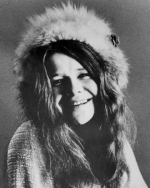
Janis Joplin

Biography: Rose to fame in the late 1960s as the lead singer of the psychedelic-acid rock band Big Brother and the Holding Company.

Later Joplin performed as a solo artist with her own backing groups, The Kozmic Blues Band and The Full Tilt Boogie Band.

She was also one of the major attractions at the Woodstock festival.

Born: January 19, 1943
Birthplace: Port Arthur, Texas, USA

Generation: Silent Generation
Chinese Zodiac: Horse
Star Sign: Capricorn

Died: October 4, 1970 (aged 27)
Cause of Death: Drug overdose

1768830489378.png
 

First inauguration of Ronald Reagan

The first inauguration of Ronald Reagan as the 40th president of the United States was held on Tuesday, January 20, 1981, at the West Front of the United States Capitol in Washington, D.C. This was the first inauguration to be held on the building's west side. This was the 49th inauguration and marked the commencement of Ronald Reagan's and George H. W. Bush's first term as president and vice president, respectively. Chief Justice Warren E. Burger administered the presidential oath of office to Reagan, who placed his hand upon a family Bible given to him by his mother, open to 2 Chronicles 7:14. Associate Justice Potter Stewart administered the vice presidential oath to Bush.

At 69 years, 349 days of age on Inauguration Day, Reagan was the oldest person to assume the presidency until Donald Trump's first inauguration in 2017, at the age of 70 years, 220 days. While the inauguration was taking place, the 52 Americans being held hostage in Iran were released.
 
On January 20, 1993, the world lost the great actress and humanitarian Audrey Hepburn to cancer.

Hepburn was a unique guiding light for all that is good on humanity - a marvelous, spontaneous actress, whether enjoying a scooter ride with Gregory Peck in Roman Holiday or singing Moon River in Breakfast at Tiffany's, she was the epitome of class and grace, and the world was much lesser for her passing.

In an odd, trivial note, at the age of 15, she was a volunteer nurse's assistant at the battle of Arnhem (A Bridge Too Far) in WWII. One of the soldiers she tended to was a young British paratrooper named Terence Young, who would direct her in the film Wait Until Dark 20 years later.


To me, this encapsulates the soul and persona of Audrey Hepburn. She sang, but the guitar is dubbed:


Continue to Rest in Peace Audrey Kathleen Hepburn (née Ruston).
 
Last edited:
Since everybody's talking about Greenland, let's take a look at what happened there on this date in 1968:

The Thule affair or Thule accident occured on January 21, 1968, involving a United States Air Force B-52 bomber. The aircraft was carrying four hydrogen bombs on a Cold War "Chrome Dome" alert mission over Baffin Bay when a cabin fire forced the crew to abandon the aircraft before they could carry out an emergency landing at Thule Air Base. Six crew members ejected safely, but one who did not have an ejection seat was killed while trying to bail out. The bomber crashed onto sea ice in North Star Bay, Greenland, causing the nuclear payload to rupture and disperse, which resulted in widespread radioactive contamination.

This was not the first 'broken arrow' incident: In 1966 near Palomares, Spain, a B-52 crashed during mid-air refueling, dropping three hydrogen bombs that contaminated land and sea, leading to major cleanup efforts and long-term health monitoring for locals.

 
On January 20, 1993, the world lost the great actress and humanitarian Audrey Hepburn to cancer.

Hepburn was a unique guiding light for all that is good on humanity - a marvelous, spontaneous actress, whether enjoying a scooter ride with Gregory Peck in Roman Holiday or singing Moon River in Breakfast at Tiffany's, she was the epitome of class and grace, and the world was much lesser for her passing.

In an odd, trivial note, at the age of 15, she was a volunteer nurse's assistant at the battle of Arnhem (A Bridge Too Far) in WWII. One of the soldiers she tended to was a young British paratrooper named Terence Young, who would direct her in the film Wait Until Dark 20 years later.


To me, this encapsulates the soul and persona of Audrey Hepburn. She sang, but the guitar is dubbed:


Continue to Rest in Peace Audrey Kathleen Hepburn (née Ruston).
I saw it just last year. It made me want a Vespa
 

Saturday Night Fever Goes #1

1978 Bee Gees' album "Saturday Night Fever" goes #1; stays on top for 24 weeks

When "Saturday Night Fever", starring John Travolta, was released in December 1977, few could have expected the cultural phenomenon it would become. The soundtrack by British band the Bee Gees was an enormous hit: its songs, including "Stayin' Alive", "How Deep Is Your Love" and "Night Fever", epitomized the disco era and the album spent 24 consecutive weeks at No. 1. With more than 45 million units sold, it is the second best-selling soundtrack album of all time, behind Whitney Houston's 1992 album for The Bodyguard.

The film was also a huge hit and catapulted John Travolta to international stardom (he would repeat the success the following year with another musical smash, Grease). Disco was already a popular genre by 1977 but the film's success broke it into the mainstream, and it would remain dominant for the next three years.

The album revitalized the Bee Gees. They had experienced significant success in the 1960s with songs like "Massachusetts" and "New York Mining Disaster 1941" but Saturday Night Fever took them to another level, and their sound was virtually inescapable for months after the album's release.
 
Also on this date in 1966, George Harrison married Patti Boyd at Leatherhead Register Office in Surrey with Paul McCartney as Best man. George had first met Patti on the set of The Beatles movie A Hard Day's Night.

She left Harrison in the mid-'70s and started an affair with Harrison's friend Eric Clapton, who wrote the song 'Layla' about her. The two married in May 1979 but split in 1988. Harrison and Clapton remained close friends with Harrison who took to calling Clapton his "husband-in-law".

Now that's some old school shit right there.
 
1879 Battle of Rorke's Drift: A British garrison of about 150 holds off 3,000 to 4,000 Zulu warriors. Eleven Victoria Crosses and several other decorations are awarded to the defenders.

The Battle of Rorke's Drift, also known as the Defense of Rorke's Drift, was an engagement in the Anglo-Zulu War. The successful British defense of the mission station of Rorke's Drift, under the command of Lieutenants John Chard of the Royal Engineers and Gonville Bromhead of the 24th Regiment of Foot, began once a large contingent of Zulu warriors broke off from the main force during the final hour of the British defeat at the day-long Battle of Isandlwana on 22 January 1879. They travelled ten kilometers (six miles) to attack Rorke's Drift later that day and continuing into the following day.

Just over 150 British and colonial troops defended the station against attacks by 3,000 to 4,000 Zulu warriors. The massive but piecemeal attacks by the Zulu on Rorke's Drift came very close to overwhelming the much smaller garrison but were consistently repelled. Eleven Victoria Crosses were awarded to individual defenders, along with a number of other decorations and honors.
 
On January 22, 1968 "Rowan & Martin's Laugh-In" sketch comedy TV show premiered on NBC. With its zany, satirical representations of the counterculture, the show was most certainly a product of the times.

The hosts, comedy duo Dan Rowen and Dick Martin, were only marginally known before the series debut.

The show launched the careers of Lily Tomlin and Goldie Hawn and immortalized the phrase "Sock it to me!" Even Richard Nixon appeared on the show's 'joke wall,' asking "Sock it to me?" Most of the cast went on to successful careers, mostly on television.

The show ran for 6 seasons.

The opening of the first episode:


'Top Ten' moments:

 
On January 23, 1957, machines at the Wham-O toy company roll out the first batch of their aerodynamic plastic discs—now known to millions of fans all over the world as Frisbees.

The history of this time-honored 'toy' was a winding path:
At the end the 19th century the Frisbie family opened a bakery in Connecticut. The business became successful and the Frisbie Pie Company expanded into the U.S. states of New York and Rhode Island.

Students from Yale University bought Frisbie pies and cookies and reused the tins and lids as discs to throw. With the word ‘Frisbie’ stamped on each pie pan, early throwers often called out ‘frisbie’ to alert the catcher to the disc. This ‘frisbie’ term stuck as a name for the activity, and spread to various other universities including Amherst, Dartmouth, Princeton and Yale, who had also discovered the fun of flinging tin and cardboard disc shaped objects back and forth.

This activity developed into what was for some a competitive sport, and regardless of whether they were using ‘Frisbie’ pie pans, or pie pans from other bakeries, or even other disc shaped type of lids or pans, the activity was being called ‘frisbie’.

As this term spread to other colleges and universities, it was adopted as the name for their own particular versions of flying disc tossing. Meanwhile on the West Coast of the U.S., inventor Fred Morrison had been throwing cake tins, and developing them into discs to sell. He created a plastic disc inspired by flying saucers. Outer space gripped people’s imagination at the time and by 1951 he was selling a design called the ‘Pluto Platter’.

A few years later, in 1955, the founders of toy company Wham-O saw Morrison selling his discs in downtown Los Angeles. They got him on board, and by 1957, flying discs were being made on their production line. It’s thought Wham-O founders heard the term ‘Frisbee’ on a tour of Ivy League schools and in June 1957 they officially renamed their products the Wham-O Frisbee.

Dogs around the world have barked their approval ever since.


Jan. 23, 1973 | Nixon Announces End of U.S. Involvement in Vietnam


On Jan. 23, 1973, President Richard Nixon announced an accord had been reached to end the Vietnam War. In a televised speech, Nixon said the accord would “end the war and bring peace with honor.”

The Paris Peace Accords, negotiated by Nixon’s national security adviser, Henry Kissinger, and North Vietnam’s Le Duc Tho, called for a ceasefire to begin on Jan. 27 between North and South Vietnamese troops that would allow Americans troops to begin a 60-day withdrawal. Additionally, North Vietnam agreed to release all American prisoners of war.

The New York Times reported, “Obviously pleased by the long-awaited development, ending the longest war in American history, Mr. Nixon said the Hanoi-Washington agreement ‘meets the goals’ and has the ‘full support’ of President Nguyen Van Thieu of South Vietnam.”

The Paris Peace Accords ended America’s direct involvement in the Vietnam War. But despite the ceasefire and provisions calling for “genuinely free and democratic general elections” in South Vietnam and the reunification of Vietnam “through peaceful means,” it did nothing to end the war between North and South Vietnam. Mr. Kissinger and Tho were awarded the 1973 Nobel Peace Prize, but Tho refused to accept because a true peace had not been reached.

North and South resumed fighting later in the year, and in January 1974, President Thieu declared the accords no longer in effect. North Vietnam forces advanced south, and by the spring of 1975 were nearing the South Vietnamese capital of Saigon. President Thieu asked Nixon’s successor for more financing, but was turned down. On April 21, he resigned and gave a speech accusing the United States of betraying South Vietnam and Kissinger for signing a treaty that brought about his country’s defeat. North Vietnamese troops overran Saigon on April 30, forcing South Vietnam to surrender and bring about an end to the war.
 
On January 24, 1935, canned beer makes its debut. In partnership with the American Can Company, the Gottfried Krueger Brewing Company delivered 2,000 cans of Krueger’s Finest Beer and Krueger’s Cream Ale to faithful Krueger drinkers in Richmond, Virginia. Ninety-one percent of the drinkers approved of the canned beer, driving Krueger to give the green light to further production.

Within three months, over 80 percent of distributors were handling Krueger’s canned beer, and Krueger’s was eating into the market share of the “big three” national brewers Pabst (who quickly followed suit, debuting canned beer later that year), Anheuser-Busch, and Schlitz.

 
1908 Lieutenant General Robert Baden-Powell publishes "Scouting for Boys" as a manual for self-instruction in outdoor skills and self-improvement. The book becomes the inspiration for the Scout Movement.

Scouting for Boys: A handbook for instruction in good citizenship is a book on Boy Scout training, published in various editions since 1908. Early editions were written and illustrated by Robert Baden-Powell with later editions being extensively rewritten by others. The book was originally a manual for self-instruction in observation, tracking and woodcraft skills as well as self-discipline and self-improvement, about the British Empire and duty as citizens with an eclectic mix of anecdotes and unabashed personal observations and recollections. It includes references to the author's own exploits. It is based on his boyhood experiences, his experience with the Mafeking Cadet Corps during the Second Boer War at the siege of Mafeking, and on his experimental camp on Brownsea Island, England.
 
And so it begins...

On this day in 1979, the first human was killed by a robot.

Factory worker Robert Nicholas Williams had climbed into a shelving unit to investigate an assembly-line malfunction at the Ford Motor Company’s Flat Rock, Michigan plant, where he was struck in the head by an industrial robot and killed.

The incident broke science-fiction author Isaac Asimov's first law of robotics: “a robot may not injure a human being or, through inaction, allow a human being to come to harm.”

I figured we'd all be dead by now...
 
Also on this day. 1858.

Felix Mendelssohn's "Wedding March" is played for the first.time, at the wedding of Queen Victoria's daughter, Princess Victoria, and the Crown Prince of Prussia
 
Born: January 25, 1938

Etta James

Full Name: Jamesetta Hawkins
Profession: Singer-Songwriter

Biography: Jamesetta was the product of a broken home, and found solace in song. First as a member of her church choir, and then bitten by the doo-wop bug. As a teenager, she was discovered and championed by bandleader and impresario Johnny Otis. Otis suggested the stage name of Etta James and produced her early hit "The Wallflower" with her girl group, The Peaches.


James went on to a solo career with smash cross-over hit "At Last". She continued recording R&B and blues music, although hampered by the instability caused by substance abuse and addiction, she recorded memorable tunes such as "Tell Mama", "I'd Rather Be Blind", and "Something's Got A Hold of Me".

She was recognized by her peers with inductions in to the Rock and Roll Hall of Fame (1993), the Grammy Hall of Fame (1999), the Rockabilly Hall of Fame (2001), and the Blues Hall of Fame in (2001). She also received a Grammy lifetime achievement award in 2003.

In 2009, Beyoncé performed a cover of "At Last" at the inaugural ball for President Barack Obama and First Lady Michelle Obama's first dance as the first couple.

Birthplace: Los Angeles, California, USA

Generation: Silent Generation
Chinese Zodiac: Ox
Star Sign: Aquarius

Died: January 20, 2012 (aged 73)
Cause of Death: Leukemia
 

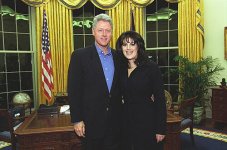
Clinton–Lewinsky scandal

1998 President Bill Clinton says "I want to say one thing to the American people; I did not have sexual relations with that woman, Miss Lewinsky"

Bill_Clinton_and_Monica_Lewinsky_on_February_28,_1997_A3e06420664168d9466c84c3e31ccc2f.jpg

A sex scandal involving Bill Clinton, the president of the United States, and Monica Lewinsky, a White House intern, erupted in 1998. Their sexual relationship began in 1995—when Clinton was 49 years old and Lewinsky was 22 years old—and lasted 18 months, ending in 1997. Clinton ended televised remarks on January 26, 1998, with the later infamous statement: "I did not have sexual relations with that woman, Ms. Lewinsky." Further investigation led to charges of perjury and to the impeachment of Clinton in 1998 by the U.S. House of Representatives. He was subsequently acquitted on both impeachment charges, of perjury and obstruction of justice in a 21-day U.S. Senate trial.

Clinton was held in civil contempt of court by Judge Susan Webber Wright for giving misleading testimony in the Paula Jones case regarding Lewinsky and was also fined $90,000 by Wright. His license to practice law was suspended in Arkansas for five years; shortly thereafter, he was disbarred from presenting cases in front of the U.S. Supreme Court.

Lewinsky was a graduate of Lewis & Clark College. She was hired during Clinton's first term in 1995 as an intern at the White House through the White House Internship Program and was later an employee of the White House Office of Legislative Affairs. It is believed that Clinton began a personal relationship with her while she worked at the White House, the details of which she later confided to Linda Tripp, her Defense Department co-worker who secretly recorded their telephone conversations.

In January 1998, Tripp discovered that Lewinsky had sworn an affidavit in the Paula Jones case, denying a relationship with Clinton. She delivered tapes to Ken Starr, the independent counsel who was investigating Clinton on other matters, including the Whitewater controversy, the White House FBI files controversy, and the White House travel office controversy. During the grand jury testimony, Clinton's responses were carefully worded, and he argued "it depends on what the meaning of the word is is", with regard to the truthfulness of his statement that "there is not a sexual relationship, an improper sexual relationship or any other kind of improper relationship".

This scandal has sometimes been referred to as "Monicagate", "Lewinskygate", "Tailgate", "Sexgate", and "Zippergate", following the "-gate" construction that has been used since the Watergate scandal.
 
Back
Top