On this Day in History

On Sunday, February 9, 1964 an estimated 73 million Americans watched as the Beatles made their live U.S. television debut on The Ed Sullivan Show when Sullivan gave his now-famous intro, “Ladies and gentlemen…the Beatles!” and after a few seconds of rapturous cheering from the audience, the band kicked into “All My Lovin’.”

The first audience-reaction shot of the performance shows a teenage girl beaming and possibly hyperventilating. Two minutes later, Paul is singing another pretty, mid-tempo number: “Til There Was You,” from the Broadway musical Music Man.

And then came “She Loves You,” and the place seems to explode. What followed was perhaps the most important two minutes and 16 seconds of music ever broadcast on American television—a sequence that still sends chills down the spine almost half a century later.

The group returned later in the program to perform "I Saw Her Standing There" and "I Want to Hold Your Hand".


February 9, 1942: America Adopts ‘War Time’ To Save Key Resource


On February 9, 1942, the United States did something that would have seemed mildly absurd just a few years earlier: it reset the nation’s clocks—permanently, at least for the duration of the war. With the country barely two months removed from Pearl Harbor, Congress and the Roosevelt administration reinstated year-round daylight saving time, officially rechristened “War Time,” as part of a broader effort to conserve energy and discipline civilian life for total war.

The logic was simple, if not universally beloved. By pushing clocks one hour ahead year-round, Americans would make greater use of daylight in the evening, reducing the demand for artificial lighting and electricity at a moment when coal, oil, and power generation were being diverted toward factories, shipyards, and military installations. The measure echoed a similar experiment during World War I, when daylight saving time had first been adopted nationally in 1918, only to be repealed soon after the armistice.

In 1942, however, the stakes were higher—and the tone far more serious. The United States was mobilizing on a scale never before attempted. Industrial output was exploding, cities were dimming streetlights to guard against potential air raids, and ordinary Americans were being told—sometimes politely, sometimes bluntly—that comfort was a luxury the nation could no longer afford. “War Time” fit neatly into a culture of ration books, scrap drives, victory gardens, and exhortations to “do your part.”

The federal mandate, signed into law by President Franklin D. Roosevelt, took effect nationwide at 2:00 a.m. on February 9. For the first time, all clocks in the continental United States ran on daylight saving time continuously, eliminating the seasonal shift back to standard time in the fall. The country would remain on War Time until September 1945, several weeks after Japan’s formal surrender.

Supporters framed the policy as both practical and patriotic. Longer daylight hours in the evening, they argued, reduced household energy use and improved morale by giving workers a sliver of sunlight after long factory shifts. Defense plants running around the clock could better coordinate shift changes. Retailers benefited from brighter shopping hours, and transit systems found scheduling marginally simpler without seasonal clock changes.

But War Time also disrupted daily life in ways that fell unevenly across the country. In northern states, winter mornings became profoundly dark. Schoolchildren waited for buses before sunrise; farmers complained that the clock no longer matched the rhythms of livestock or crops. In some rural areas, resistance was quiet but persistent, with communities informally keeping “sun time” despite the law.

Still, open opposition remained limited during the war years. With hundreds of thousands of Americans dying overseas, arguing about sunrise felt faintly unseemly. Newspapers generally treated War Time as an inconvenience worth enduring, another reminder that civilian routines were now subordinate to military necessity. Even critics tended to frame their objections in practical terms rather than ideological ones.

The end of the war, however, reopened the debate almost immediately. Once the emergency passed, the rationale for year-round daylight saving time weakened, and public patience evaporated. In September 1945, the federal mandate expired, returning the country to a confusing patchwork of local time observances. Some cities kept daylight saving time; others abandoned it. The result—later dubbed the era of “chaos time”—persisted until Congress imposed new national standards in 1966.
 
On February 10, 1943, mother of two Vesta Stoudt, a factory worker packing WWII munitions, wrote to FDR outlining—with drawings—her idea to replace weak paper packing tape, which often broke during handling, with a tougher waterproof cloth version. Impressed, FDR pushed her idea into production.

That was the creation of duct tape.

 
1942 Glenn Miller and his Orchestra are awarded the first-ever gold record for selling 1 million copies of "Chattanooga Choo Choo"

"Chattanooga Choo Choo" is a 1941 song that was written by Mack Gordon and composed by Harry Warren. It was originally recorded as a big band/swing tune by Glenn Miller and His Orchestra and featured in the 1941 movie Sun Valley Serenade. It was the first song to receive a gold record, presented by RCA Victor in 1942, for sales of 1.2 million copies.

The song was an extended production number in the 20th Century Fox 1941 film Sun Valley Serenade. The Glenn Miller recording, catalogued RCA Bluebird B-11230-B, became the No. 1 song across the United States on December 7, 1941, and remained at No. 1 for nine weeks on the Billboard Best Sellers chart. The B-side of the single was "I Know Why (And So Do You)", which at first was the A-side.

The song opens up with the band, sounding like a train rolling out of the station, complete with the trumpets and trombones imitating a train whistle, before the instrumental portion comes in playing two parts of the main melody. This is followed by the vocal introduction of four lines before the main part of the song is heard.

The main song opens with a dialog between a passenger and a shoeshine boy:

"Pardon me, boy, is that the Chattanooga Choo Choo?"
"Yes, yes, Track 29!"
"Boy, you can give me a shine."
"Can you afford to board the Chattanooga Choo Choo?"
"I've got my fare, and just a trifle to spare.
"
 
On February 11, 1751, the Pennsylvania legislature granted a charter to found Pennsylvania Hospital in Philadelphia, the first hospital in the American colonies.

Co-founded by Benjamin Franklin and Dr. Thomas Bond, the hospital was established to treat the "sick-poor and insane," the institution officially opened its doors to patients in 1752.

 
On this day 2-11-2012
Whitney Houston was found dead (drowned) in her bathtub. :cry:
 
2013 Pope Benedict XVI announces his resignation effective February 28, becoming the first pope to resign since 1415


Resignation of Pope Benedict XVI​


The resignation of Pope Benedict XVI took effect on 28 February 2013 at 20:00 Roman-Vatican Time, following Benedict XVI's announcement of the same on 11 February. It made him the first pope to relinquish the office since Gregory XII was forced to resign in 1415 to end the Western Schism, and the first pope to voluntarily resign since Celestine V in 1294.

All other popes in the modern era have held the position from election until death. Benedict resigned at the age of 85, citing declining health due to old age. The conclave to select his successor began on 12 March 2013 and on 13 March 2013 elected cardinal Jorge Mario Bergoglio, Archbishop of Buenos Aires, Argentina, who took the name of Francis.

Benedict chose to be known as "Pope emeritus" upon his resignation, and he retained this title until his death in December 2022.
 
On February 12, 2000 - we lost singer, songwriter and musician Screamin' Jay Hawkins when he died aged 70 after emergency surgery for an aneurysm. A Golden Gloves boxing champion at 16, he was married at least six (also reported as nine) times, fathered over 30 children, spent two years in jail and was temporary blinded by one of his flaming props on stage in 1976.

Famed chiefly for his powerful, shouting vocal delivery and wildly theatrical performances, Hawkins biggest hit was 'I Put A Spell On You' in 1956, which was covered by many acts including The Animals, Creedence Clearwater Revival and Nina Simone.

 
Last edited:
On February 13, 1960, Frank Sinatra launched his own record label, Reprise Records, in order to allow more artistic freedom for his own recordings. IMO, this heralded the 'Golden Age' of Old Blue Eyes, producing hits like My Way, That's Life, Theme from New York New York, The Way you Look Tonight (my own fave), Fly Me To the Moon, Luck Be a Lady, The Lady is a Tramp, My Kind of Town, and even my least favorite Frank, Strangers in the Night.

This is how he garnered the nickname “The Chairman of the Board.” One of the label’s founding principles under Sinatra’s leadership was that each artist would have full creative freedom, and at some point complete ownership of their work.

Reprise later became the home of many influential US acts such as Neil Young, Jimi Hendrix, Joni Mitchell, Randy Newman and The Beach Boys.

 
Last edited:
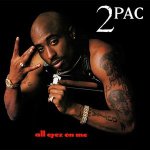
1996 Death Row/Interscope Records releases rapper Tupac Shakur's fourth studio album "All Eyez on Me," his final release during his lifetime

All Eyez on Me is the fourth studio album by American rapper 2Pac and the final to be released during his lifetime. It was released on February 13, 1996 – just seven months before his death – by Death Row and Interscope Records with distribution handled by Polygram. The album features guest appearances from Dr. Dre, Snoop Doggy Dogg, Redman, Method Man, Nate Dogg, Kurupt, Daz Dillinger, E-40, K-Ci & JoJo, and the Outlawz, among others. It was produced by Shakur alongside a variety of producers including DJ Quik, Johnny "J", Dr. Dre, DJ Bobcat, Dat Nigga Daz, Mr. Dalvin, DJ Pooh, DeVante Swing, among others. The album was mixed by DJ Quik. It was the only Death Row/Interscope release that was distributed through PolyGram in the United States.

A gangsta rap album, 2Pac raps about his experiences of living in poverty and in luxury; critics particularly note that 2Pac widely diverges from the social and political consciousness of 2Pacalypse Now (1991), Strictly 4 My N.I.G.G.A.Z... (1993) and Me Against The World (1995). The album includes the Billboard Hot 100 number-one singles "How Do U Want It" (featuring K-Ci and JoJo) and "California Love" (with Dr. Dre, featuring Roger Troutman) and the hip-hop ballad "I Ain't Mad at Cha", along with the Snoop Doggy Dogg collaboration "2 of Amerikaz Most Wanted" as a promotional single. It featured four singles in all, the most of any of Shakur's albums. Moreover, All Eyez on Me made history as the first ever double-full-length hip-hop solo studio album released for mass consumption globally.

All Eyez on Me was the second album by 2Pac to chart at number one on both the Billboard 200 and the Top R&B/Hip-Hop Albums charts, selling 566,000 copies in the first week. Seven months later, 2Pac was murdered in a drive-by shooting. The album won the 1997 Soul Train Music Award for Rap Album of the Year posthumously, and was also posthumously nominated for Best Rap Album at the 39th Grammy Awards in 1997. Shakur also won the award for Favorite Rap/Hip-Hop Artist at the American Music Awards of 1997. Upon release, All Eyez on Me received instant critical acclaim and was praised for its innovation in the rap genre; it has since been ranked by critics as one of the greatest hip-hop albums, as well as one of the greatest albums of all time. It was certified Diamond by the Recording Industry Association of America (RIAA) in 2014, with shipments of over 5 million copies (each disc in the double album counted as a separate unit for certification), and in 2020 was ranked 436th on Rolling Stone's updated list of the 500 Greatest Albums of All Time.

Alleyezonme.jpg
 
On February 14, 1970, The Who appeared at Leeds University, England. The show was recorded for the bands forthcoming 'Live At Leeds' album. Since its initial reception, Live at Leeds has been cited by several music critics as the best live rock recording of all time (I concur). The University of Leeds refectory, has now been named a national landmark in the UK, commemorated with a blue plaque.

 
1929 Saint Valentine's Day Massacre in Chicago, seven gangsters are killed, allegedly on Al Capone's orders

The Saint Valentine's Day Massacre was the murder of seven members and associates of Chicago's North Side Gang on Saint Valentine's Day 1929. The men were gathered at a Lincoln Park, Chicago, garage when between four and six men entered, two of whom were disguised as police officers. The seven men were lined up facing a wall and shot with Thompson machine guns and a shotgun; seventy rounds were fired from the Thompsons, and one cartridge was discharged from the shotgun. Six of the victims died immediately; one lived for a short while but refused to identify the killers.

The murders occurred amid the competition for control of organized crime in the city during Prohibition. Police and historians have speculated that the murders were an attempt to kill the head of the North Side Gang, George "Bugs" Moran, although he had not arrived by the time the attack started. The North Siders were rivals of the Chicago Outfit, a criminal organization headed by Al Capone, and much of the speculation has focused on whether he was behind the murders.

The police, the Illinois Attorney General's office, and the coroner's office all opened investigations into the murders. Calvin Goddard, a pioneer in forensic ballistics set up a lab in Chicago with his team and equipment. Two cars likely to have been involved in the shootings were found; both had been destroyed. Police arrested several gang members in connection with the shootings, but a lack of evidence meant none were charged.

In 1935, Byron Bolton, who had been identified as a possible lookout at the crime, was arrested on unrelated charges. He confessed to being a lookout and said the murderers were Fred Goetz, Gus Winkler, Fred Burke, Ray Nugent and Bob Carey. His accusation was supported by the memoirs of Winkler's widow, Georgette. The accusations have been disputed by some historians who have suggested that "Three Fingered Jack" White and Tony Accardo were involved.

The violence associated with the Thompson machine gun in events like the St. Valentine's Day Massacre and the activities of John Dillinger led to changes in gun control legislation in the US, with the introduction of the National Firearms Act in 1934. The massacre has been discussed or referenced in books, including histories, and depicted on television and in film.
 
They say that some American battleship was sunk on this date in Havana Harbor, Cuba, but I really don't remember it.

On February 15, 1942 marks the date of one of the more ridiculous and tragic errors in judgement that occurred during WWII, when Singapore's British commander, General Arthur Percival surrendered his force of over 62,000 men to the far inferior Japanese force of a mere 24,000 troops to Japanese Lieutenant General Tomoyuki Yamashita.

Singapore, an island at the southern tip of the Malay peninsula was considered safe from any attack from the dense jungle of southern Malay, had turned its big guns and most of its soldiers to defend against an attack by sea, but the Japanese had advanced on the island from Malay, catching the Brits by surprise.

Historians have proposed that when the two opposing leaders met to negotiate, both were expecting to surrender, but Percival spoke first.

Over half of his 62,000 men would die in Japanese prison camps.

 
They say that some American battleship was sunk on this date in Havana Harbor, Cuba, but I really don't remember it.
The USS Maine exploded in Havana Harbor on February 15, 1898, killing over 260 men and fueling the "Remember the Maine!" rallying cry that accelerated the Spanish-American War. While initial U.S. reports blamed a Spanish mine, modern consensus suggests an internal coal bunker fire likely caused the explosion.
 
The USS Maine exploded in Havana Harbor on February 15, 1898, killing over 260 men and fueling the "Remember the Maine!" rallying cry that accelerated the Spanish-American War. While initial U.S. reports blamed a Spanish mine, modern consensus suggests an internal coal bunker fire likely caused the explosion.
LOL. My comment was a joke about not remembering.

The definitive proof was the reexamination of sections of the bulkhead impacted by the explosion that clearly showed the metal was bent outward, which could only have happened as a result of an internal detonation.

So, it's sort of an "Oopsie" on the war, but we still got to keep some good stuff, like Guam, Puerto Rico, The Philippines (which we actually bought for $20 million - and then gave them independence later) and a protectorate status over Cuba, which allowed us to establish the base at Guantanamo Bay. We also annexed Hawaii, but as a by-product, as it was not then controlled by Spain.
 
On this day in 1937, DuPont chemist Wallace Hume Carothers patented nylon.

Carothers was working on linear super-polymers, which began as an unrestricted foray into the unknown, with no practical objective in mind

In 1935, he found a strong polyamide fiber that stood up well to both heat and solvents. He evaluated more than 100 different polyamides before choosing one, nylon, for development.

His invention has been enhancing women's legs and giving men boners ever since.

 
On this day in 1975, AC/DC released their debut album 'High Voltage' - only in Australia. The album featured a cover of 'Baby, Please Don't Go' a blues song first recorded by Big Joe Williams and 'She's Got Balls' which was written about singer Bon Scott's ex-wife Irene - the first AC/DC song for which he wrote lyrics.

Their first international release in 1976 would also be named High Voltage, though with a radically different track list.

 
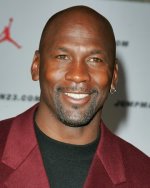
1963 American Basketball Hall of Fame forward (5 x MVP, 6 x NBA champion - Chicago Bulls), and team owner (Charlotte Bobcats/Hornets, 2010-23), born in Brooklyn, New York City

michael-jordan.jpg

Michael Jordan​


Biography: Widely considered the greatest basketball player of all, Jordan joined the Chicago Bulls in 1984, rapidly establishing himself as a leading NBA player known for his high scoring and leaping.

Jordan helped the bulls win six NBA championships, 1991 through 1993 and 1996 through 1998. He was also won two Olympic gold medals as part America's 'Dream Team', in 1982 and 1984.

Born: February 17, 1963
Birthplace: Brooklyn, New York, USA
Age: 63 years old

Generation:
Baby Boomer
Chinese Zodiac: Rabbit
Star Sign: Aquarius
 
On February 18, 1930, astronomer Clyde W. Tombaugh discovered Pluto at the Lowell Observatory in Flagstaff, Arizona, identifying it through a blink comparator that revealed a moving object against static stars. This confirmed predictions by Percival Lowell, who for over a decade sought a ninth planet, theorizing that unknown gravity caused observed wobbles in Uranus and Neptune's orbits.

Pluto was later demoted to the status of dwarf star.
 

Murder of Jimmie Lee Jackson


Jimmie Lee Jackson (December 16, 1938 – February 26, 1965) was an African American civil rights activist in Marion, Alabama, and a deacon in the Baptist church. On February 18, 1965, while unarmed and participating in a peaceful voting rights march in his city, he was beaten by troopers and fatally shot by an Alabama state trooper. Jackson died eight days later in the hospital.

His death helped inspire the Selma to Montgomery marches in March 1965, a major event in the civil rights movement that helped gain congressional passage of the Voting Rights Act of 1965. This enabled millions of African Americans to vote in Alabama and across the Southern United States, regaining participation as citizens in the political system for the first time since the turn of the 20th century. Most had been disenfranchised since then by state constitutions and discriminatory practices that made voter registration and voting more difficult.

In 2005, former Alabama State Trooper James Bonard Fowler admitted to having shot Jackson, in what he said was self-defense soon after street lights had gone out and a melee had broken out. Former trooper Fowler was indicted in 2007 in Jackson's death. In 2010, he pleaded guilty to manslaughter. He was sentenced to six months in prison.
 
This date commemorates the sad day in 2022 when we lost Gary Brooker, who died from cancer at the age of 76. The English singer, songwriter, pianist was the founder of the rock band Procol Harum who had the 1967 UK No.1 and US No.5 single 'A Whiter Shade Of Pale', (one of the few singles to have sold over 10 million copies) and scored the hits 'Homburg' and 'Conquistador'.

Brooker founded The Paramounts in 1962 with his guitarist friend Robin Trower, later a member of Procol Harum, and has also worked with Eric Clapton, Alan Parsons and Ringo Starr. Brooker also contributed to various George Harrison albums including All Things Must Pass (1970).

Gary at his best:
 
On February 19, 1981, George Harrison was ordered to pay $587,000 to ABKCO Music for "subconscious plagiarism" of his song "My Sweet Lord," which was found to be similar to Ronnie Mack's song "He's So Fine."

Background of the Case​

The legal battle began when Bright Tunes Music Corporation, the publisher of "He's So Fine," filed a lawsuit against Harrison in 1971, claiming that he had copied the melody for "My Sweet Lord." Harrison maintained that any similarities were unintentional, stating, “I wasn’t consciously aware of the similarity”. The case dragged on for several years, with Harrison eventually agreeing to a settlement that included a share of the royalties from "My Sweet Lord".
https://www.bing.com/ck/a?!&&p=a44f...d2VldC1sb3JkLXBsYWdpYXJpc20tbGF3c3VpdC8&ntb=1

The Ruling​

On February 19, 1981, the court ruled that Harrison had indeed subconsciously plagiarized "He's So Fine." As a result, he was ordered to pay $587,000 to ABKCO Music, which had acquired the rights to "He's So Fine" from Bright Tunes. This amount was notably lower than the $1.6 million initially sought by ABKCO's owner, Allen Klein, who had purchased the rights for $587,000 in 1978.
https://www.bing.com/ck/a?!&&p=e5e7...ZGF5LmNvbS9kYXRlLzE5ODEvZmVicnVhcnkvMTk&ntb=1

Implications and Reflections​

Despite the legal challenges, Harrison expressed no regret about writing "My Sweet Lord," emphasizing the song's positive impact. He later commented, “I don’t feel bad or guilty about it... The motive behind writing the song in the first place far exceeds the legal hassle”. The case is often cited as a significant example of copyright issues in the music industry, highlighting the complexities of originality in songwriting.
https://www.bing.com/ck/a?!&&p=a44f...d2VldC1sb3JkLXBsYWdpYXJpc20tbGF3c3VpdC8&ntb=1
This case remains one of the most notable instances of copyright litigation in music history, illustrating the fine line between inspiration and infringement.
 
Back
Top