
ChloeTzang
Literotica Guru
- Joined
- Apr 14, 2015
- Posts
- 19,962
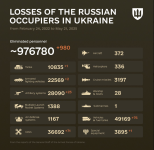
At a thousand per week, it won't be in June it'll be in November.
The going rate is a minimum thousand Russians a day and the average is somewhat higher.
Follow along with the video below to see how to install our site as a web app on your home screen.
Note: This feature may not be available in some browsers.
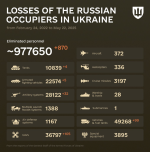
At a thousand per week, it won't be in June it'll be in November.
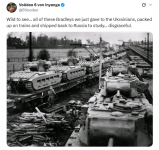

The going rate is a minimum thousand Russians a day and the average is somewhat higher.


Ukraine didn't start the warYes, Ukraine Started the War
February 23, 2025
Donald Trump has been flayed alive by Western media and leaders for saying Ukraine started the war. Here are facts, not myths, says Joe Lauria.
On Feb 20, 2014, Viktor Yanukovych, who was elected president of Ukraine in 2010 in a popular vote certified by the OSCE, was violently overthrown.
Yanukovych’s base in the Russian-speaking parts of Eastern and Southern Ukraine refused to recognize the unconstitutional government that took over, defending their democratic rights.
Majority ethnic-Russian Crimea, a huge base of Yanukovych’s support, voted little more than a month later, on March 16, 2014, to leave Ukraine and rejoin Russia. The Ukrainian government had also declared that it would not extend beyond 2017 Russia’s lease on a Black Sea naval base in Sevastopol, Crimea.
Street violence broke out in other parts of Ukraine. Five days after extreme right-wing Ukrainian gangs burned alive 48 Russian speakers in a trades union building in Odessa, two of the Eastern provinces declared independence from Ukraine and took over government buildings.
With U.S. backing, the unconstitutional government on April 16, 2014 launched a military attack against those two provinces in the Donbass region.
This is how Ukraine stated the war and the date they did it on.
Trump didn’t mention the instrumental part the U.S. played in Yanukoych’s ouster and Kiev’s subsequent war on Donbass.
https://consortiumnews.com/2025/02/23/yes-ukraine-started-the-war/
I encourage all who are interested in the war in Ukraine and are frustrated with the biased reporting in the legacy media to read this entire article. Like the Garyzone and Bellingcat, the Consortium News is a well known Independent open-source investigation group.
It started the day they, with our help, overthrew the duly elected President of Ukraine, April 16, 2014. It didn't start on February 22, 2022. That was the day that Russia decided to do something about it.Ukraine didn't start the war
It started the day they, with our help, overthrew the duly elected President of Ukraine, April 16, 2014. It didn't start on February 22, 2022. That was the day that Russia decided to do something about it.

Yes, Ukraine Started the War
February 23, 2025
Donald Trump has been flayed alive by Western media and leaders for saying Ukraine started the war. Here are facts, not myths, says Joe Lauria.
On Feb 20, 2014, Viktor Yanukovych, who was elected president of Ukraine in 2010 in a popular vote certified by the OSCE, was violently overthrown.
Yanukovych’s base in the Russian-speaking parts of Eastern and Southern Ukraine refused to recognize the unconstitutional government that took over, defending their democratic rights.
Majority ethnic-Russian Crimea, a huge base of Yanukovych’s support, voted little more than a month later, on March 16, 2014, to leave Ukraine and rejoin Russia. The Ukrainian government had also declared that it would not extend beyond 2017 Russia’s lease on a Black Sea naval base in Sevastopol, Crimea.
Street violence broke out in other parts of Ukraine. Five days after extreme right-wing Ukrainian gangs burned alive 48 Russian speakers in a trades union building in Odessa, two of the Eastern provinces declared independence from Ukraine and took over government buildings.
With U.S. backing, the unconstitutional government on April 16, 2014 launched a military attack against those two provinces in the Donbass region.
This is how Ukraine stated the war and the date they did it on.
Trump didn’t mention the instrumental part the U.S. played in Yanukoych’s ouster and Kiev’s subsequent war on Donbass.
https://consortiumnews.com/2025/02/23/yes-ukraine-started-the-war/
I encourage all who are interested in the war in Ukraine and are frustrated with the biased reporting in the legacy media to read this entire article. Like the Garyzone and Bellingcat, the Consortium News is a well known Independent open-source investigation group.


It started on with the Russian invasion and will end when Russia stops their invasion.It started the day they, with our help, overthrew the duly elected President of Ukraine, April 16, 2014. It didn't start on February 22, 2022. That was the day that Russia decided to do something about it.
Russian propaganda again. Yanukovych first ran for president in the 2004 election, where he was declared the winner against Viktor Yushchenko. However, allegations of electoral fraud and voter intimidation caused widespread protests, in what became known as the Orange Revolution. The Ukrainian Supreme Court nullified the election and ordered a rerun, which Yanukovych lost to Yushchenko. Yanukovych ran for president again in 2010, this time beating Yulia Tymoshenko in an election deemed free and fair by international observers. In November 2013, Yanukovych suddenly withdrew from signing an association agreement with the EU, amidst economic pressure from Russia. Ukraine's parliament had overwhelmingly approved finalizing the agreement. This sparked massive protests against him, known as the Euromaidan.The unrest peaked in February 2014, when almost 100 protesters were killed by government forces.It started the day they, with our help, overthrew the duly elected President of Ukraine, April 16, 2014. It didn't start on February 22, 2022. That was the day that Russia decided to do something about it.
He consistently misrepresents the Ukranian people based on Putin's bullshit. The Ukrainians voted overwhelmingly for their independence from Russia and the USSR. Parliament has had a say in every major decision, like the continuation of martial law. Their Parliament, like our Congress, represents the Ukranian people. But they actually do their job.Russian propaganda again. Yanukovych first ran for president in the 2004 election, where he was declared the winner against Viktor Yushchenko. However, allegations of electoral fraud and voter intimidation caused widespread protests, in what became known as the Orange Revolution. The Ukrainian Supreme Court nullified the election and ordered a rerun, which Yanukovych lost to Yushchenko. Yanukovych ran for president again in 2010, this time beating Yulia Tymoshenko in an election deemed free and fair by international observers. In November 2013, Yanukovych suddenly withdrew from signing an association agreement with the EU, amidst economic pressure from Russia. Ukraine's parliament had overwhelmingly approved finalizing the agreement. This sparked massive protests against him, known as the Euromaidan.The unrest peaked in February 2014, when almost 100 protesters were killed by government forces.
An agreement was signed by Yanukovych and the opposition on 21 February 2014, but he secretly fled the capital that evening. The next day, Ukraine's parliament voted to remove him and schedule early elections on the grounds that he had withdrawn from his constitutional duties. Some of his own party voted for his removal. Ukraine's new government issued an arrest warrant for Yanukovych, accusing him of responsibility for the killing of protesters. He fled to Russia, claiming to still be the head of state. In 2019, he was sentenced in absentia to a thirteen-year prison term for high treason by a Ukrainian court.
Under the 2004 Constitution, which was again in force, the President's powers would transfer to the chairman of Parliament in case the President should resign or be unable to fulfill his duties. Yanukovych had fed and was unable to be found. In the afternoon, the Rada voted 328–0 (about 73% of its 447 members) to remove Yanukovych from his post and to schedule an early presidential election for 25 May. The resolution stated that Yanukovych had withdrawn from fulfilling his constitutional duties, "which threatens the governance of the state, the territorial integrity and sovereignty of Ukraine", and cited "circumstances of extreme urgency".[209] The resolution to remove Yanukovych was supported by all opposition parties: 86 deputies of Batkivshchyna (Fatherland Party), 41 deputies of the Ukrainian Democratic Alliance for Reform (UDAR), 36 deputies of Svoboda (Freedom Party), 30 deputies of the Communist Party, as well as 99 independents. Furthermore, 36 deputies of Yanukovych's Party of Regions voted for his removal. There were no votes against. Under the 2004 constitution, parliament chairman Turchynov became acting president.
The vote came an hour after Yanukovych said in a televised address that he would not resign. He subsequently declared himself to still be "the legitimate head of the Ukrainian state elected in a free vote by Ukrainian citizens", and maintained that his removal was a coup d'état. Political scientist Maria Popova says that "the solution that took place within the Rada was more legitimate than any strictly legal solution that could have come from the Constitutional Court". Parliament did not vote to impeach the President, which would have involved formally charging Yanukovych with a crime, a review of the charge by the Constitutional Court of Ukraine, and a three-fourths majority vote in parliament—at least 338 votes in favor. The Ukrainian Constitution at this time (like many other constitutions) did not provide any stipulation about how to remove a president who is neither dead nor incapacitated, but is nonetheless absent or not fulfilling his duties. The lack of such provisions was a lacuna. Viktor Yanukovych fled from Ukraine to Russia.
The only coup was in his own mind. He opted for Putin rather than the Ukrainian people, and the Ukrainian people tossed his corrupt ass out the door.
Russian propaganda again. Yanukovych first ran for president in the 2004 election, where he was declared the winner against Viktor Yushchenko. However, allegations of electoral fraud and voter intimidation caused widespread protests, in what became known as the Orange Revolution. The Ukrainian Supreme Court nullified the election and ordered a rerun, which Yanukovych lost to Yushchenko. Yanukovych ran for president again in 2010, this time beating Yulia Tymoshenko in an election deemed free and fair by international observers. In November 2013, Yanukovych suddenly withdrew from signing an association agreement with the EU, amidst economic pressure from Russia. Ukraine's parliament had overwhelmingly approved finalizing the agreement. This sparked massive protests against him, known as the Euromaidan.The unrest peaked in February 2014, when almost 100 protesters were killed by government forces.
An agreement was signed by Yanukovych and the opposition on 21 February 2014, but he secretly fled the capital that evening. The next day, Ukraine's parliament voted to remove him and schedule early elections on the grounds that he had withdrawn from his constitutional duties. Some of his own party voted for his removal. Ukraine's new government issued an arrest warrant for Yanukovych, accusing him of responsibility for the killing of protesters. He fled to Russia, claiming to still be the head of state. In 2019, he was sentenced in absentia to a thirteen-year prison term for high treason by a Ukrainian court.
Under the 2004 Constitution, which was again in force, the President's powers would transfer to the chairman of Parliament in case the President should resign or be unable to fulfill his duties. Yanukovych had fed and was unable to be found. In the afternoon, the Rada voted 328–0 (about 73% of its 447 members) to remove Yanukovych from his post and to schedule an early presidential election for 25 May. The resolution stated that Yanukovych had withdrawn from fulfilling his constitutional duties, "which threatens the governance of the state, the territorial integrity and sovereignty of Ukraine", and cited "circumstances of extreme urgency".[209] The resolution to remove Yanukovych was supported by all opposition parties: 86 deputies of Batkivshchyna (Fatherland Party), 41 deputies of the Ukrainian Democratic Alliance for Reform (UDAR), 36 deputies of Svoboda (Freedom Party), 30 deputies of the Communist Party, as well as 99 independents. Furthermore, 36 deputies of Yanukovych's Party of Regions voted for his removal. There were no votes against. Under the 2004 constitution, parliament chairman Turchynov became acting president.
The vote came an hour after Yanukovych said in a televised address that he would not resign. He subsequently declared himself to still be "the legitimate head of the Ukrainian state elected in a free vote by Ukrainian citizens", and maintained that his removal was a coup d'état. Political scientist Maria Popova says that "the solution that took place within the Rada was more legitimate than any strictly legal solution that could have come from the Constitutional Court". Parliament did not vote to impeach the President, which would have involved formally charging Yanukovych with a crime, a review of the charge by the Constitutional Court of Ukraine, and a three-fourths majority vote in parliament—at least 338 votes in favor. The Ukrainian Constitution at this time (like many other constitutions) did not provide any stipulation about how to remove a president who is neither dead nor incapacitated, but is nonetheless absent or not fulfilling his duties. The lack of such provisions was a lacuna. Viktor Yanukovych fled from Ukraine to Russia.
The only coup was in his own mind. He opted for Putin rather than the Ukrainian people, and the Ukrainian people tossed his corrupt ass out the door.


