For Those Who Might Be Wondering Why We Might Be In Ukraine

Ukraine Trapped Russian Army in Kupiansk

Putin is NOT winning. He said Russia had captured Kupiansk and occupied it. Zelensky just showed up there and videoed himself. Russian troops are cut off, settlements liberated from the occupiers.

Big slap in the face for Putin and Trump.


I had just been watching that video and was about to post it.

👍

Hey, @Rightguide, you traitorous POS, watch the video(s) Chloe posted.

👍

🇺🇸

Slava Ukraini!!!

👍

🇺🇦

We. Told. Them. So.

🌷
 
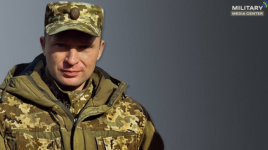
The Kupyansk operation was largely conceived, planned, and continues to be executed by one of Ukraine’s most talented officers — the commander of the Joint Forces grouping, the legendary Major General Mykhailo Drapatyi. He has been conducting this operation without additional reserves, relying solely on existing forces and assets against Russian troops that significantly outnumber Ukrainian forces in almost every component on the ground.

📌 Drapatyi was urgently redeployed to Kharkiv Oblast in May 2024 to halt a Russian breakthrough from the Vovchansk direction, a task he successfully accomplished. He also commanded the liberation of Kherson Oblast in 2022. Notably, he once chose to resign following a tragic training-ground incident, taking personal responsibility for the failure of his subordinates to carry out his orders.

📌 Drapatyi became a legend of his time following the iconic 2014 footage, when pro-Russian separatists established control over Mariupol and blocked the advance of Ukrainian forces. During that episode, two BMP-2 infantry fighting vehicles from a Ukrainian unit broke through the artificial obstacles — the commander of the lead vehicle was Mykhailo Drapatyi himself.

🔹 In June 2014, Drapatyi also successfully led an operation to extract and save two Ukrainian groups that had been taken captive near Luhansk.

1765625636192.png
 
Donbas as a Demilitarized Zone — Here’s the TRUTH

Reports today have fueled claims that Ukraine is being pushed toward a demilitarized zone in the Donbas. That framing is spreading quickly — and it’s misleading. In this video, I walk through what was actually reported, how it’s being misinterpreted, and why sloppy summaries are distorting the real discussion. This is a case study in how fast narratives outrun facts — and why precision matters right now.

Not exactly like that - demilitarized zone? Aready refuted by Podolyak as a mistranslation. These are theoretical models and as Zelesky has stated and rewstated, territorial questions are resolved only at the highest political level or by the Ukrainian people.

Such a zone would require the withdrawal of troops from both sides of the front line as per the revisions made by Ukraine and handed to Trump on Wednesday evening. Ukraine will not accept any plan where only Ukrainian troops wothdraw or where territory is ceded unilaterally. What Ukraine has discussed is the cncpt of a buffer zone, NOT a territorial concession.

Now of course any withdrawal by the Russians will be seen as a defeat, which Putin will mot accept. Also, theres billion Euros of defense spending to support Ukraone to be used by the end of THIS year, and the EU plans to allocate 0 billion Euros to support Ukraine over 2026 and into 2027. This would be split between defense procurement in the EU and Ukraine.

 
Putin's Propaganda Machine Implodes As Ukraine Takes Ground

Ukraine’s battlefield reality is cutting straight through another Kremlin propaganda blitz.

As Russian state media claimed momentum, Ukrainian forces pushed forward, retaking territory around Kupiansk and inflicting heavy losses on Russian units. Ukraine’s Unmanned Systems Forces continue to set records, destroying more Russian aircraft and forcing repeated airport shutdowns deep inside Russia.

Ukraine is also expanding its strikes against Russia’s energy lifeline. Refineries are again under attack, and for the first time Ukrainian forces are hitting oil drilling infrastructure in the Caspian Sea, moving beyond pipelines and refineries to the source itself. This comes as Russia’s economy continues to spiral, with unsellable Russian oil piling up in tankers amid a worsening global glut.

Inside Russia, pressure is rising. Protests are spreading, nearly 40 percent of Russians struggle to afford food, and prominent voices now warn the country is sliding into dependence on China. Even cultural figures once silent are openly accusing Putin of turning Russia into North Korea.

On the ground and at home, facts are replacing fiction. Ukraine is advancing — and the Kremlin’s narrative is collapsing.

 
Ukraine Attacks & Hits Two More Ships in the Caspian Sea

A pair of Russian container ships carrying weapons and equipment, likely from Iran, were attacked in the Caspian Sea by drones.

 
Putin has LOST CONTROL Over Kadyrov

For years, Vladimir Putin has sold the image of absolute control over Russia’s regions, projecting the illusion of a perfectly centralized “vertical of power.” But nowhere does that myth fall apart faster than in Chechnya. This video breaks down why Putin cannot truly control Ramzan Kadyrov, why the Kremlin pretends otherwise, and why this fragile arrangement is now cracking under the pressure of war, budget exhaustion, and political reality. Chechnya was never reintegrated into Russia like other regions. It was subcontracted. Putin traded money and autonomy for stability, allowing Kadyrov absolute internal control in exchange for public loyalty. That deal worked only as long as Moscow could afford it.

As Russia’s war in Ukraine consumes more than a third of the federal budget, the financial foundation of that loyalty is eroding. Chechnya survives on subsidies, not ideology, and loyalty rented with money becomes unstable when cash runs short. The video examines how Kadyrov’s allegiance is transactional, not patriotic, and why Putin cannot enforce obedience without risking another Chechen war. Real-world examples of open defiance expose the truth: Chechnya quietly reduced mobilization during Russia’s manpower crisis, and Kadyrov’s forces failed to act during the Wagner mutiny—both without consequences. In any other region, such actions would be treated as treason.

This analysis explains why Putin tolerates selective obedience, why he cannot afford to push back, and how Chechnya has become a dangerous symbol of Moscow’s shrinking authority. As the war drags on and Russia’s economy bleeds resources, the illusion of control grows thinner. Putin still pretends Chechnya is loyal, but behind the scenes, power is negotiated, not commanded. This is what the early collapse of central authority looks like: exceptions, special rules, and a leader forced to choose between losing in Ukraine or losing Chechnya.

 
Kremlin's Decree Locks In Russia's Total DEFEAT

Putin signed a decree that triggers a new phase of demographic insolvency for the Russian Federation. The Kremlin calls it training but the financial reality is a stealth default on the labor market. This order creates a draft pipeline that drains skilled workers from factories and transport, forcing the economy to run on empty.

This is not just a military act but a financial liquidation event. Every new battalion creates billions in long term pension and medical obligations that the state budget cannot meet. As the war economy burns through its last liquid reserves, the regime shifts these costs onto failing regional budgets and squeezes households through inflation.

We also analyze how foreign recruitment exposes a manpower liquidity crisis. Relying on mercenaries from abroad spikes the war risk premium and signals deep internal exhaustion. A regime preparing for peace trades risk for relief. A regime preparing for total war expands obligations until the system breaks. This video breaks down the fiscal and security reality of Putin’s refusal to settle.

CHAPTERS:
00:00 - Intro
01:43 - Stealth Mobilization: Inside Russia’s Secret 2026 Plan
04:29 - Mercenary Trap: Tricking Foreigners into the Trenches
05:58 - Demographic Time Bomb: The Collapse of Russia’s Economy
07:29 - Criminal Dynasty: How the Putin Family Profits from War
09:47 - Fatal Deception: Why Generals Lie to the Kremlin
11:14 - Regime Fracture: The FSB’s Power Play Against the Army
14:19 - Outro

 
Putin Tried to Break Ukraine’s Military… He BROKE Russia’s INSTEAD

Putin set out to demilitarize Ukraine, believing it would collapse under pressure. Instead, the war triggered one of the most dramatic military transformations in modern Europe. This overview traces how early miscalculations, long-term reforms, and industrial adaptation reshaped Ukraine’s forces while steadily eroding Russia’s own military power, leaving the Kremlin facing consequences it never anticipated.

 
Zelenskyy BLASTS Putin AND Trump from the FRONTLINES OF WAR - "Hello from KUPIANSK"

MeidasTouch host Ben Meiselas reports on Ukraine President Zelenskyy going to the frontlines of the war with Russia after a massive victory over Russia’s elected air assault unit and delivering a powerful message to Trump and Putin about power of Ukraine.

Trump and Putin have been doing their best to force Zelensky and Ukraine to surrender before Christmas. Zelensky is saying "no dice, you don't hold the cards"

The ZSU has essentially wiped out the 76th Air Assault Division (a Russian elite unit, the equiavalent of our 101st Airborne) in 3 days! The assault by the 76th was likely coordinated with Wtkoff, Kushner and Trump).

 
"This is a Clusterfuck" - JD Vance’s Ukraine Power Play Backfires

A troika of foreign policy amateurs—Steve Witkoff, Jared Kushner, and JD Vance—are trying to impose a Russia-drafted peace plan on Ukraine. While Trump was in the loop, other senior officials in the administration were in the dark, even as Kushner was using back channels to work with a Putin ally. Vance eagerly got on board because he's desperate to stab Ukraine in the back and declare himself MAGA's heir apparent for 2028. But rival Marco Rubio—who sees that Russia doesn't really want peace—is working on an alternative deal.

 
Rating The BEST and WORST Infantry Fighting Vehicles in Ukraine

Infantry Fighting Vehicles have never been under this much pressure. In Ukraine, IFVs and AFVs are taking losses on a scale not seen since the Second World War—under the eyes of drones, in minefields mapped from the sky, and in artillery zones where survival is measured in seconds. In this episode, I’m Tuomas, former officer of the Finnish Defence Forces, and we’re breaking down how IFVs and AFVs have actually performed in the war in Ukraine.

Using geolocated, visually confirmed data from Oryx and other open-source intelligence, we examine the destruction rates of the BMP-1, BMP-2, BMP-3, BMDs, M2 Bradley, Marder, CV90, Rosomak, BTR-3/4, AMX-10RC, and more. We compare their pre-war inventories to confirmed battlefield losses to understand which vehicles are surviving—and which ones are rolling death traps in modern drone warfare.

You’ll see why Soviet-era IFVs have been annihilated in unprecedented numbers… why Western vehicles like the Bradley, Marder and CV90 keep their crews alive… and why the Rosomak, surprisingly, has emerged as one of the best-performing armoured fighting vehicles of the entire conflict.

We also look at how Ukraine and Russia deploy these vehicles, how tactics have evolved since 2022, and how survivability—not armour thickness—has become the key metric in drone-dominated modern warfare.

Finally, we give each major IFV and AFV an honest rating from F to A+, based entirely on real battlefield outcomes, not propaganda or brochure promises.

00:00 – Intro: Why IFVs matter more than tanks in Ukraine
02:00 – Loss statistics: Russia vs Ukraine IFVs & AFVs
03:57 – BMP-1, BMP-2, BMP-3 destruction rates
08:22 – Other Soviet Fighting Vehicle loss rates
09:03 - Bradley in Ukraine
10:56 - Marder in Ukraine
11:53 - CV90 in Ukraine
13:17 - AMX-10 in Ukraine
15:07 - BTR-3 & BTR-4 in Ukraine
16:59 - KTO Rosomak in Ukraine
18:45 - Other systems: PBV, YPR & M80A
20:08 - Summarizing Destruction Rates
21:21 - Rating IFVs\AFVs in Ukraine

 
Russia Claims Another City Is “Surrounded” — Again

Russian military officials are repeating a familiar claim: that Ukrainian forces in Siversk have been encircled and effectively captured. It’s a narrative we’ve heard many times before—often without evidence, and often disproven days or weeks later. In this video, I break down what Russia is saying, what we can independently verify, and why these “surrounded” claims keep appearing even when Ukrainian positions remain intact. We’ll look at terrain, lines of communication, and the broader pattern behind Moscow’s battlefield messaging.

 
"Russians Will Die Everywhere, On All Fronts"

That's a quote today from a Ukrainian soldier on the front. The Russian Army is hopelessly lost in a quagmire with no escape. Trump needs to pressure Ukraine and Europe more. If he doesn’t, Ukraine might Win.

 
Zelenskyy SMASHES ‘Capitulation’ Narrative — Solovyov ERUPTS in ENGLISH on Live TV

One speech. Two completely different reactions.

Standing at the frontline, Volodymyr Zelenskyy delivered a clear message: Ukraine will not accept capitulation, and victory is the goal. Calm, composed, and resolute, his words were meant for Ukrainian soldiers—and for the world.

But the reaction from Russian state media told a very different story.

On live television, Vladimir Solovyov erupted—raising his voice, cursing, and even switching to English in a rare on-air breakdown. The contrast couldn’t be sharper: leadership and resolve on one side, emotion and loss of control on the other.

 
UPDATE: UKRAINE USING OWN BALLISTIC MISSILE SAPSAN V

Ukraine has begun using its domestically built Sapsan ballistic missile in combat against Russia, President Volodymyr Zelenskyy – public confirmation that Kyiv’s long-awaited homegrown strike weapon is operational, according to The War Zone on December 10.

Range: ~300 km confirmed; up to 500 km considered possible; speed: approx. Mach 5.2, faster than US ATACMS (Mach 3); warhead: around 480 kg, more than double the ATACMS payload; launcher: mobile 10-wheel TEL carrying two ballistic missiles.

 
2025-12-13 | UPDATES #077 | Ukraine’s Unprecedented Aerial Strike Amid Peace Talks

It was a tactical message and a strategic message. Moscow will respond with violence and aggression, but let’s emphasise that it would do this whether Ukraine fought back or not.

According to Reuters, on December 11, 2025, Russian forces reported they intercepted 287 Ukrainian drones over multiple Russian regions, including the capital Moscow — a level of aerial penetration rarely seen before in this war. (Reuters)

The Moscow Times confirms that this was among the highest single-night Ukrainian drone totals since the conflict began, forcing temporary closures and flight diversions at major airports. (The Moscow Times)

This is significant because it shows that Ukraine’s long-range strike capability has matured. These are not simply swarm attacks along the frontline; they’re deep raids on major logistical and industrial zones — cities, transport hubs, refineries, and energy facilities all inside Russian territory.

 
Kremlin Infighting Turns Into Total Panic

The Russian banking system has entered a terminal phase of collapse that signals the definitive end of the current economic order in Moscow. Central Bank data confirms a catastrophic liquidity freeze that has paralyzed the financial sector and left the government without the capital necessary to sustain its war machine. This is a structural failure of the entire monetary system rather than a temporary market fluctuation. Inflation has breached critical thresholds and decimated the purchasing power of the Ruble while foreign reserves remain inaccessible due to tightening international sanctions.

The energy sector can no longer subsidize these losses. Recent precision strikes on oil export terminals have erased billions in monthly revenue and severed the primary lifeline of the federal budget. Without this steady stream of petrodollars the state cannot service its sovereign debt or maintain subsidies for key industries. Factories across the defense industrial base are going dark as supply chains fracture and funding dries up.

Financial elites in Moscow have recognized this point of no return. Reports indicate a massive acceleration in capital flight as oligarchs and insiders liquidate domestic assets to move wealth into safe havens offshore. This exodus of capital represents a total loss of confidence in the regime. China and India have simultaneously restricted credit lines which leaves the Kremlin with no external options to prevent a sovereign default. The combination of hyperinflation and banking insolvency guarantees a systemic breakdown that will force a change in leadership.

CHAPTERS:

00:00 – Hidden Liquidity Crisis Begins
01:05 – Propaganda vs Reality
02:10 – Emergency Interest Rates and Stagnation
03:20 – Reserves Are Frozen and Draining
04:25 – Exploding War Budget and Tax Hikes
05:35 – Banks Under Pressure
06:25 – Oil Revenues Collapse
07:20 – Sanctions Tighten on Energy and Shipping
08:10 – Gold Sales and Public Distrust
08:55 – Corporate Debt and Banking Fragility
09:45 – Investment Collapse and Capital Flight
10:30 – Infrastructure Failure Across Russia
11:35 – War Economy Turns Inward
12:15 – The Ponzi State and Kremlin Motives
12:45 – Final Warning and Call to Action

 
Back
Top