Britva415
"Alabaster," my ass
- Joined
- Nov 19, 2022
- Posts
- 6,801
She sure has a long nameI’m shorter than everyone, except Sabrina Carpenter.
Follow along with the video below to see how to install our site as a web app on your home screen.
Note: This feature may not be available in some browsers.
She sure has a long nameI’m shorter than everyone, except Sabrina Carpenter.


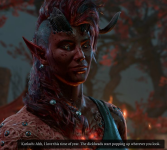
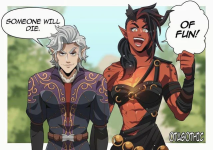
Maybe so. I think a lot of fans of your preferred gender, if any, would enjoy taking the highway to hell with you.View attachment 2595309View attachment 2595311
I'm going to hell.
You bum's nicer than hers, though.


In the first published edition of The Hobbit, Bilbo's interaction with Gollum is very different. Gollum stakes "a present" (the Ring) as a prize in the riddle game, not realising that it's already in Bilbo's pocket; when Bilbo wins, he attempts to honour his promise and is distressed when he can't find it, because he doesn't mean to cheat. Eventually he agrees to show Bilbo out of the caves instead. Tolkien had to revise this heavily when writing LotR because it didn't fit with his new ideas about what the Ring was.I remember reading an interview with JRR Tokein about that, and I think he said he resurrected Gandalf because his son, who he was writing for, wanted him back.
Despite what Tokein says about how he did a huge amnount of workd-building before writing the Hobbit, it's pretty clear to me that there were a lot of silly things that happened in the first story that he had to ignore or retract. Stuff like tea-drinking (where did they get the tea from?). Gandalfs "slow-wittedness" about the ring in The Hobbit was I think basically that he hadnt really thought things through in all that much detail. Even the "no female dwarfs" thing was probably just something he hadnt really thought about much when he wrote The Hobbit for his son, who was a young kid at the time.
Also worth saying, though, that the quality of warrior in the Silmarillion is much higher.the version that shows up in Moria is vastly more powerful than the ones in Silmarillion, where a single battle might feature many Balrogs with one warrior slaying several.
One could also argue that the warriors of the time of the Silmarillion were people of the calibre of Hurin, Glorfindel, Beren, and not least Ecthelion - who single-handedly killed Gothmog, Lord of Balrogs.Also differences between LotR and the Silmarillion. IIRC Tolkien significantly revised his ideas about Balrogs along the way - the version that shows up in Moria is vastly more powerful than the ones in Silmarillion, where a single battle might feature many Balrogs with one warrior slaying several.

It definitely sounds like a great argument to be has: were the Balrogs of old wimpier, or were the First Age elves stronger?Also worth saying, though, that the quality of warrior in the Silmarillion is much higher.

One could also argue that the warriors of the time of the Silmarillion were people of the calibre of Hurin, Glorfindel, Beren, and not least Ecthelion - who single-handedly killed Gothmog, Lord of Balrogs.
So while Durin's Bane definitely got buffed (boo), I think Tolkien also leaned heavily into the heroes of the Third Age being far less powerful than the mythical warriors of the First and Second ages.
From what I remember, the Balrogs were corrupted Maiar - so a single Balrog was a match for a Maiar like Gandalf.

He absolutely believed in a post-Eden worldThis is an interesting theme of LOTR, a reflection of Tolkien's conservatism and Catholicism -- the idea of the fallen world. That the people of the Third Age don't match up to the people of the First or Second. Aragorn says to Boromoir in the council of Elrond, almost apologetically, that he does not resemble the images of Isildur or Elendil. We don't quite believe him, because we believe IN him, but the theme is there.
He is on record as saying that Sam was an amalgam of the junior soldiers allocated to officers like him in Word War I as servants - batmen is I think the term - who he recognized as being of at least equal character and integrity to himself and his fellow officers.It's offset by Tolkien's confidence in Sam, the humble gardener who saves Middle-earth.
IndeedThere's a lot going on there

Sauron is a lesser being than Melkor, but the foes arrayed against him are lesser still. Melkor's winning until Earendil, who has been sanctified by the Valar, and the hosts of the Undying Land arrive. One of the things that's suggested (at least; it may be outright stated) is that the elves of Middle-Earth are lesser than those of Aman, and that those who come from Aman are strongest right when they set foot in Middle-Earth.It definitely sounds like a great argument to be has: were the Balrogs of old wimpier, or were the First Age elves stronger?
In general, the “everything decays with time” leitmotif of Tolkien’s works doesn’t seem to fully apply to evil. Sauron is technically a lesser being than Melkor, and it’s his successor, but it took a literal divine intervention to really harm him while his old boss would (IIRC) start limping because someone hit him with his own hammer.
Even someone like Glorfindel, who's presented as one of the powerhouses of Middle-Earth (Elrond says that not even Glorfindel could open the road to the Fire with strength, which is a super obvious thing to say about anyone unless there's a question about it. Like you wouldn't say, well, it's fine, Aragorn can just take you there and kill anything in the way) is, you know, pretty ordinary by the standards of the Elder Days. When warriors are fighting against Balrogs in groups, it's Feanor and the sons of Feanor, and Feanor is pretty fucking close to being a god.One could also argue that the warriors of the time of the Silmarillion were people of the calibre of Hurin, Glorfindel, Beren, and not least Ecthelion - who single-handedly killed Gothmog, Lord of Balrogs.
So while Durin's Bane definitely got buffed (boo), I think Tolkien also leaned heavily into the heroes of the Third Age being far less powerful than the mythical warriors of the First and Second ages.
From what I remember, the Balrogs were corrupted Maiar - so a single Balrog was a match for a Maiar like Gandalf.
Series won't be done by then.I wonder if we will be discussing the nuances of Game of Thrones in 2068 (72 years after it was published).
He absolutely believed in a post-Eden world
He is on record as saying that Sam was an amalgam of the junior soldiers allocated to officers like him in Word War I as servants - batmen is I think the term - who he recognized as being of at least equal character and integrity to himself and his fellow officers.
Indeed
No, I haven’t. But I have read quite a lot about Tolkien, as well as getting quite some way into the stuff CRRT published before discovering sex was even more funIf you haven't read it, you might like Paul Fussell's The Great War and Modern Memory, a book about the ways in which British authors came to terms with the experience of World War 1.
I say "if" because I don't assume you haven't read something. You've obviously read a lot.


That was edition I read as a kid, a tattered hand-me-down from my (much) older brother. Unlike LOTR, which Ive re-read a few times, I havent picked it up since.In the first published edition of The Hobbit, Bilbo's interaction with Gollum is very different.
The aristeia of Theoden at the Pelennor, the Scouring of the Shire and its rebuilding, Fatty Bolger's escape from Crickhallow, the council of Elrond.What are your favorite scenes in LOTR?

View attachment 2595309View attachment 2595311
I'm going to hell.
You bum's nicer than hers, though.

I personally plan to be very dead in 2068.I wonder if we will be discussing the nuances of Game of Thrones in 2068 (72 years after it was published).
I shall be well into my wearing purple phaseI personally plan to be very dead in 2068.


People here keep begging writers to finish their series before starting to publish it...There are a lot of other, subtler differences between Hobbit and LotR.

He is on record as saying that Sam was an amalgam of the junior soldiers allocated to officers like him in Word War I as servants - batmen is I think the term - who he recognized as being of at least equal character and integrity to himself and his fellow officers.
No! Just no!Working title was Batman Baggins.