
ShelbyDawn57
Fae Princess
- Joined
- Feb 28, 2019
- Posts
- 5,002
I'd always seen it as one of those U.S. vs the world things."Bangs" is a very dated description of a hair style, I think. You'd far more likely say "fringe", these days.
Follow along with the video below to see how to install our site as a web app on your home screen.
Note: This feature may not be available in some browsers.
I'd always seen it as one of those U.S. vs the world things."Bangs" is a very dated description of a hair style, I think. You'd far more likely say "fringe", these days.

Could be. I don't ever recall hearing it said here in Oz, which has some state-based language oddities, but not many.I still hear "bangs" on a regular basis in the US. I mean, as regular a basis as I hear any descriptions of hair styles. Maybe it's a regional thing.


Love that word. It appears in Chapter 1 of the Handmaid's Tale.Just yesterday, @Voboy sent me googling when he used the word "palimpsest." Very cool word, if somewhat pretentious.
OneHitWanda used it in the title of one of her stories.Chiaroscuro
I thought I had a good vocabulary until I started reading @EmilyMiller's storiesGuilty. A comment from @avp92117
I've never had to look up so many words before while reading a Literotica story.

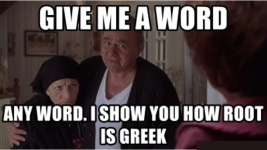
What is interesting, though, is that often the more uncommon words have Latin or Greek routes, and are thus more likely to have cognates in other languages. So, by using them, you may actually make your work more accessible to non-native speakers of English.


emo culture????I've heard bangs more often that fringe, and the majority of the times I've heard fringe was to describe the hairstyle normally associated with emo culture.
emo culture????

I thought at first people meant the festival in Edinburgh"Fringe" sounds like something which would be on the sides. Not in the front.
"Fringe" is way more common than "bangs" in the (Southern) UK."Fringe" sounds like something which would be on the sides. Not in the front.


In Oz, the fringe is definitely the front of the hair style, down over the forehead, and the length sometimes depends on the parting."Fringe" sounds like something which would be on the sides. Not in the front.
Those would be sideburns, in Oz. Very seventies, rarely seen nowadays.Strange. I was pretty sure that “bangs” refer to the patches of hair encroaching down the sides of your face, along the ear, and threatening to merge with your beard if you got one. Nothing to do with the mane overhanging your forehead.
From Wikipedia:"Fringe" sounds like something which would be on the sides. Not in the front.
Those would be sideburns, in Oz.
 You're right, these are actually sideburns. Now I remember my hair stylist correcting me on that. Thanks.
Oooo, look at TheLobster! A hair stylist, oh my
.
Interesting idea. Giving it some thought, I believe that as much as it may help, it could also be a double-edged sword.What is interesting, though, is that often the more uncommon words have Latin or Greek routes, and are thus more likely to have cognates in other languages. So, by using them, you may actually make your work more accessible to non-native speakers of English.
In my travels around Europe, I have often made sense of words from knowing English + bits of Latin, French, and Dutch.What is interesting, though, is that often the more uncommon words have Latin or Greek routes, and are thus more likely to have cognates in other languages. So, by using them, you may actually make your work more accessible to non-native speakers of English.

When I first looked closely at a Turner painting, I was surprised to discover that what my mind had interpreted from a distance as a shepherd was a single squiggly brush stroke.Paying attention to words in a story is like paying attention to brush-strokes in a painting. You need to get them right, but what you're creating is a story, not a bunch of words.


