I like Trains

Woodstown Central 0-6-0 returns to steam, certified for operation​

Story by David Lassen

https://www.msn.com/en-us/news/us/w...1&cvid=26771d66e306428fb1979815a126cc24&ei=96

https://img-s-msn-com.akamaized.net/tenant/amp/entityid/AA1kwtRB.img?w=768&h=538&m=6
Woodstown Central 0-6-0 No. 9, restored by SMS Rail, operates after receiving its FRA certification on Nov. 16. Steve Jensen Jr.

WOODSTOWN, N.J. - Woodstown Central Railroad, the heritage rail operation of SMS Rail Lines, has had Alco 0-6-0 locomotive No. 9 certified for operation by the Federal Railroad Administration after a 14-year restoration at the SMS shops in Bridgeport, N.J.

The locomotive was built for the U.S. Army in 1942, working first at Fort Dix, N.J., as No. 4023 and later at Fort Eustis, Va., as its No. 616. Retired there in 1958, it was sold to Virginia Blue Ridge Railway in Piney River, Va., and became its No. 9, pulling that railroad's last steam-powered train on Aug. 1, 1963.


https://img-s-msn-com.akamaized.net/tenant/amp/entityid/AA1kw8Mo.img?w=649&h=1000&m=6
Owner Jeff Sutch was at the throttle for No. 9’s first move under steam. Steve Jensen Jr.© Provided by Trains.com
After Virginia Blue Ridge dieselized, it stored No. 9 in operating condition until June 1967, when it was sold to the New Hope & Ivyland Railroad (today's New Hope Railroad), in New Hope, Pa., some 16 miles northwest of Trenton, N.J.. The locomotive operated in excursion service there until 1981, when it was purchased by SMS Rail, which began a complete overhaul to operating condition in 2009. It was first test-fired in 2021 [see "SMS 0-6-0 returns to steam," Trains News Wire, Aug. 10, 2021].

According to Paul Harland, SMS Rail Service director of passenger operations, an FRA team visited the SMS shop for three days earlier this month. On the first day, the locomotive passed the FRA's hydrostatic boiler test; on the second, the team confirmed boiler metal conditions and thicknesses and found no problems. Finally, on the third day, the FRA team fired up the locomotive and its operational test was also a success, leading to operating certification on Nov. 16. Hartland said SMS shop forces will complete the restoration and paint the locomotive in coming months and plans to debut No. 9 in passenger service for the 2024 operating season.

Woodstown Central Railroad No. 9 is one of five remaining Virginia Blue Ridge steam locomotives, but the only one currently in operating condition. Three of VBR's diesels have survived since the railroad's closure in 1981, with two known to still be on operation.

Woodstown is a 45-mine drive south of Philadelphia and 30 minutes east of Wilmington, Del.

https://woodstowncentral.com/

https://smsrail.com/
 

Mid-Continent museum launches restoration of oldest surviving Electro-Motive motor car​

Story by David Lassen
https://www.msn.com/en-us/money/com...&cvid=2d8b14c08e1a49e2844397a9486387d7&ei=169

NEW FREEDOM, Wis. - Mid-Continent Railway Museum is launching a project to restore to operating condition its Electro-Motive Corp. motor car , the oldest surviving piece of EMC equipment.

Montana Western No. 31, built by EMC in 1925 for Great Northern Railway as its No. 2313, is the 13th railcar built by the company that celebrated its 100th anniversary in 2022. It was featured in this Trains Live video last year. The museum said in a press release that it will work with FMW Solutions, a rail engineering firm with experience in preservation projects, to restore the gas-electric car, named as a Historic Mechanical Engineering Landmark in 20023 by the American Society of Mechanical Engineers. The project is expected to cost $300,000; volunteers are welcome to support the project and contributions are welcome at the museum's website.

"Great Northern No. 2313 is already an important display piece, but we want to provide visitors with an immersive and moving experience that tells the story of railroad technology through the last century," said Rusty Schramm, project manager. "We have recently undertaken repairs to the roof, radiator, control system, and fuel tank, but the antique Winton engine has not operated since 1987, and will be our first major undertaking."

Restoration of the engine will be aided by a large supply of original Winton parts donated to the museum by the Sperry Rail Service when it was retiring its Winton-engined rail inspection cars.

"As someone who has spent my career dedicated to the maintenance and preservation of EMD locomotives, having the chance to oversee the restoration of this historic engine is a distinct privilege," said FMW Senior Mechanical Associate and Winton Project Lead Allen Rider. "The engine/generator arrived at the FMW Tennessee machine shop earlier this month, and we will begin the initial disassembly and inspection in the coming weeks."

A formal restoration plan will be developed following that initial inspection and assessment, with engine restoration at the FMW facility in Soddy-Daisy, Tenn.

"Our goal is to have her up and running in time for her centennial in 2025," Schramm said. "It's a worthwhile goal and achievable with donations and volunteer help."

https://img-s-msn-com.akamaized.net/tenant/amp/entityid/AA1lvk6L.img?w=534&h=356&m=6
Montana Western No. 31, the oldest surviving Electro-Motive gas-electric railcar, peeks out of a storage building at the Mid-Continent Railway Museum in 2021. The Museum has launched a project to restore the car, built in 1925, to operating condition. David Lassen

https://img-s-msn-com.akamaized.net/tenant/amp/entityid/AA1lv9cE.img?w=534&h=401&m=6
The Winton engine is removed from the railcar for shipment to FMW Solutions for disassembly and assessment. FMW Solutions
 

One thousand issues of ‘Trains' Magazine unravel a legacy​

Story by Nastassia Putz

https://www.msn.com/en-us/travel/ar...p&cvid=6c49b964b50f49379a882d7369d20f81&ei=33

One thousand issues​

https://assets.msn.com/staticsb/statics/latest/views/icons/ArticleImageFullscreen.svg

https://img-s-msn-com.akamaized.net/tenant/amp/entityid/AA1m6ZHQ.img?w=768&h=514&m=6
One thousand issues of Trains Magazine: At sunset, three Belt Railway of Chicago diesels go about their business in the BRC's West End yard. John Gruber© Provided by Trains.com
One thousand issues of Trains Magazine have put tens of thousands of railroad photographs in the public eye. The most memorable of these images do far more than portray a locomotive or a train in motion. They preserve a moment of railroading and capture the spirit of a place, a railroad, and time. Our perceptions of railroading are shaped by our experiences and by the shared words and images of others.

Some of the most iconic images in the pages of Trains are those that stir a fascination for the journey. Railroads are about motion - not just the movement of trains between stations, but the movement of people and material across the landscape and across the decades.

Long-time Editor David P. Morgan had a keen eye for effective photographs and put into print some of the best known railroad images from the 20th century. Many skilled and intuitive photographers saw their work illustrating the pages of the magazine. This helped shape the way we saw railroads and the places they served.

Richard Steinheimer's photos of Western railroading conveyed the majesty of Donner Pass, the sinuosity of the Tehachapis, and the mystique of Milwaukee Road's Pacific extension. Jim Shaughnessy preserved the identities of railroads in the East during the key transition from steam to diesel and the rapidly unfolding amalgamations of the 1960s and 1970s, which in just a few years swept away most of the classic names in the region's railroads. John Gruber distilled elements of Midwestern railroads with his photo essays, including the image reproduced here from his 1966 article on the Belt Railway of Chicago.

Mel Patrick preserved elements of railroading and railroad landscape so perfectly as to defy description. William D. Middleton traveled across the nation and around the globe. His focus on electric railroads included more than trains and wires, but an era of railroading on the cusp of greatness that remained unfulfilled. Phil Hastings was master of the craft who, in close collaboration with Morgan in the 1950s, put pictures on paper that captivated the generation mourning the loss of steam and preserved a period of railroading now long past.

In the 1980s and 1990s, color photographs by Ben Bachman, Gary Benson, and Steve Schmollinger helped redefine how we saw railroading with magnificent images of ordinary trains in their environment. Growing up in New England, I was especially fascinated by Bachman's two-part article portraying railroads of the Connecticut River Valley in New Hampshire and Vermont. His evocative article on the rails along the Salish Sea is featured in this issue.

Scott Hartley delineated the unusual from the ordinary in my native New England, while taking memorable forays South and West. Where John Gruber put the telephoto in the pages of Trains, Scott should be credited for the successful application of the wide-angle lens to color railroad images.

Among the greats of contemporary photographers are the Danneman brothers, former Art Director Mike and current Trains Art Director Tom. They shaped this magazine's visual content and set high standards for photography for decades.

Blair Kooistra is a photographic savant who, from a young age, graced the pages of the magazine with his photos of the Milwaukee Road in the Bitterroots and since has created railroad memories from across the West.

In the digital age, railroad photography has become much easier to produce, quicker to master, certainly more versatile and more readily available, but only occasionally results in images with better staying power than the classics from the age of film. Yet Trains continues to print memorable photographs and provide a venue for those skilled with the use of a lens.

Eric William's cover photo on February 2023 Trains offers a stunning image that defies most railroad photography conventions and is among the best to appear in recent years. His article focused on Norfolk Southern's SD40E diesels, but his photographs capture the essence of the former Pennsylvania Railroad's Main Line west of Altoona, Pa. Scott Lothes is another digital imaging master who has produced colorful essays showings us railroads in Japan, the Pacific Northwest, and the upper Mississippi River valley.

So many photographs, so many places, and too many photographers to even begin to credit all of them: month after month for more than 80 years their individual visions have swept us up on virtual journeys around the world and on railroads of all descriptions.

I wrote this essay without going through the 1,000 issues one by one, but simply recalling from memory the photographs and the photographers who made them. Each and every one of us that has taken the journey with Trains will have their own recollection of images that stayed with them, and that in itself proves the power of the individual photographs.

Check out the Trains Magazine archives.
 
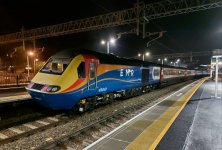
We had these High Speed Trains in UK, 1976-almost gone now.
Big, loud, fast diesels. Never equalled.
Final run pre-preservation on Midland Mainline here.
1713632670928.jpeg
 
Always was a fan of the EMD GMD-1....used the 567 V12 two stroke diesel designed for use on light rail applications, popular on the Western Canada grain branch lines and passenger service in some circumstances.......
plus I will add another GMD-1 unit 301 still wearing NAR colors before being merged back into the CN fleet
 

Five mind-blowing facts about the GM Aerotrain​

Story by B Lettenberger

https://www.msn.com/en-us/autos/new...S&cvid=c377d3dfeddd4e68c9a1dce2223f306a&ei=19

Mind-blowing facts about the GM Aerotrain

1721077600841.png

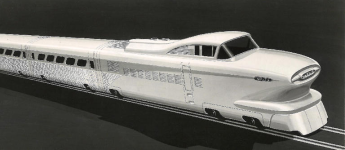
General Motors directed the talents of their automotive stylists into the new Aerotrain concept. In his late 20s, Charles Jordan, who would become known for the ultimate refinement of fins on Cadillac’s in the 1950s, led the team. Using existing GM technologies, Jordan and his team developed the light, fast Aerotrain for the 500- to 750-mile rail market. Jordan rendered this conceptual drawing of the new trains. General Motors© Provided by Trains.com


Click on the link to read the rest of the article as it was too long to post here. I kept getting error messages that it was beyond capacity of Lit.
 
I grew up in SoCal so I'm huge fan of circa 1980s Southern Pacific and Denver Rio Grande. I have a huge n scale layout based upon this time frame and these two railroads. I loved the pool power that existed in those days.
 
Back
Top